
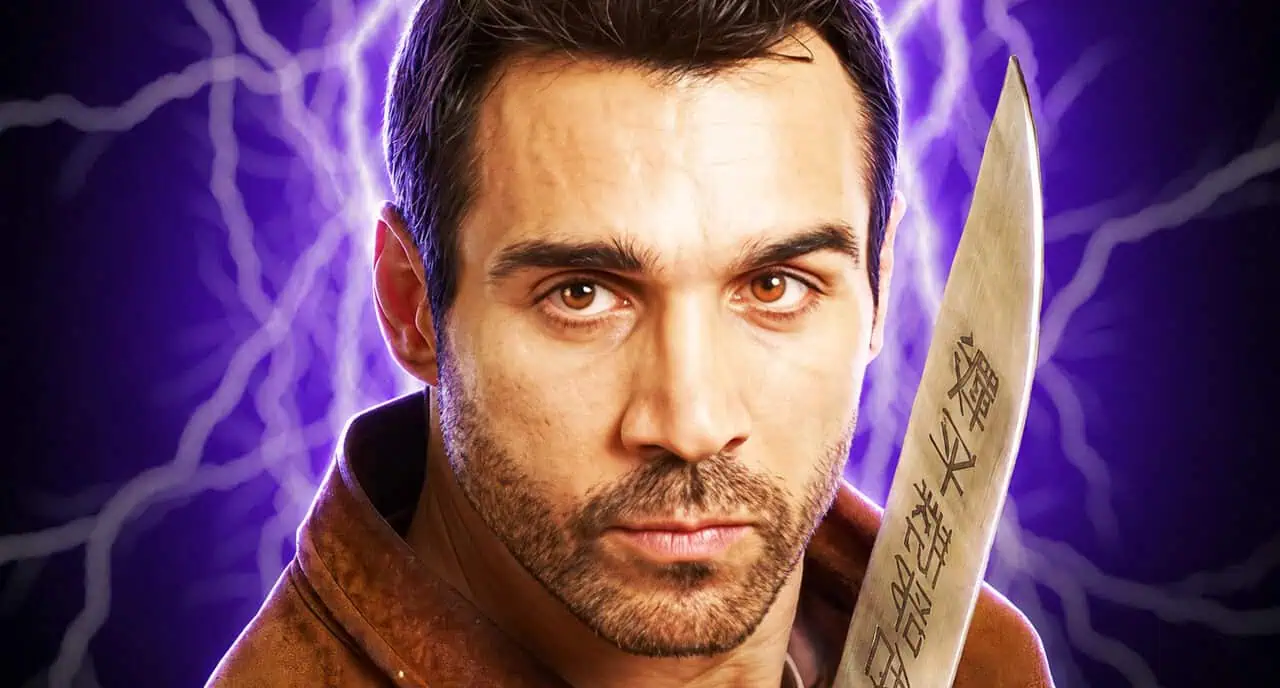

The star didn’t want to come back. The script was rewritten repeatedly, completely upending the series’ mythology. The original director eventually walked away. And when the finished movie finally emerged, it became the first Highlander film that couldn’t even make it into theaters. So how did a franchise that began with one of the most beloved cult movies of the ’80s end up here? What convinced Adrian Paul to return after initially refusing? Why was the story of the Immortals rewritten so drastically? And how did a planned continuation of the franchise end up essentially killing it instead?
There can be only one… but unfortunately, there was also Highlander: The Source.
How Highlander: The Source began
Development of a fifth Highlander movie dates back to 2001, when producers Peter S. Davis and William N. Panzer sought to keep the franchise alive following Highlander: Endgame. There was just one problem: Miramax wasn’t interested. Endgame had bombed at the box office, reportedly losing the studio around $10 million, and they had little appetite for another sequel.
Miramax ultimately sold the rights back to Davis and Panzer, who began developing a new movie that would follow Endgame while continuing the mythology established in Highlander: The Series. But there was a much bigger problem. Adrian Paul didn’t want to do it.
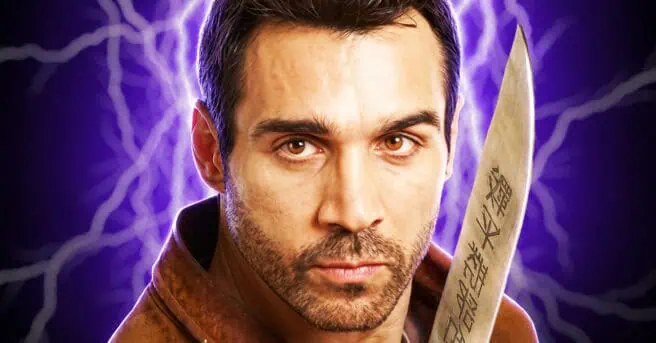
Paul had already been disappointed by how Endgame turned out, and when he read the proposed script for The Source, he flat-out refused to return as Duncan MacLeod. Part of the problem was that Paul initially believed he’d be working from a script by David Abramowitz, a veteran writer on Highlander: The Series who already had an established relationship with Paul. Abramowitz seemed like the natural choice to continue Duncan’s story and expand the show’s mythology. Except the script Paul received wasn’t quite what he was expecting. In fact, Abramowitz’s version wasn’t even the first attempt at getting Highlander 5 off the ground.
The many scripts of Highlander 5
While the project was still under development at Miramax, Joel Soisson, who had previously written Endgame and a host of cheap horror sequels, was recruited to conjure up a new plot. Credited under the alias Mark Bradley, one of Soisson’s most notorious versions caught up with Duncan squatting in a gas station in the middle of the desert near a crashed airplane. He wore cowboy boots and a hat, smoked cigarettes, and kept a pet monkey named Connor as a cheeky in-joke.
That may have actually been a much cooler angle, because The Source is the only franchise offering devoid of Connor MacLeod’s presence after he was killed off beforehand. It’s one of many infuriating aspects of a movie that not only bastardized the beloved Highlander lore but also all but killed the entire IP with one fell sword swing. But we digress… for now.
Although Soisson created the original story, screenwriter Peter Briggs, who would go on to write Hellboy for Guillermo del Toro, was brought in to retool The Source. Briggs pored through all the previous movies and even became an anonymous member of the franchise’s official online message board, highlander-community.com. Get this: Briggs went undercover, asked fans on the website what they wanted to see in the next Highlander movie, incorporated their ideas into the script, and even sent fans copies upon request. It wasn’t until after he was booted off the project that Briggs finally revealed his true identity, which he did voluntarily in honor of a friend from the fansite who tragically died around the same time.
Briggs’ concepts for the sequel included setting the movie in Africa, as the studio wanted, and designing action set pieces in Morocco and along the Nile. Those ideas were ultimately discarded once Miramax sold the rights and a new writer was recruited.
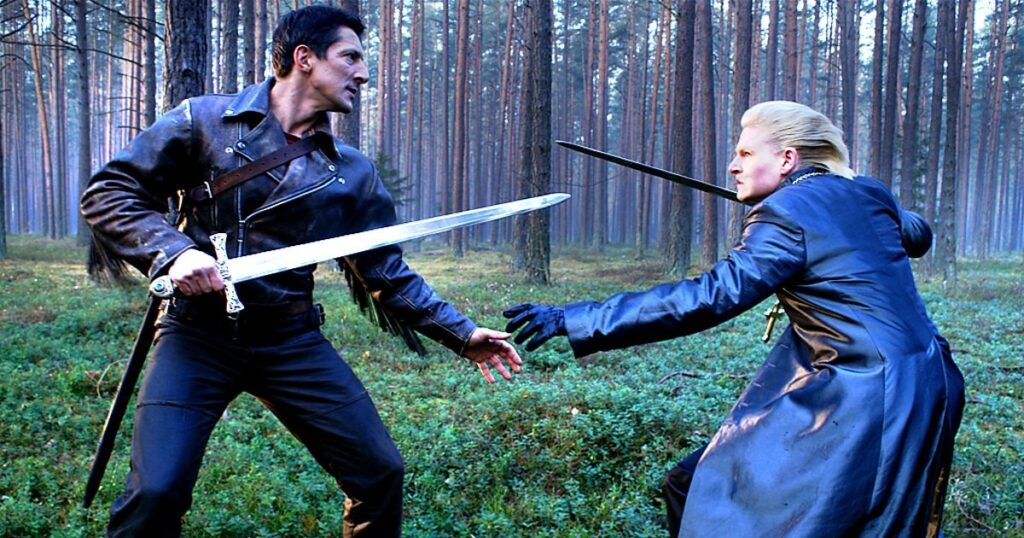
The next writer to work on The Source was Stephen Kelvin Watkins, whose sole writing credit remains this cinematic catastrophe. More like blame than credit, right? Watkins’ original vision was for The Source to be the first in a new Highlander trilogy, but those plans were scrapped and the script was rewritten as a self-contained story. As Paul saw it, Watkins’ work wasn’t up to snuff and only got worse with revisions, crushing hopes for an invigorating trilogy.
Speaking of early brainstorming, Panzer also lobbied to connect the story to Highlander II: The Quickening, the odious second film in the cinematic series, by having The Source originate from the planet Zeist. His efforts were rejected as well. All for the better!
Once Watkins’ take on the material was deemed uninspired, unworkable, and in need of wholesale rewrites, Abramowitz was brought in for revisions to reinstate the core mythology and get back to what appealed to fans.
After all the investments made in various script iterations, however, the producers eventually returned to Watkins’ initial premise. Abramowitz was so incensed by the finished movie that, despite it retaining a few of his story alterations and being credited in an early cut leaked to the press, he demanded that his name be removed from the picture altogether.
Soisson and Watkins are credited in the finished film, with Soisson winning a WGA arbitration case to earn credit even though his story contributions had been drastically revised.
Why Adrian Paul returned to Highlander: The Source
Meanwhile, once Adrian Paul caught wind that the producers had reverted to the initial screenplay rather than the Abramowitz version he truly backed and believed in, he became deeply disillusioned with the project. And they were already shooting. In fact, the only reason Paul agreed to make the movie after declining it in the first place was that he was given a substantial pay bump and an executive producer credit.
Once Paul initially passed, Davis and Panzer desperately tried to get Christopher Lambert to return as Connor, despite the character being a ghost. Alas, they couldn’t meet Lambert’s high-dollar salary demands and hastily renegotiated with Paul to return as Duncan.
Afterward, the rest of the cast was filled out. Peter Wingfield returned as Methos, Connor’s fellow Immortal and longtime friend who appeared in both Endgame and the TV series. Jim Byrnes also returned as Joe Dawson, the Watcher who oversees Duncan’s life. Newcomers included Dutch actress Thekla Reuten as Anna Teshemka, Duncan’s mortal wife who left him due to his infertility; Christian Solimeno as The Guardian; Stephen Rahman Hughes as Zai Jie; Stephen Wright as Reggie Weller; and Thom Fell as Cardinal Giovanni.
Russell Mulcahy walked away from The Source
During the lengthy script revisions, Australian director Russell Mulcahy, who helmed the badass original Highlander and its equally embarrassing sequel, The Quickening, was attached to The Source. Mulcahy was interested in making a prequel focusing on the origin story of the first generation of Immortal Scottish warriors, set millennia before the events of the first film, with Duncan appearing only briefly in a framing story. Davis and Panzer quickly dismissed the notion and insisted that Duncan remain ever-present throughout. Mulcahy subsequently left the production, sensing the same harbinger of doom he had felt while making The Quickening and nimbly sidestepping another disaster of epic proportions.
Instead, he went on to direct the lucrative Resident Evil: Extinction for Sony and Screen Gems, which was also released in 2007, before directing 40 episodes of Teen Wolf and its TV movie spin-off.
Brett Leonard takes over
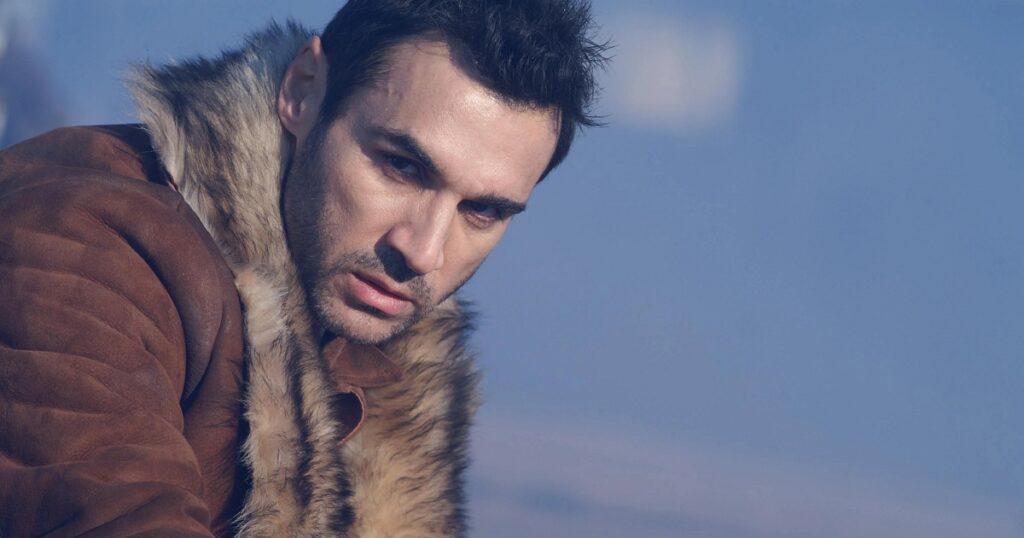
Following Mulcahy’s exit, American filmmaker Brett Leonard was tapped to bring The Source to life in July 2005. At this point, Lionsgate Films had acquired the franchise rights and titled the newest entry Highlander: The Journey Continues. Leonard was best known for helming 1992’s The Lawnmower Man and the underrated 1995 sci-fi action movie Virtuosity. He had also recently completed the indie body-horror movie Feed before joining the Highlander universe.
Speaking of Feed, Leonard brought back cinematographer Steve Arnold from that film to help light and frame The Source, although Lithuanian director of photography Dmitrij Gribanov also contributed without receiving a credit.
Despite all the misgivings voiced during development, including a script in shambles and a leading star who had essentially been bribed to return, Lionsgate gave Leonard a modest $13 million budget to make the film, roughly half the cost of Endgame.
Principal photography on The Source began on October 17, 2005, and was completed on December 4. The entire 48-day shoot took place in Lithuania, where much of the story is set, with filming locations including Kaunas, the Old Town in Vilnius, Klaipėda port, and the iconic Trakai Island Castle. The castle stood in for the dystopian, post-apocalyptic medieval environment of the movie.
Although the shoot was reportedly smooth and didn’t suffer too many major mishaps or grave injuries, the last-minute decision to change the setting from Africa to Europe as a cost-saving measure ultimately hindered the production. Remember, in Hollywood, time is money!
Why Highlander: The Source skipped theaters
Once photography was completed in late 2005, Lionsgate planned to release the movie in theaters sometime in 2006. In June 2006, Paul stated that the film was still being edited, the special visual effects were being fine-tuned, and composer George Kallis had been hired to arrange the score with an 80-piece orchestra. All of which meant more time and money.
But when the calendar year came and went, several announcements touting the movie’s release kept pushing the date further and further into 2007. The movie was reportedly still being edited as late as Valentine’s Day of that year. Rumors of a Producer’s Cut opening theatrically or going straight to DVD in September 2007 persisted throughout the year, constantly teasing fans without paying off the promise.
Eventually, The Source was released in the United States seven months later, on September 15, 2007, when it aired as an original TV movie on the Sci-Fi Channel. It became the first Highlander installment in history not to be released on the big screen. Oh, the indignity.
The leaked Russian cut
Adding to the confusion surrounding the release, an earlier cut of the film was shown to overseas distributors in Russia in February 2007. The Russian edit was eight minutes longer and featured different opening and closing narration from Methos rather than Anna, as in the U.S. release. The film was copied and quickly pirated online, where it spread like wildfire to various countries, including Brazil, Germany, Poland, and Romania.
Once Davis learned about the international piracy, he promised fans that the online versions were not the definitive Producer’s Cut and vowed to release the final version in September 2007. That final version turned out to be the shorter Sci-Fi Channel airing.
The shorter U.S. cut radically mutes The Guardian’s silly goofiness while improving some of the glaring visual effects issues. However, it replaces Methos’ voice-over with new narration from Anna that not only fails to address several massive plot holes but essentially undoes the foundational ethos on which the whole franchise was built.
The Russian cut is a bit more ambiguous and open-ended, while also featuring the complete, unabridged soundtrack rather than using bits and pieces as the U.S. version does.
How The Source changed Highlander mythology
By now, we’ve done all we can to avoid lambasting The Source for brazenly tossing the winning franchise formula in the dumpster. Never mind Lambert’s absence as Connor. The Source is also the first installment to nix the villain’s deadly decapitation during the climax and completely abandon the traditional Quickening ritual that typically concludes the action. It’s also the first franchise entry in which the epic finale doesn’t take place in a gritty industrial arena, and the first not to feature a villain whose name starts with the letter K after Kurgan, Kane, Kell, and Katana.
It’s one thing to alienate the fanbase by eliminating what worked so well in the past. It’s quite another to replace those qualities with one ridiculous substitute after another.
Rather than honoring the preestablished mythology or pushing it forward to new frontiers, the creators utterly dropped the ball by making Duncan suddenly able to bear children after years of establishing that Immortals are sterile. It’s one of the most insulting injustices in franchise history, utterly betraying the worldbuilding rules that made the stakes so high and no longer adhering to the number one law: “There can only be one.”
In the U.S. release, the movie ends with Duncan and Anna linking to The Source and triumphantly posing with a newborn fetus.
An alternative ending to the domestic cut was included on the DVD release, featuring additional narration from Anna. She claims that the logic behind the Immortals’ Game had been a ruse all along and that the rule “there can only be one” was completely false. Instead, the law is reinterpreted to mean that only the most pure-hearted Immortals can obtain The Source. It’s an absurd retcon that should have been instantly aborted upon conception.
In the end, we’re supposed to believe that Duncan and Anna’s newborn will carry the legacy, as Duncan sappily declares, “He is the One.”
Worse yet, there was apparently a scripted, extended version of the alternate ending in which Anna and Duncan raise their child in the Scottish Highlands and name him Connor in honor of Duncan’s brethren. Fortunately, that part of the script went unfilmed.
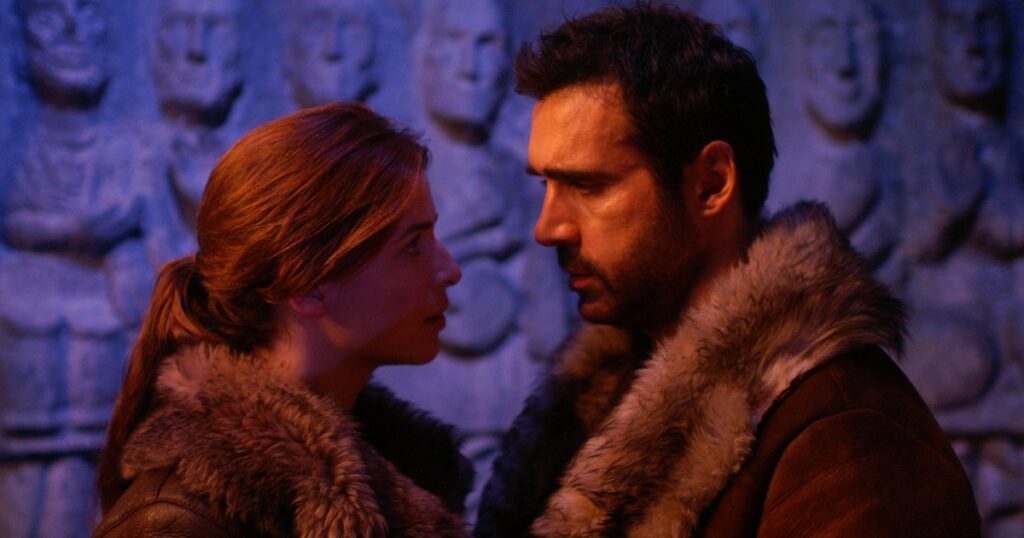
Highlander: The Source was essentially erased from the series
On the topic of DVD releases, the 2008 DVD release of Highlander: The Series included a short film titled Reunion. The 17-minute short was written by Abramowitz and directed by Donald Paonessa, both longtime alumni of the TV show. The short essentially ignores and bypasses the events depicted in The Source, picking up in 2008, roughly a decade after the show concluded.
One year later, in 2009, Abramowitz essentially disowned The Source, calling it a “bad dream” that Duncan had at the Highlander Worldwide Convention in Los Angeles. As a result, most diehard fans have wiped the story from the official Highlander canon and tried to escape their own nightmarish experience watching the flick.
The critical response to Highlander: The Source
As for the film’s greater reception, it earned scathing reviews across the board. A 3.0 IMDb rating wasn’t bad enough. The movie also earned an 18% Popcornmeter rating on Rotten Tomatoes. IGN gave the movie a 1/10, while critics and fans largely agreed that it was a cheap and misguided continuation of the franchise.
The finished product wasn’t only poorly written and badly made. In the quest to try something new in Connor MacLeod’s absence, the creators fundamentally altered the core mythology and turned fans against them through one baffling decision after another.
Let’s take Adrian Paul’s profoundly disappointed response as an example. In 2022, Paul recorded a video voicing his frustrations with the overall experience, stating:
“The Source was a sore point for a lot of people, as it was for me. When we first got the script, I saw the scenes, as did Peter Wingfield, and we said, ‘this is really good, this is a great piece of quality.’ When I got the script about three or four weeks later, it wasn’t the one I had been reading. Unfortunately, when you start with something like that, it didn’t really go the way it was supposed to go. And that goes down to a lot of the factors that are spoken about in the movie industry: there are a lot of different things that can go wrong during the process of actually making a movie. And this is one of the things that started from day one where we didn’t have a script that was up to par.”
Beyond its widespread critical evisceration, The Source ultimately squandered nearly the entire $13 million budget Lionsgate had earmarked for the production. Since it went straight to cable, it could not recoup its budget through theatrical ticket sales. Instead, Lionsgate earned roughly $213,000 through selling the rights to the Sci-Fi Channel and through DVD sales.
The death of William Panzer
Adding fatal injury to costly insult, William Panzer died in March 2007, a month after the Russian cut was leaked online and six months before The Source premiered on television. The producer was ice skating near his home in Idaho when he fell and suffered fatal blunt force trauma to the head.
The Source and the anime film Highlander: The Search for Vengeance are both dedicated to Panzer’s memory, which is a touching honor. But the tragedy still underscores the black cloud that seemed to swirl around the entire production.
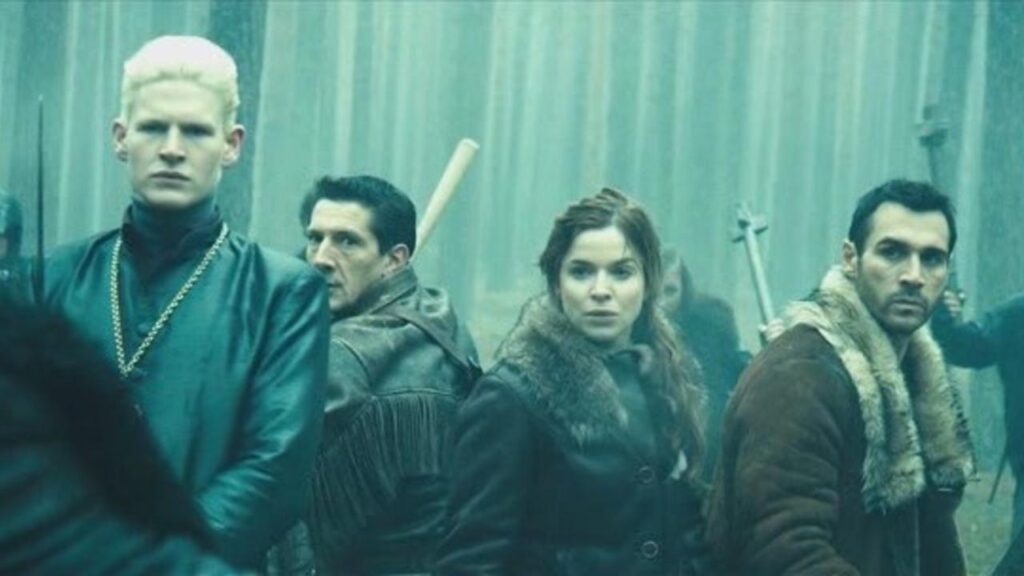
Was Highlander: The Source the death blow for the franchise?
Looking back after nearly two decades, it’s hard not to point to The Source as Highlander’s crushing death blow. In an attempt to fuse the TV series with the film franchise, the producers lost their way amid countless script rewrites, alienating Adrian Paul and fans in the process and nullifying the overarching mythology with a misguided retcon that the IP has struggled to move past.
Although Paul agreed to return with a pay raise and producer credit, he was just as let down by the finished product as the rest of us.
Due to the poor execution of an already questionable premise, The Source bears the dubious distinction of being the only Highlander installment not released theatrically in North America, resulting in a sad straight-to-cable release and an uproarious backlash from the fanbase.
What’s next for Highlander?
Of course, Highlander isn’t dead yet. Lionsgate made several efforts to revive the property after The Source, and the franchise has now moved into another attempt at a big screen comeback. Henry Cavill is set to portray Connor MacLeod in the upcoming Highlander reboot, with Russell Crowe playing Ramirez and Dave Bautista as The Kurgan. Chad Stahelski, director of all four John Wick movies, is directing the new film. The reboot has been in production in Scotland, although a release date has yet to be announced.
So, until the new addition cleanses our palate after the indigestibly bitter last dish, that, dear friends, is the wild and weird ride of Highlander: The Source.
A couple of previous episodes of this show can be seen below. For more, check out the JoBlo Horror Originals YouTube channel—and don’t forget to subscribe!











The comment section exists to allow readers to discuss the article constructively and respectfully, focused on the topic at hand.
What’s Not Allowed