
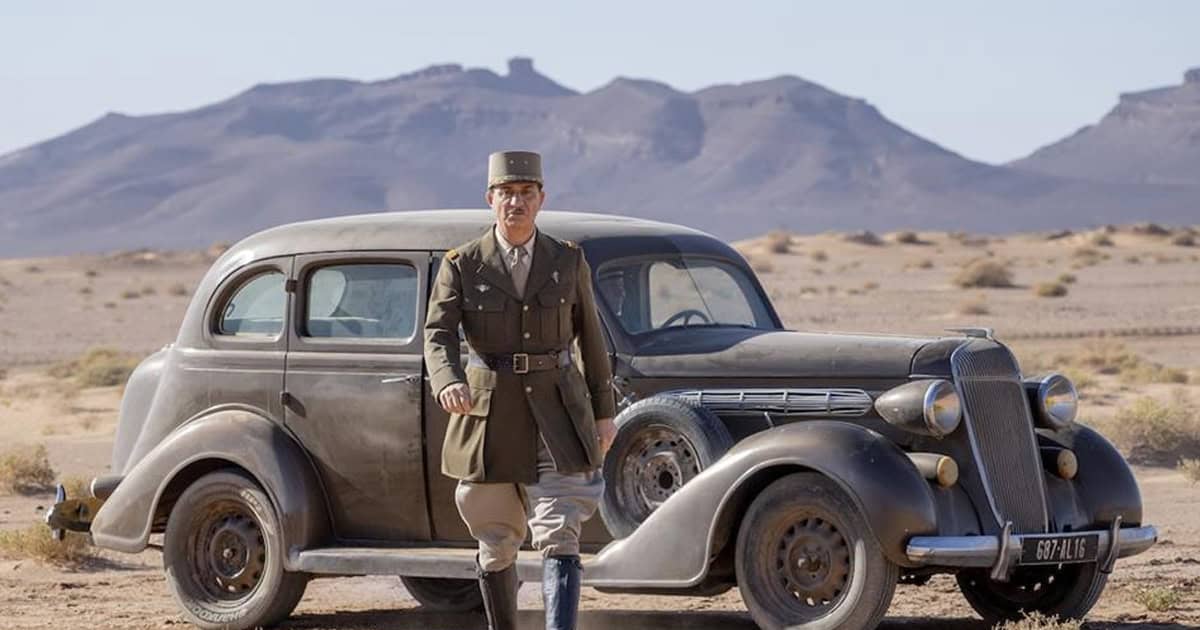

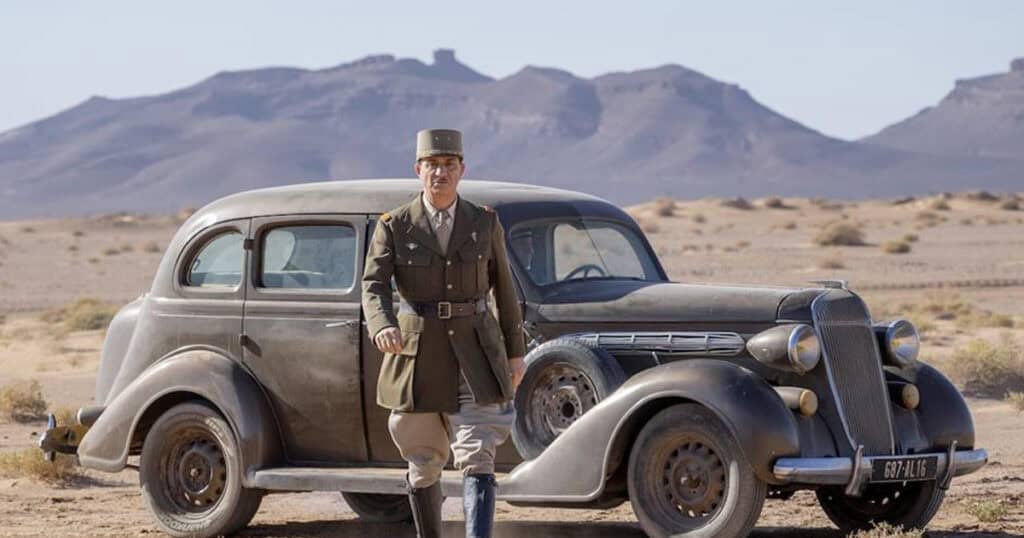
PLOT: After the French defeat, General Charles de Gaulle flees France for the UK, where he becomes the leader of Free France, a resistance army bent on fighting Nazi Germany and liberating the country from its occupiers.
REVIEW: De Gaulle: Tilting Iron is a two-part French epic chronicling the life of Charles de Gaulle, who rose from being a French officer in the Great War to a general and eventually the leader of the Free France resistance movement, and — in the post-war period — the Prime Minister and eventual President of France. The first part of the hoped-for blockbuster saga appropriately made its debut here at Cannes, and for a World War II history buff such as myself, proved to be a very entertaining watch.
In fact, despite running a lengthy 160 minutes, I could have immediately started up the second part of the saga, but alas, it’s not due out until later this summer in France, with there being no telling when we’ll get it stateside. Hopefully it gets picked up by a streamer like Netflix, as it’s exceedingly well made, with it being an epic tale that’s as technically polished as any American war film. The first half takes place between the fall of France and the eventual success of Operation Torch, where the Allies were able to secure a major victory in Algeria shortly after the United States entered the war.
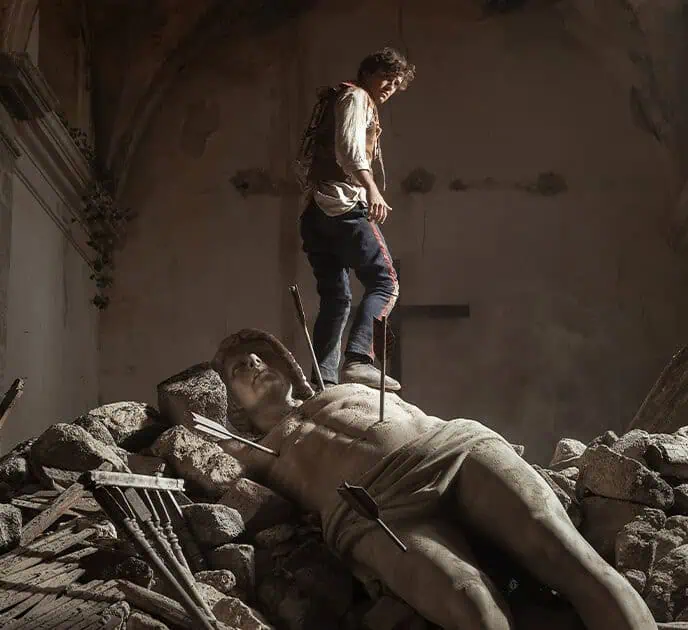
Simon Abkarian is terrific as de Gaulle, with the story of his exile and return as the head of the French resistance being compelling stuff. Director Antonin Baudry and co-screenwriter Bérénice Vila have based the film on British historian Julian Jackson’s epic biography of de Gaulle, with it aiming to be the definitive film based on his life. Certainly, there’s never been one made with the resources put into this, with it being an epic in every sense of the word. It has a sprawling scale, with epic battle sequences, excellent VFX, and a stunning score by All Quiet on the Western Front composer Volker Bertelmann, who gives it a modern feel.
One thing De Gaulle is not is simply a series of battle sequences. Anyone who knows about French history, particularly as far as WWII goes, knows that a lot of behind-the-scenes work went into de Gaulle being able to build his forces outside of France, which was occupied by the collaborationist Vichy government. Sentenced to death in absentia by his former compatriots, de Gaulle, with little in the way of resources, has to humble himself before Winston Churchill (played by Simon Russell Beale, who’s played him in several other productions including rhe underrated Operation Mincemeat) while assembling an exiled force which, little by little, is able to retake territory. You follow de Gaulle as he tries to establish the Free French resistance, with most of the film revolving around him building military might, although seeds are sprinkled throughout involving the on-the-ground French resistance, with Jean Moulin — one of the great heroes of the resistance (who has his own biopic playing in competition here at Cannes) — part of the story in a small role.
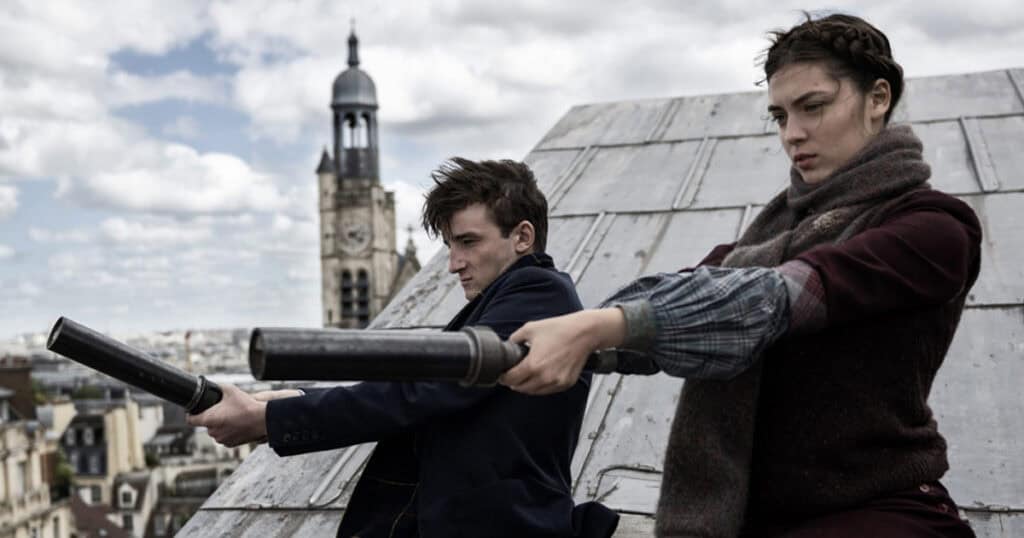
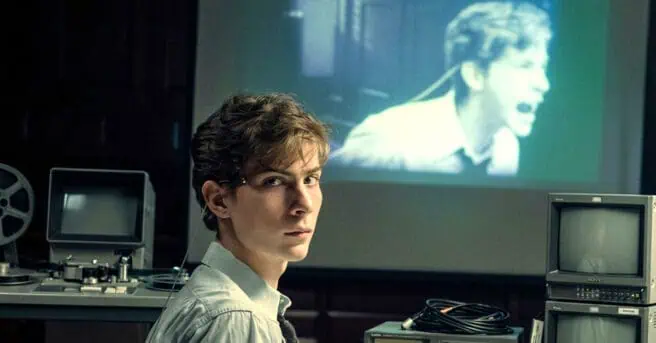
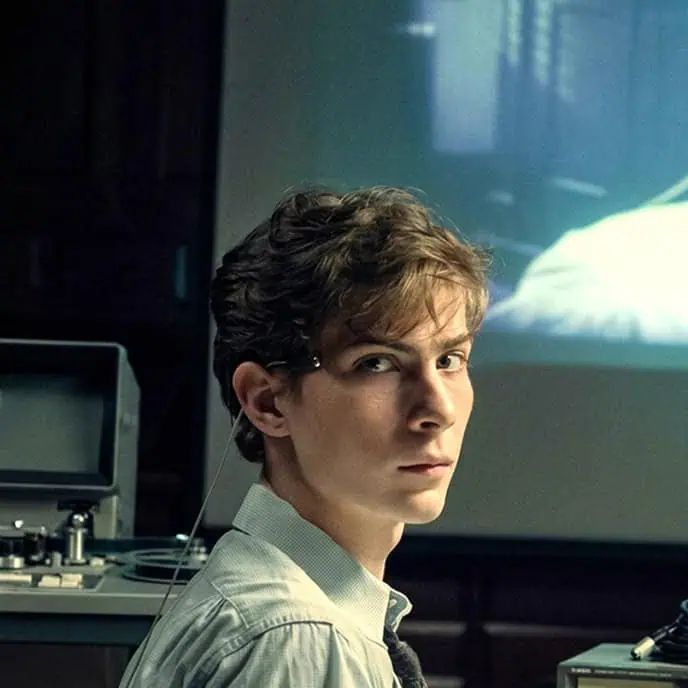
The film is complemented by sequences involving a young French student, Fernand (Florian Lesieur), who is involved with the beginnings of the French resistance in Paris and befriends two Jewish siblings who become caught up in the Holocaust (let us not forget that over 25% of the Jewish population of France was eventually killed in concentration camps following roundups by collaborationist French officials). It adds some human drama, with his final actions in Algeria adding a nice button onto an already compelling film.
Hopefully Western audiences get a chance to see both parts of De Gaulle, with a streaming release likely being its best bet for North America, even if it was clearly made for the big screen (I saw it on an IMAX screen here, and it played well). For WWII history buffs, this is an event.








The comment section exists to allow readers to discuss the article constructively and respectfully, focused on the topic at hand.
What’s Not Allowed