
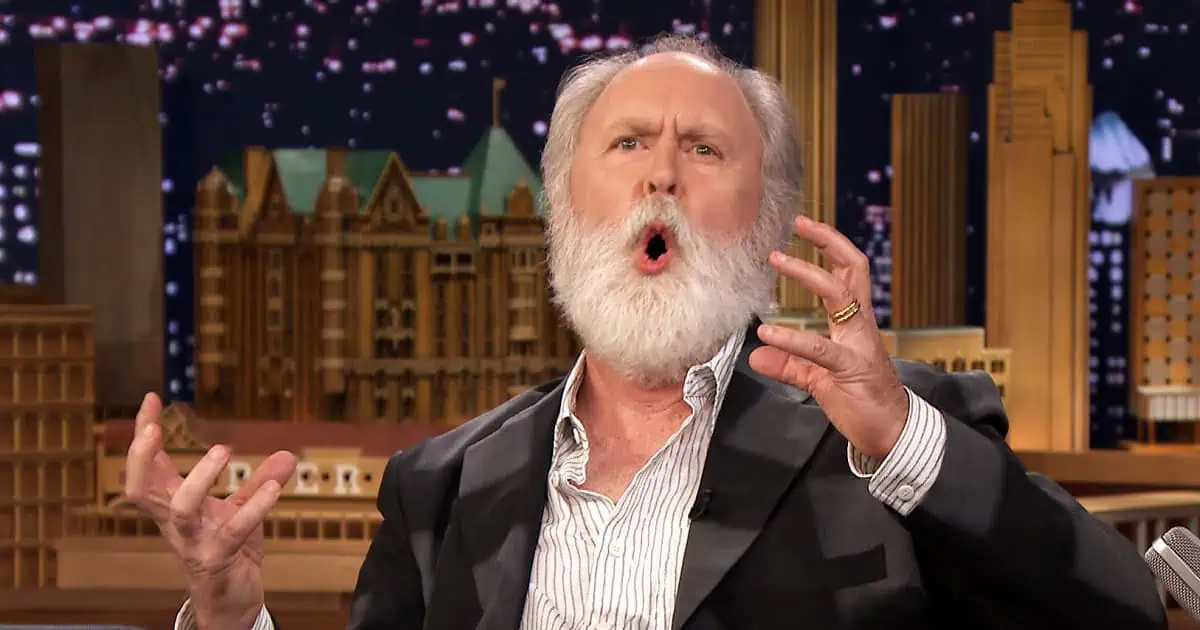
Before Kelsey Grammer became Frasier Crane, the role almost went to someone very different. And television history only shifted because John Lithgow said no.
In a behind-the-scenes account of Cheers’ unexpected breakout character, it turns out that Frasier Crane wasn’t originally envisioned as a long-running character. In fact, when he was first introduced in Season 3 of Cheers, he was only there for a very specific purpose: as a plot device to bring Diane Chambers back into the bar. At the time, no one involved in the show could have predicted that Frasier would evolve into one of TV’s most successful spin-off characters.
But the first step in that journey almost looked completely different.
“We Offered the Part to John Lithgow”
According to Cheers director and co-creator Jim Burrows, the production team envisioned a specific actor playing Frasier, and it wasn’t Kelsey Grammer.
“We offered the part to John Lithgow,” Burrows revealed in the book Top of the Rock: Inside the Rise and Fall of Must See TV. At the end of Season 2, Diane had left Cheers, and it looked like she’d be gone for good. Between seasons, she suffered a nervous breakdown and checked into a psychiatric hospital, where she underwent treatment and met psychiatrist Dr. Frasier Crane, with whom she began a romantic relationship.
For the start of Season 3, the expectation was simple: Frasier would serve the storyline, resolve the immediate plot arc, and disappear after a few episodes.
Lithgow, already an accomplished stage and screen actor, was approached for the role, but he wasn’t interested in committing to television at that time.
John Lithgow’s “No” Changed TV History
Lithgow’s response redirected television history.
“I just said, ‘No, I don’t want to do Frasier,’” Lithgow recalled. “I barely even remembered that. It was like swatting a fly away. At that time, I just wasn’t going to do a series.”
It was a casual rejection of a role that, at the time, didn’t appear to carry long-term significance. There was no indication that Frasier would outgrow Cheers, no hint of a spin-off, and certainly no suggestion that the character would become one of the defining sitcom figures of the next several decades.
Lithgow moved on, but the role still needed to be filled.
Enter Kelsey Grammer
With Lithgow out, the production team continued searching. At the time, Kelsey Grammer was performing in Sunday in the Park with George alongside Mandy Patinkin when a Paramount casting director heard about him through a recommendation. That recommendation came through industry connections, leading him to the casting process.
Grammer would later describe being called in for what initially seemed like a standard audition, only to find himself reading for a character called Frasier Nye. When he read the material, something clicked.
“I thought, ‘I can play this. I can get this part.’”
A Character No One Expected to Last
Frasier Crane wasn’t designed to last. Even during casting, he was still expected to be a short-term storyline device. That changed the moment Kelsey Grammer appeared on tape.
“When we saw him, we all started laughing,” Burrows said. There was something instantly compelling about Grammer’s performance that elevated what had been written as a functional role into something enduring.
From there, Frasier began his evolution from supporting character to Cheers regular, to spin-off star of Frasier, which would go on to become one of the most acclaimed sitcoms in TV history.
The What-If That Still Echoes
Looking back, Lithgow’s decision isn’t really a “missed opportunity.” It’s a reminder of how fragile entertainment history can be. A single casting decision, made casually, helped shape one of television’s most iconic characters. It also raises a question: how many defining performances exist only because someone else said no?
In this case, Frasier Crane didn’t just become a character. He became a legacy, one that might have belonged to John Lithgow had the timing, interest, or circumstances been slightly different. Instead, Lithgow walked away. Kelsey Grammer walked in. And television comedy was never quite the same.














The comment section exists to allow readers to discuss the article constructively and respectfully, focused on the topic at hand.
What’s Not Allowed