
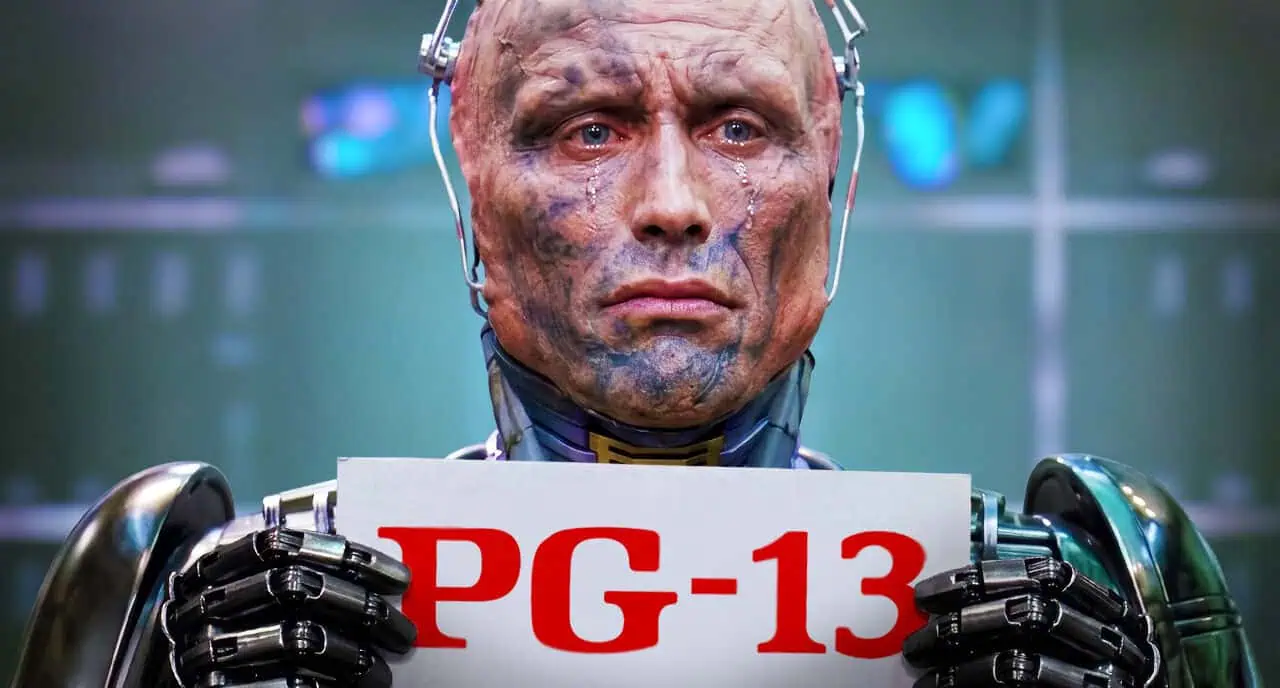
When a movie franchise reaches its third installment, studios usually look for a way to keep audiences interested. Sometimes it works. Friday the 13th Part III embraced 3D, A Nightmare on Elm Street 3 brought Wes Craven back, and Halloween III: Season of the Witch attempted to reinvent the entire series as an anthology. Then there’s RoboCop 3.
Instead of refreshing the franchise, it stripped away nearly everything that made the first two films memorable. The violence was toned down to a PG-13 rating, Peter Weller was gone, Frank Miller’s screenplay was heavily rewritten, and the biting satire that defined the series was largely missing.
So what happened? Why did RoboCop 3 fail? And how did one of the smartest action franchises of the 1980s lose its soul? Let’s find out.
The Original RoboCop Set an Impossible Standard
Before we can understand why RoboCop 3 failed, we have to look at what made the original so special. Released in 1987, RoboCop wasn’t just another sci-fi action movie. Directed by Paul Verhoeven, it blended ultra-violent action, horror, dark comedy, and razor-sharp social satire into something audiences hadn’t seen before. Underneath all the exploding squibs and outrageous gore was a surprisingly emotional story about Alex Murphy, a good cop brutally murdered and rebuilt as a corporate product. It was equal parts Frankenstein, Blade Runner, and action blockbuster, all wrapped in one unforgettable package.
Peter Weller didn’t simply play RoboCop, he became RoboCop. His restrained physical performance and subtle humanity beneath the armor gave the character a soul that no amount of special effects could replace.
The film earned over $54 million worldwide against a $14 million budget, received strong reviews, and quickly became one of Orion Pictures’ biggest successes. A sequel was inevitable.
RoboCop 2 Showed the First Cracks
Although RoboCop 2 remains popular with many fans, the production revealed problems that would become much bigger during the third film. Development was rushed after a writers’ strike disrupted production. Comic book legend Frank Miller was brought in to write the screenplay, but his ambitious script was repeatedly rewritten by the studio. Ironically, Orion also questioned whether Peter Weller even needed to return, believing audiences wouldn’t care who was inside the suit.
Thankfully, cooler heads prevailed. Weller returned, bringing the same quiet humanity that made Alex Murphy compelling in the original film.
Even with studio interference and an inflated budget, RoboCop 2 still retained much of what fans loved. It was violent, profane, cynical, and filled with the dark humor that defined the series. Critics were more divided this time around, and the movie earned less than its predecessor, but there was still plenty of excitement for a third and even a fourth film. Unfortunately, that excitement wouldn’t last.

The Franchise Was Already Becoming Kid-Friendly
Many fans blame RoboCop 3 for turning the franchise into family-friendly entertainment, but that shift actually began years earlier. Like Rambo, The Toxic Avenger, and Swamp Thing, RoboCop received a Saturday morning cartoon despite being based on an extremely violent R-rated film. Naturally, the cartoon led to action figures, lunch boxes, and every other piece of merchandise imaginable.
The irony was hard to miss. One of the original movie’s biggest themes was corporate greed and commercialization, yet the franchise itself was quickly becoming a merchandising machine.
Video games followed the same trend. The arcade games still featured RoboCop blasting his way through endless criminals, but once those games were ported to home consoles, much of the violence was toned down. As the series expanded beyond theaters, studios realized RoboCop could appeal to younger audiences without all the blood and gore.
That idea would have enormous consequences for the next movie.
The Troubled Production of RoboCop 3
If RoboCop 2 exposed cracks in the foundation, RoboCop 3 drove straight through them. The sequel was originally slated for a 1992 release but was delayed until late 1993 after Orion Pictures ran into serious financial trouble. By the time it finally reached theaters, much of the momentum built by the first two films had disappeared.
Behind the scenes, the creative team looked promising on paper. Fred Dekker, best known for the cult classics Night of the Creeps and The Monster Squad, was hired to write and direct. He initially planned to write the screenplay with longtime friend Shane Black before ultimately teaming with Frank Miller, whose ideas from RoboCop 2 carried over into the new project.
Unfortunately, history repeated itself. Just as it had on RoboCop 2, Miller’s screenplay was heavily rewritten by the studio until very little of his original vision remained. Years later, he would adapt both rejected RoboCop screenplays into comic books, and many fans still consider those stories closer in spirit to the original film than what ultimately reached theaters.
The cast featured several familiar faces, including Nancy Allen returning as Officer Lewis alongside Mako, Rip Torn, CCH Pounder, Stephen Root, and Daniel von Bargen. One name, however, was missing. Peter Weller. Alex Murphy would instead be played by Robert John Burke.
Now, Burke deserves some credit here. He’s a terrific character actor who has turned in memorable performances throughout his career, including the title role in the criminally overlooked Dust Devil. But replacing Peter Weller was an impossible assignment. To make matters worse, Burke inherited a RoboCop suit built specifically for Weller’s body. Because of budget cuts, the production reused the existing armor instead of constructing a new one, leaving Burke to perform in a costume that didn’t properly fit.
Then came the decision that would define the movie forever. Orion mandated that RoboCop 3 be rated PG-13. For a franchise built on uncompromising violence, dark satire, and adult themes, it was a dramatic shift, and one the series never fully recovered from.
What RoboCop 3 Is About
The story picks up sometime after RoboCop 2. Old Detroit has fallen completely under the control of OCP, which plans to replace it with the long-promised Delta City. The remaining residents refuse to leave, leading OCP to unleash a brutal private security force known as the Urban Rehabilitators or simply, the Rehabs.
During one confrontation, Officer Lewis is murdered by Rehab commander Paul McDaggett, while RoboCop is left heavily damaged trying to protect innocent civilians. After being repaired by former OCP scientist Dr. Lazarus, Murphy has his restrictive Fourth Directive removed, allowing him to act against the corporation that created him. He even receives a jetpack upgrade because apparently every action hero in the early ’90s needed one.
RoboCop joins the resistance as they fight back against OCP, McDaggett, and Kanemitsu Corporation, the Japanese company financing Delta City. When video evidence exposing OCP’s crimes reaches the public, the corporation’s support collapses, Detroit’s police force sides with the resistance, and the villains are ultimately defeated.
On paper, it isn’t a terrible premise. In fact, many of the story’s ideas fit naturally within the world established by the first two films. The problem wasn’t the basic plot. It was everything surrounding it.

Why RoboCop 3 Failed
There isn’t one single reason RoboCop 3 failed. It was the result of several creative decisions that all pulled the franchise away from what made it special. Some were unavoidable, others were entirely self-inflicted. Together, they created a sequel that felt like RoboCop in appearance but not in spirit.
Let’s start with the biggest one.
1. Peter Weller Was the Soul of RoboCop
When people think of RoboCop, they don’t think of the armor. They think of Peter Weller. The original film worked because Weller never treated Murphy like a machine. Even after becoming RoboCop, tiny movements, pauses, and subtle changes in body language reminded us there was still a man trapped inside the metal.
That humanity became even more important in RoboCop 2, where Murphy slowly regained pieces of his former life. Weller’s understated performance grounded even the film’s most outrageous moments.
Robert John Burke never really had that opportunity. Part of that wasn’t his fault. The script gave Murphy far less emotional material, leaving Burke to spend most of the movie functioning as an action hero rather than a tragic human being.
Still, the difference is impossible to ignore. Burke plays RoboCop. Weller is RoboCop.
What’s especially frustrating is that Peter Weller actually wanted to return. For years, fans assumed he’d simply lost interest in the role. In reality, he met with Fred Dekker, discussed the screenplay, and was interested in coming back. The problem was scheduling. Weller had already committed to David Cronenberg’s Naked Lunch, and the productions overlapped.
It wasn’t a case of an actor abandoning the franchise. It was simply bad timing.
Ironically, Weller would eventually return to voice Alex Murphy decades later in RoboCop: Rogue City, reminding fans just how much of the character’s identity came from the man behind the visor.
2. Frank Miller’s Vision Was Lost
Frank Miller understood RoboCop. His scripts leaned even harder into the franchise’s political satire, corporate corruption, and over-the-top violence. They were ambitious, strange, and unmistakably his.
The problem was that Orion didn’t want Frank Miller’s RoboCop. They wanted a safer, more commercial blockbuster.
Just as they had with RoboCop 2, the studio repeatedly rewrote Miller’s screenplay until very little of his original work remained. Miller was so dissatisfied with the final film that he later adapted his original ideas into comic books, giving fans a chance to see what might have been.
Whether you think Miller’s scripts were perfect or not is beside the point. The important thing is that they had a clear creative vision. The finished movie doesn’t.
Instead, RoboCop 3 often feels like it’s caught between two completely different films: one trying to continue the dark satire of the originals and another trying to become a family-friendly science-fiction adventure. That identity crisis is visible in almost every scene.
3. Fred Dekker Was Given an Impossible Job
It’s easy to point fingers at Fred Dekker because he directed RoboCop 3, but I don’t think the blame belongs solely to him. In fact, Dekker seemed like a surprisingly good choice. By the early ’90s, he’d already directed two beloved cult classics: Night of the Creeps and The Monster Squad. Both films showcased his love of genre filmmaking, practical effects, and memorable characters. More importantly, they felt like movies made by someone with a genuine passion for horror and science fiction.
Dekker wasn’t some studio-for-hire director. He was a filmmaker with a distinct voice. The problem was that RoboCop 3 didn’t allow him to use it.
Unlike Night of the Creeps, which proudly embraced its R-rated horror roots, RoboCop 3 came with restrictions before cameras even started rolling. Orion wanted a PG-13 movie that could appeal to younger audiences, sell more merchandise, and broaden the franchise’s appeal. That’s a difficult assignment for any director. It’s nearly impossible when you’re following Paul Verhoeven and Irvin Kershner.
Verhoeven made the original RoboCop one of the sharpest pieces of social satire ever disguised as an action movie. Every outrageous squib hit, every commercial parody, and every grotesque death served a purpose. The violence wasn’t there simply for shock value; it reinforced the film’s cynical view of corporations, media, and American consumerism.
Kershner approached RoboCop 2 differently, but he still understood the world Verhoeven had created. The sequel expanded Murphy’s humanity while preserving the franchise’s dark humor and brutal edge.
Dekker inherited that legacy while being told to sand off nearly every rough edge. To his credit, he has never spent decades blaming the studio for the film’s failure. In interviews, he’s accepted responsibility and admitted that the finished movie simply didn’t work. That honesty is refreshing, but it’s also hard not to wonder what might have happened under different circumstances.
Imagine if Peter Weller had returned. Imagine if Shane Black had remained involved with the screenplay. Imagine if Frank Miller’s ideas had survived intact. Would RoboCop 3 have rivaled the original? Probably not. Would it have been a much stronger sequel? I think there’s a very good chance.
Sadly, the film’s failure effectively ended Dekker’s directing career. Outside of a handful of writing projects (including the much-maligned The Predator in 2018) he never again received the opportunity to direct a major studio feature. In that sense, RoboCop 3 didn’t just hurt the franchise. It derailed the career of a filmmaker who deserved another shot.
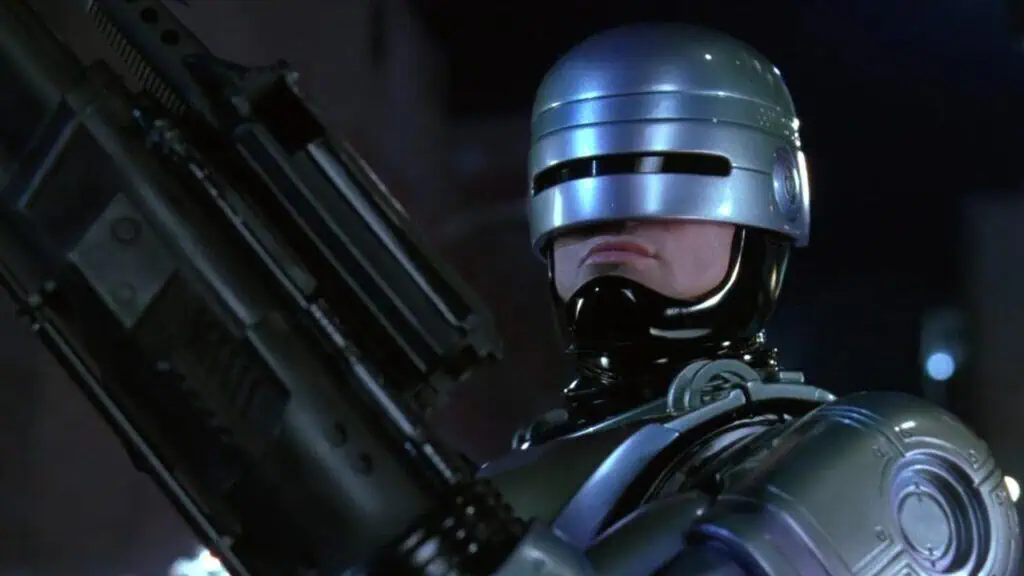
4. The PG-13 Rating Took Away Everything That Made RoboCop Unique
If there’s one decision that defines why RoboCop 3 failed, it’s this one. The PG-13 rating.
Now, let’s be clear. A PG-13 rating doesn’t automatically make a movie bad. Some of the greatest action films ever made carry that rating. The problem is that RoboCop was never built to be one of them.
The original film was unapologetically adult. It pushed the limits of the MPAA, requiring multiple edits just to avoid an X rating. Even then, audiences embraced it because the violence wasn’t empty spectacle. It was exaggerated, satirical, and inseparable from the story Verhoeven wanted to tell. Murphy’s execution is horrifying because it needs to be. ED-209’s boardroom malfunction is absurdly graphic because it’s mocking corporate incompetence. Emil’s toxic waste death is cartoonishly gruesome because RoboCop exists in a heightened, almost comic-book version of reality. Remove that edge, and the satire starts falling apart.
That’s exactly what happened in RoboCop 3. The violence became bloodless. The language was softened. The humor became safer. Even RoboCop himself felt less intimidating. For the first time, the franchise seemed more interested in attracting younger viewers than staying true to its identity.
Ironically, that decision ignored what made the original movie successful in the first place. Nobody loved RoboCop because it was family friendly. They loved it because it wasn’t. The movie was smart enough to challenge audiences while still delivering outrageous action and unforgettable one-liners.
RoboCop 3 removes nearly all of that. It doesn’t just lose the gore, it loses the satire, the anger, and Murphy’s humanity. Most importantly, it loses the confidence to be unapologetically RoboCop.
That’s why the movie feels strangely hollow. It still has the armor, the Auto-9, and OCP, but it no longer feels like the same franchise. It’s a textbook example of a studio misunderstanding why audiences connected with a property in the first place. Trying to make RoboCop appeal to everyone ultimately made it resonate with almost no one.
The Damage Lasted for Years
RoboCop 3 wasn’t just a disappointing sequel. It effectively brought the theatrical franchise to a standstill. The film received the weakest reviews of the series and underperformed at the box office. Plans for future movies quietly disappeared, and RoboCop spent much of the next two decades bouncing between television shows, animated series, and direct-to-video projects. Some of those productions had their fans, but few captured the tone of the original film.
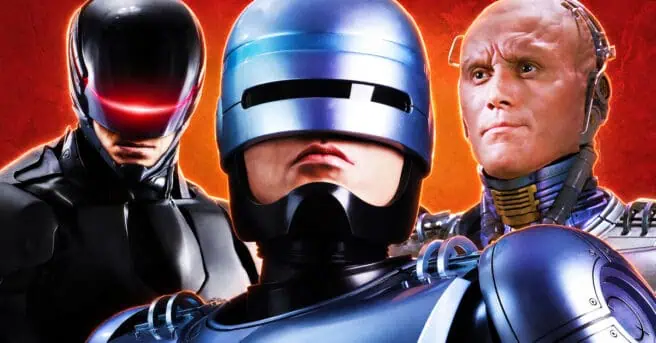
The live-action television series stripped away much of the violence to accommodate syndication. The Canadian-produced miniseries experimented with darker ideas but never gained much traction. Even the 2014 remake, with a talented cast led by Joel Kinnaman, Gary Oldman, Michael Keaton, Samuel L. Jackson, and Jackie Earle Haley, felt strangely restrained. It wasn’t a terrible movie. It was simply… forgettable. Like RoboCop 3, it understood the iconography of the franchise without fully capturing its personality.
For more than twenty years, it seemed like Hollywood knew what RoboCop looked like. It just didn’t remember who he was.
How RoboCop Finally Found Its Way Back
For a long time, it looked like RoboCop 3 had done permanent damage to the franchise. The movies were finished, the television projects never caught on, and the 2014 remake failed to spark a new series. On screen, Alex Murphy had become little more than a recognizable brand.
Ironically, the character’s redemption didn’t come from Hollywood. It came from comics and video games.
Frank Miller finally got to share his original ideas through Frank Miller’s RoboCop and Frank Miller’s RoboCop: Last Stand. While they aren’t direct replacements for the films, they preserve the darker satire, violence, and corporate cynicism that made the original RoboCop so distinctive. For many fans, they’re the closest thing we’ll ever get to Miller’s intended sequels.
Then there was RoboCop Versus The Terminator. On paper, it sounds like the kind of crossover that should never work. Instead, it became one of the franchise’s most entertaining spin-offs, matching two of cinema’s greatest cyborgs in a story that respected both universes. It even inspired a pair of well-regarded 16-bit video games that embraced the over-the-top action fans expected.
But the real turning point came decades later. By then, video games had evolved. They were no longer expected to tone down violence for younger audiences, and developers finally had the technology to recreate the gritty, oppressive Detroit that fans remembered from 1987. More importantly, they brought back the one person the franchise had been missing: Peter Weller.
His appearance as RoboCop in Mortal Kombat 11 reminded fans just how inseparable the actor was from the character. Hearing Weller deliver Murphy’s dry wit again instantly restored something that had been absent for years. That momentum continued with RoboCop: Rogue City in 2023 and its follow-up, RoboCop: Unfinished Business. Rather than rebooting the character or modernizing him beyond recognition, the games embraced everything that made the original films work. Detroit was filthy. OCP was as corrupt as ever. The satire was back. The violence was unapologetic. Most importantly, Murphy once again felt like Murphy.
Set between RoboCop 2 and RoboCop 3, Rogue City almost feels like the sequel many fans had wanted all along. It’s funny, surprisingly faithful to the films, and filled with callbacks that never feel forced. If you’ve never played it, it’s one of the easiest recommendations I can make to any RoboCop fan.
Ironically, it took a video game to remind everyone what made RoboCop special.

Final Thoughts
So, why did RoboCop 3 fail? It wasn’t because audiences suddenly stopped caring about RoboCop. It wasn’t because Fred Dekker lacked talent. It wasn’t even because Peter Weller couldn’t return. It failed because the franchise forgot its own identity.
The original RoboCop was never just an action movie. It was a vicious satire of corporate greed, media sensationalism, and urban decay wrapped inside one of the greatest science-fiction films ever made. The violence wasn’t there simply to shock audiences. The profanity wasn’t included just to earn an R rating. Every outrageous moment reinforced the film’s themes and made Murphy’s struggle feel more human.
RoboCop 3 stripped away those elements in an effort to appeal to a broader audience. In doing so, it appealed to almost no one. That’s the real tragedy of the film.
Beneath the compromises, there are flashes of an interesting movie. Frank Miller had compelling ideas. Fred Dekker had proven himself to be a talented filmmaker. Robert John Burke gave an honest performance under nearly impossible circumstances. Even the story itself contains the seeds of a worthy continuation. But none of those pieces were allowed to come together.
Instead, RoboCop 3 became a cautionary tale about studio interference and the dangers of chasing a wider audience at the expense of what made a franchise successful in the first place.
Fortunately, that’s not where the story ends. Thanks to comics, modern video games, and Peter Weller’s eventual return to the role, RoboCop’s legacy has recovered in ways few fans could have predicted back in 1993.
If there’s one lesson to take away from RoboCop 3, it’s this: You can change actors and directors. You can even change the story. But when you remove the heart, the satire, and the uncompromising edge that define a franchise, you’re left with something that may look familiar, but it isn’t RoboCop.








The comment section exists to allow readers to discuss the article constructively and respectfully, focused on the topic at hand.
What’s Not Allowed