
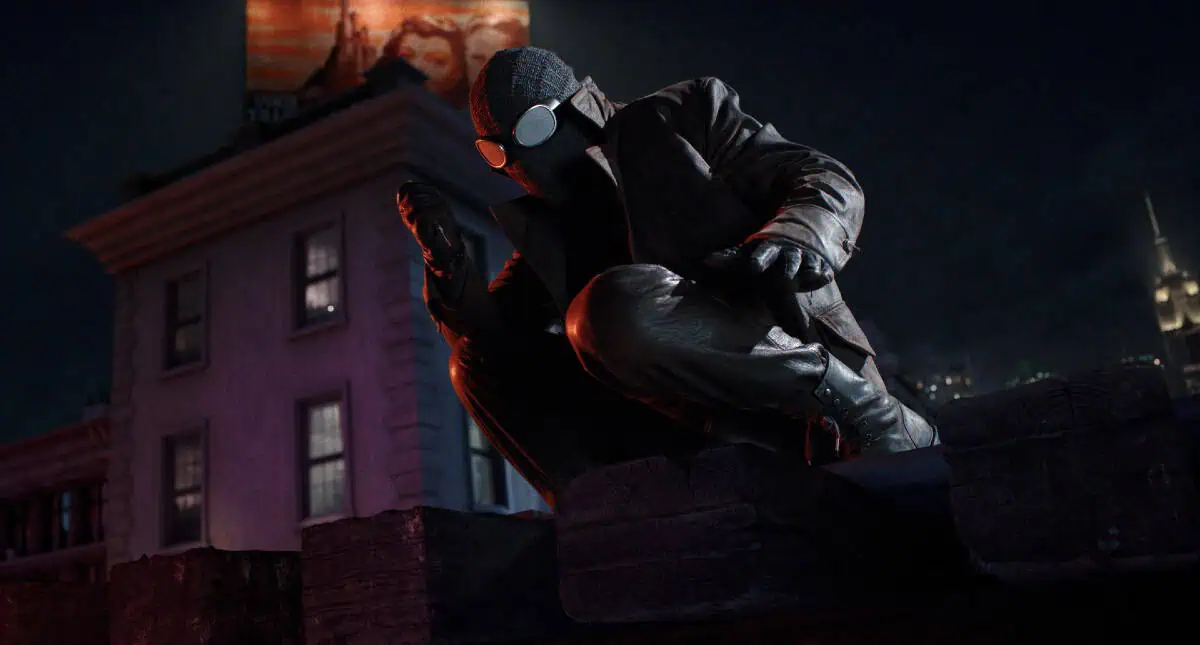
Plot: Tells the story of Ben Reilly, an aging and down-on-his-luck private investigator in 1930s New York, who is forced to grapple with his past life as the city’s one and only superhero.
Review: Nicolas Cage has played several superheroes in his career. First, he starred in two mediocre Ghost Rider films. Then he played Big Daddy in 2010’s Kick-Ass before a brief cameo in 2023’s The Flash, which brought his never-made Superman movie to life. Cage has also voiced Superman and Peter Parker as Spider-Man Noir in the Spider-Verse films. Now, Phil Lord and Christopher Miller’s acclaimed animated Marvel movies inspire an original shift into live action with Nicolas Cage playing a distinct variation of his black-and-white detective character. Spider-Noir, set in a parallel world to the Sony Spider-Man Universe, is an alternate take on Cage’s private investigator’s view of the webslinging hero. With a cast of characters straight from the comics, Spider-Noir is a throwback to the classic detective movies of the 1930s, featuring excellent special effects that bring new takes on Spider-Man and his rogues’ gallery to life in the most unique take on a Marvel character yet.
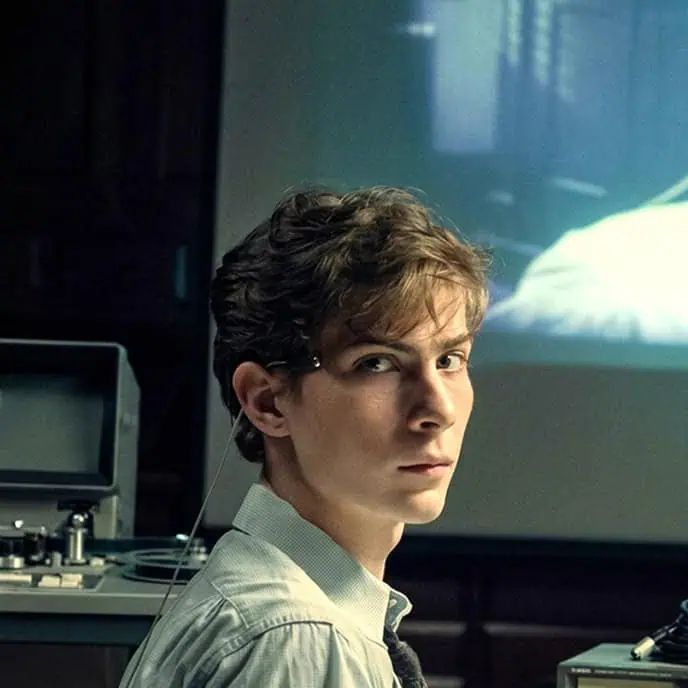
Released in both black-and-white and color versions, the eight-episode first season of Spider-Noir picks up in the 1930s, five years after Ben Reilly (Nicolas Cage) has given up being the masked hero known as The Spider. Working as a private investigator, Reilly laments the death of his love, Ruby, and takes jobs here and there to make ends meet and pay his secretary, Janet (Karen Rodriguez). Reilly’s case brings him face-to-face with someone with superpowers, which leads him directly to lounge singer Cat Hardy (Li Jun Li). A femme fatale with connections to mob kingpin Silvermane (Brendan Gleeson), Reilly realizes he must once again become The Spider to contend with multiple superpowered people like Flint Marko (Jack Huston) and Lonnie Lincoln (Abraham Popoola), whose origin stories are connected to his own.
Spider-Noir evokes all the hallmarks of classic film noir, with Nicolas Cage’s performance an homage to Humphrey Bogart, Jimmy Cagney, and Edward G. Robinson. Cage gets to cut loose with his trademark over-the-top mannerisms and delivery, but this take expands on his animated take of the same character. While the Spider-Verse performance featured a Peter Parker version of the character, this parallel is named after the Spider-Man clone famously introduced in Marvel Comics. His powers are the same as Peter Parker’s, but Cage gets to play with differences that set this performance apart from the one we saw in the Miles Morales-led movies. Cage gets to have a lot of fun in this role, with Reilly going undercover at various points, and the actor plays with fun twists on accents and bizarre traits that add to the fun. Overall, Cage plays the part as if it were written in the era in which it takes place, and for his first lead role in a television series, the Oscar winner delivers some of the best work of his career.

The supporting cast is all great, with familiar Spider-Man characters appearing in new iterations. Jack Huston, who already has the matinee-idol looks of a noir actor, gives Sandman a cool twist, while Abraham Popoola’s Tombstone offers a much more empathetic take on the villain. Brendan Gleeson is perfectly cast as an Irish version of the usually Italian mafioso, while Li Jun Li’s Cat Hardy is an alluring take on Black Cat. Lamorne Morris makes for a great Robbie Robertson, whose ambition and skills as a photographer and reporter balance Cage’s cynical take on Ben Reilly. The eight-episode series does a great job of delivering an overarching narrative that connects the initial cases Reilly works on with a wholly original origin story for The Spider and the villains he encounters. The series manages to capture the hallmarks of what we love about Spider-Man as a character without being beholden to every aspect of Peter Parker. The shift to Ben Reilly as the protagonist allows for some creative freedom, much like what Lord and Miller brought to Miles Morales in Into the Spider-Verse.
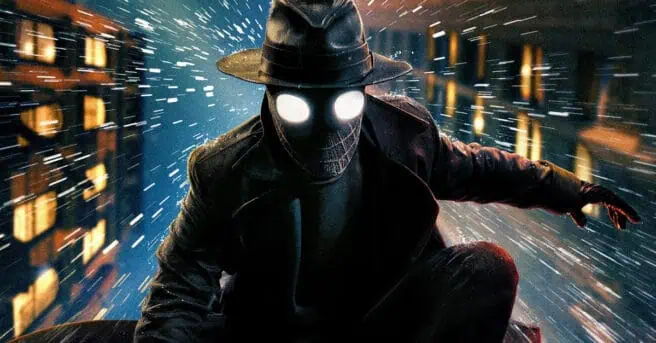
The big question that many may have is the presentation of Spider-Noir. Developed by Oren Uziel, screenwriter of 22 Jump Street and The Cloverfield Paradox, who serves as co-showrunner alongside Steve Lightfoot (Hannibal, The Punisher), Spider-Noir was filmed on black-and-white film and colorized in post-production. Directors on the eight-episode season, including Harry Bradbeer on the first two episodes, followed by Nzingha Stewart, Alethea Jones, and Greg Yaitanes. The “authentic black & white” look adds a crispness to the shadows and urban landscapes of Spider-Noir, with smoky bars and retro scene transitions appropriate to the era. The “True Hue Full Color” is actually a colorized version of the footage that reminded me of the stylized look of the 2004 Jude Law movie Sky Captain & The World of Tomorrow. It is very different from filming in color, which lends a comic-book feel to those episodes. Having watched all eight in both variations, I am not sure which I prefer, as both offer distinct experiences without detracting from the other.
With all eight episodes dropping at once, Spider-Noir is a fantastic gateway for audiences unfamiliar with film noir, allowing them to explore the classic genre. The series also serves as the single best project from Sony’s Spider-Man Universe that does not feature Tom Holland. Nicolas Cage has rarely been better as this character, allowing him to channel his well-known love of cinema and comic books, as well as his quirky approach to inhabiting his roles. Spider-Noir is a spectacular love letter to a bygone era and the best superhero series in a very long time. Watch it in either presentation, and you will find a lot to appreciate from the music and mood to the costumes and special effects. Who would have thought this would end up being one of the best Spider-Man projects ever? I hope we get more seasons that continue to expand on this specific slice of the multiverse.
Spider-Noir premieres with all eight episodes on May 25th on MGM+ and May 27th on Prime Video.















The comment section exists to allow readers to discuss the article constructively and respectfully, focused on the topic at hand.
What’s Not Allowed