


Ever hear the old saying that the definition of insanity is doing the same thing over and over again and expecting a different result? Well, when it comes to horror remakes, doing the exact same thing with only a minor tweak feels nearly as common. Sometimes those changes work. Other times, they absolutely don’t.
Today, we’re looking at two horror remakes that took the general concepts of their original films and added their own twists, with wildly different results. From a childlike villain transformed into a brutal psychopath to so much exploding glass that you’d think the filmmakers owned stock in a window company, these movies show both the best and worst ways to remake a horror classic.
Let’s break down what worked and what definitely didn’t when it came to remaking The Texas Chainsaw Massacre and The Fog.
Horror Remakes Never Really Stop
I think most horror fans would agree that we’d rather get original content than endless remakes. Yet every year, the remake train keeps chugging along. And it’s not hard to understand why. Remakes are a proven commodity. Why gamble on something new when you can just remake Salem’s Lot or Cape Fear again?
Still, not every remake is doomed from the start. Some actually understand how to reinterpret an original film while still respecting what made it work in the first place. And one of the best examples of that is 2003’s The Texas Chainsaw Massacre.
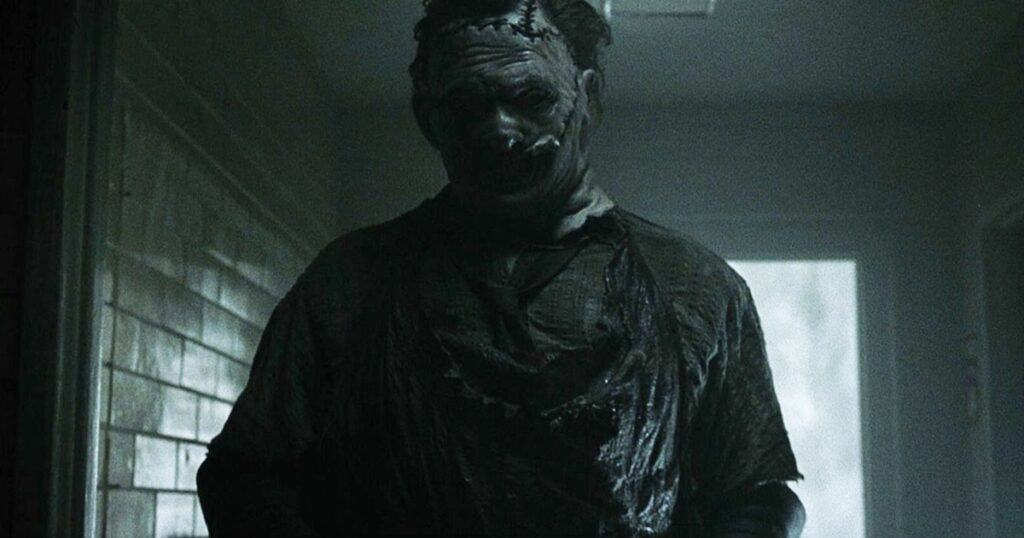
Why The Texas Chainsaw Massacre (2003) Works as a Remake
The 2003 remake succeeds because it follows the bones of the original story while adding its own style, energy, and modern sensibilities, even though the film still technically takes place in the 1970s. The original Texas Chainsaw Massacre follows a group of young people traveling through rural Texas to check whether their grandfather’s grave has been disturbed by grave robbers. While there, they also decide to visit the old family homestead. That’s basically it. It’s a simple premise, but it feels believable. We follow Sally and Franklin Hardesty, along with their friends Pam, Kirk, and Jerry, as they make the unfortunate decision to pick up a hitchhiker who mutilates himself and sends the entire day spiraling into horror.
The remake changes several key elements while keeping the same overall framework intact. Instead of checking a grave, the characters are returning from Mexico with a van full of weed while heading to a Lynyrd Skynyrd concert in Dallas. We’re still following five young adults, but the setup immediately introduces a different energy. And instead of a deranged hitchhiker harming himself, the remake gives us a disturbed young woman who suddenly shoots herself in the van. That single moment changes everything.
The Remake Adds Urgency and Momentum
One of the biggest differences between the original and the remake is pacing. The 1974 film is a slow burn. Characters wander off one by one, unknowingly entering danger until it’s far too late. The remake immediately throws its characters into chaos. Now they’re stuck with a dead body, a destroyed van, illegal drugs they don’t want discovered, and a desperate need to find the authorities. Everyone understands from the very beginning that something is horribly wrong.
That added urgency gives the remake a completely different momentum while still preserving the core premise.
How Leatherface Changed Between Versions
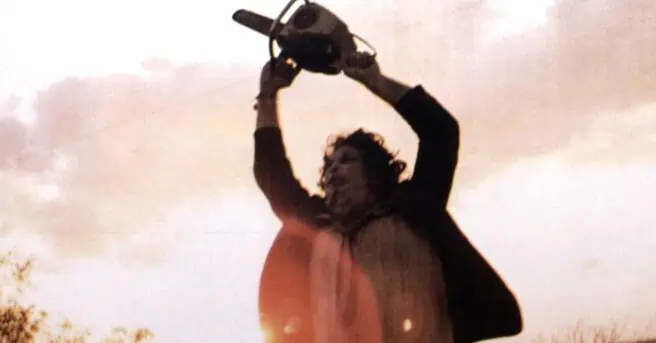
The most dramatic difference between the two films is Leatherface himself. In the original film, Leatherface almost feels like a confused child trapped in a nightmare. Gunnar Hansen plays him as someone who doesn’t fully comprehend his own actions. When people enter his house, he kills them almost instinctively. There’s even vulnerability to him. After several kills, he appears frightened and overwhelmed, like someone panicking rather than reveling in violence.
The 2003 version completely reinvents the character. This Leatherface is closer to a full-blown slasher villain in the mold of Jason Voorhees. He’s massive, aggressive, and openly terrifying. Once he enters the story, he becomes an unstoppable force sprinting after victims with a chainsaw in full view. Andrew Bryniarski’s performance is intense and genuinely intimidating. It’s a much more overt interpretation of the character, but it works for the kind of horror audiences expected in the early 2000s.

The Hewitt Family vs. The Sawyer Family
The remake also expands the family dynamic. The original Sawyer family is disturbing because they feel weirdly plausible. There’s Leatherface, the Hitchhiker, the Cook, and Grandpa, a deeply broken family surviving in isolation.
The Hewitts in the remake feel more theatrical and grotesque. The sheriff, in particular, becomes almost more terrifying than Leatherface himself. While Leatherface acts like a violent tool used by the family, Sheriff Hoyt actively enjoys psychologically tormenting people. He’s cruel, manipulative, and sadistic in ways that feel deeply unsettling.
The remake ramps everything up, but unlike many later horror remakes, those changes still serve the story.
Sally vs. Erin
Sally Hardesty is iconic. Her terrified escape in the original film remains one of the defining images in horror history. The shot of her screaming in the back of the pickup truck is legendary for a reason. But as a character, Sally is mostly reactive. That wasn’t unusual for 1970s horror. Characters like Nancy Thompson and Sidney Prescott hadn’t redefined the “final girl” archetype yet.
Erin in the remake feels much more like a modern horror protagonist. She actively tries to protect people, refuses to abandon the hitchhiker’s body, and eventually makes brutally difficult decisions to survive. She even rescues a baby from the Hewitt family.
Yes, the movie occasionally treats her like eye candy (it is a Michael Bay-produced film, after all), but she’s still given far more agency than Sally.
The Visual Style of Texas Chainsaw Massacre (2003)
A huge reason the remake works is its presentation. Director Marcus Nispel and cinematographer Daniel Pearl create an incredibly grimy, oppressive atmosphere. Everything feels filthy and sweaty. The film practically makes you want to take a shower afterward.
The original movie used static camerawork and flat lighting to create a documentary-like realism. That approach worked perfectly in 1974, but it likely wouldn’t have landed the same way in 2003. So the remake leans into dynamic camerawork, heavy shadows, and high-contrast imagery instead. The result is visually stylish without completely losing the brutality of the original.
People often dismiss the remake as “style over substance,” but that feels unfair. It understands the original structure while successfully adapting it for a different era of horror audiences. And that’s exactly what a remake should do.

Why The Fog (2005) Fails as a Remake
Then we get to 2005’s The Fog. I actually expected this movie to be much worse than it was. And while it’s absolutely a bad remake, it’s at least entertaining in a “so bad it’s good” kind of way. Unfortunately, nearly every change it makes weakens the original story.
The Original Fog Had Moral Complexity
John Carpenter’s original The Fog centers around a small coastal town preparing for its centennial celebration. The town’s founders intentionally wrecked a ship carrying people infected with leprosy because they feared the creation of a nearby leper colony. They then used the stolen gold from the wreckage to build the town. It’s morally ugly, but there’s nuance to it.
The remake removes that complexity entirely. Now the founders simply trick the lepers, steal their money, and burn them alive like cartoon villains. The original leaves room for interpretation through ghost stories and Father Malone’s diary entries. The remake just bluntly explains everything through literal flashbacks. There’s no mystery left.
The Characters Feel Hollow
The original film features genre legends like Jamie Lee Curtis, Tom Atkins, Adrienne Barbeau, Janet Leigh, Hal Holbrook, and Charles Cyphers. It feels grounded despite the supernatural premise.
The remake, meanwhile, leans heavily into early-2000s CW-style casting. Characters who were once rough-around-the-edges adults become conventionally attractive young leads. Tom Atkins’ rugged Nick Castle becomes Tom Welling’s pretty-boy version of the character. The result feels far more artificial.

Stevie Wayne Was Better in the Original
Adrienne Barbeau’s Stevie Wayne is one of the best parts of Carpenter’s film. She spends most of the movie trapped inside the lighthouse radio station while broadcasting warnings to the town. Her playful dynamic with Dan, the local weatherman, gives the movie warmth and personality.
The remake strips almost all of that away. Selma Blair’s version of Stevie becomes far more proactive, but not necessarily smarter. At one point she nearly drowns herself trying to save her son. In trying to modernize the character, the remake accidentally makes her seem reckless.
The Remake Overexplains Everything
One of the best things about Carpenter’s original is its ghost-story atmosphere. Weird events occur at midnight during the town’s centennial celebration. Strange supernatural incidents slowly build tension as the fog rolls in.
The remake changes the timeline to 134 years later for no meaningful reason. Even worse, the entire haunting is triggered because two guys accidentally disturb a bag at the bottom of the ocean containing relics from the shipwreck. Seriously. The ghosts apparently wouldn’t have returned otherwise.
It’s one of many examples where the remake changes things simply for the sake of being different.
The Ending Completely Falls Apart
The original Fog ends beautifully. Father Malone offers the stolen gold back to the ghosts in exchange for ending the curse. The ghosts seemingly disappear, only for Malone to suddenly be decapitated moments later. It’s creepy, tragic, and effective.
The remake goes completely off the rails. Elizabeth turns out to be the reincarnation of the ship captain’s lover despite also being descended from one of the people responsible for killing him. Then she somehow transforms into a ghost and leaves with the spirits. It’s baffling. Nothing about it makes any sense.

Why One Remake Worked and the Other Didn’t
The biggest difference between these two films comes down to intention.
The Texas Chainsaw Massacre remake changes things to enhance the story and adapt it for a new era. The Fog changes things simply because it can.
That’s why one still holds up while the other feels like a cheap imitation of the horror remake trend that exploded in the 2000s.
Even their visual presentation reflects this difference. Texas Chainsaw Massacre feels grimy, deliberate, and cinematic. The Fog often feels cheap. And yes, there is also an absurd amount of exploding glass.
Final Thoughts
Remakes aren’t automatically bad. When handled correctly, they can reinterpret a classic story while still honoring what made the original special. Marcus Nispel’s Texas Chainsaw Massacre understood that balance. Rupert Wainwright’s The Fog didn’t.
Still, both films remain fascinating examples of how differently two remakes can approach the exact same challenge: taking the skeleton of a beloved horror movie and rebuilding it for a new audience. Sometimes that works brilliantly. And sometimes you end up with ghosts exploding people through windows.












The comment section exists to allow readers to discuss the article constructively and respectfully, focused on the topic at hand.
What’s Not Allowed