


The phrase “suffer for your art” has been thrown around in Hollywood for decades. The belief that your greatest work can only come from sacrificing a piece of yourself is widely held and often comforting for the creative world. But in the 1980s, that phrase was being taken a little too literally.
Today, most action movies visualize their intense stunt work and high-octane action with the help of green screens, sophisticated camera rigs, and in some cases CGI. The 1980s B-movie era didn’t always have the time or budget for that kind of safe filmmaking. In those days, it was far more common to have real actors and stunt performers jumping off real structures and dealing with real explosions that caused real damage.
Today, we’re going to look at some of the most horrific and impressive stunt work of the 1980s, break down the insane behind-the-scenes stories, and praise an often-overlooked job in Hollywood that movies simply couldn’t exist without.
Why Stuntmen Deserve More Credit
In our previous episodes, we’ve discussed the A-list stars of our favorite action movies. We’ve broken down the rise of the B-list stars who arguably provided even more 80s goodness than their predecessors. We’ve talked about the kung-fu action invasion and even praised some of the iconic B-movie directors who made it all possible. But today, my friends, we’re going to talk about the stuntmen.
That’s right, we’ve got a handful of unbelievable stories from behind the scenes of your favorite 80s action movies that really highlight why suffering for your art can sometimes produce incredible results. Now, to be clear, on-set injuries happen in Hollywood every year and near-death experiences aren’t exclusive to this decade. However, advances in filmmaking technology and safety standards have made modern productions much safer than they were in the 1980s. The era had a genuine “Wild West” approach to action filmmaking. If something looked dangerous on screen, there’s a very good chance it was actually dangerous during production.
Jackie Chan’s Near-Fatal Armour of God Accident
One of the most famous examples came during the filming of Armour of God (1986). In the film, Jackie Chan embarks on an international treasure hunt across Europe. The movie itself is awesome, but one particular stunt nearly ended Chan’s career and his life.
The scene involved Chan leaping from the side of a castle wall onto a tree branch. It seemed straightforward compared to many of the other stunts he’d already performed throughout his career. Unfortunately, when Chan jumped and grabbed the branch, it snapped under the impact. He fell more than 30 feet and landed on jagged rocks below.
The stunt was performed practically with no wires or harnesses. Chan suffered a skull fracture that required emergency brain surgery. The injury left him with permanent hearing impairment and a hole in his skull that remains to this day. According to those involved, he came frighteningly close to dying.
The incident has since become known as “the stunt that almost killed Jackie Chan,” yet somehow it didn’t stop him from continuing to perform death-defying stunts throughout the rest of his career.

The Brutal Pole Slide in Police Story
As terrifying as the Armour of God accident was, it wasn’t even Chan’s first major stunt injury. A year earlier, while filming Police Story (1985), Chan performed one of the most iconic stunts in action movie history.
During the film’s legendary shopping mall sequence, Chan slides down a pole from the upper level of the building, crashing through hundreds of decorative light bulbs before hitting the ground. On screen, the stunt looks incredible. Behind the scenes, it was a nightmare.
The stunt left Chan with severe burns, a dislocated pelvis, hand injuries, and a near-electrocution due to exposed wiring. He reportedly avoided a far worse outcome only by releasing the pole earlier than planned. It’s one of those moments that looks unbelievably dangerous because it actually was.
Cannon Films and the Art of Controlled Chaos
Speaking of burns, no discussion of 1980s stunt work would be complete without talking about Cannon Films. One of the defining characteristics of the Cannon era was its love of gigantic explosions and practical pyrotechnics. Think of a Chuck Norris action movie from the 1980s that doesn’t feature massive explosions. I’ll wait.
Part of what gave Cannon Films its reputation was the way the studio approached action filmmaking. Productions often operated on extremely tight budgets and even tighter schedules. There usually wasn’t enough money for elaborate safety systems, expensive stunt resets, or multiple takes. Explosions were frequently one-shot events because resetting the effects cost too much. If a car needed to crash, Cannon often preferred destroying a real vehicle on camera rather than spending money on more sophisticated setups.
The result was a filmmaking environment that felt chaotic even by 1980s standards. Stories from stunt performers and crew members painted many Cannon productions as unpredictable, rough around the edges, and occasionally reckless. Underpaid stunt performers were often expected to perform dangerous burns, crashes, and fight sequences with far fewer protections than modern productions provide.
Oddly enough, that same mentality became part of Cannon’s legend. The rough edges, real danger, and feeling that anything could go wrong gave many of these movies an energy that still stands out today.

Chuck Norris, Explosions, and One-Take Action
Movies like Invasion U.S.A., Missing in Action, and American Ninja built their reputations on practical action.
Cannon specialized in producing low-budget movies that felt much bigger than their budgets suggested. The formula was simple: cast a recognizable action star, give audiences plenty of fights and explosions, and make every action sequence count.
Because money was tight, productions often only had the budget for a single major explosion. If you wanted Chuck Norris running away from a fireball, you had one chance to capture it.
Norris performed many of his own stunts, especially hand-to-hand combat scenes, but more dangerous sequences required stunt doubles such as Pat Johnson and Max Maxwell.
During productions like Invasion U.S.A. and Missing in Action, stunt performers reportedly suffered burns and other injuries while working around large-scale pyrotechnics.
The reality was that safety standards on many of these lower-budget productions simply weren’t what they would be on larger studio films.
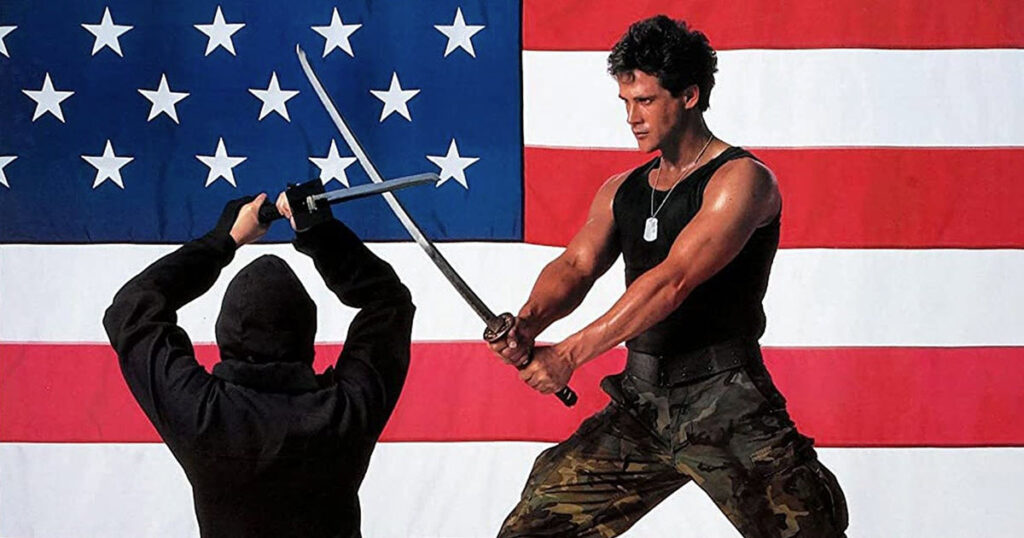
The Risks Behind American Ninja
American Ninja became a fan favorite thanks to its martial arts action and practical stunt work. Like many Cannon productions, the movie relied heavily on practical explosions and physical stunt performances.
Several stunt performers reportedly suffered injuries during production, particularly during action-heavy sequences involving pyrotechnics. Risky? Absolutely. Awesome to watch? Also absolutely.
The Danger of The Delta Force
In the case of The Delta Force, the production raised the stakes by using real military aircraft and equipment. While this added authenticity to the movie, it also introduced new risks.
The film’s practical explosions and aerial sequences required stunt crews, pilots, and technicians to work around expensive military hardware. There were reportedly close calls during filming, including situations where aircraft came dangerously close to accidents.
The movie may have been about rescuing passengers from a hijacked plane, but some of its stunt sequences carried very real risks behind the scenes. Thankfully, nobody was killed during production.
Predator and the Physical Toll of Practical Filmmaking
Even higher-budget productions weren’t immune to the dangers of practical filmmaking. Take Predator, for example.
The film’s jungle environment created constant challenges for the cast and crew. Intense heat, heavy rain, humidity, rough terrain, and practical explosions combined to make filming physically exhausting.
Because so much of the movie was shot on location using practical effects, the stunt work carried genuine risks. Many people involved in the production have described the shoot as physically punishing.
The result was one of the greatest action films ever made, but it certainly wasn’t an easy one to create.
The Real Helicopter Action of Rambo III
The same can be said for Rambo III. The film features extensive helicopter action combined with large-scale explosions, and many of those sequences were accomplished using real aircraft and practical effects.
Real pilots flew real helicopters while explosions detonated around them. Although there are no widely reported accounts of major injuries from the production, the stunt work itself carried obvious risks.
Many of the safety standards required on modern productions would make sequences like these significantly more difficult to execute today. Whether the risk was worth it is up to you.

Why 1980s Action Movies Still Feel Different
What truly separates 1980s action movies from modern blockbusters is the lack of a CGI safety net. When audiences watched towering explosions, brutal car crashes, giant falls, or actors running through walls of fire, much of it was happening for real in front of the camera.
The stunt culture of the era was built around practical effects and physical risk because digital alternatives simply didn’t exist. If a director wanted a helicopter explosion, they had to blow something up. If they wanted a car to flip, they had to flip a real car.
That created an atmosphere where stunt performers constantly pushed themselves to dangerous extremes. Many stunt veterans from the era have described the mentality as simple: “You either got the shot, or got hurt trying.”
And while that approach made the work incredibly dangerous, it also gave 80s action movies a raw energy that audiences still respond to decades later.
Part of what makes these films so effective is that viewers instinctively recognize that the danger they’re seeing isn’t simulated. Someone actually took that risk.
Saluting the Unsung Heroes of 1980s Action Cinema
At the end of the day, Cannon Films and many other low-budget production companies were determined to create exciting, high-octane entertainment with limited resources.
The result was a lot of risk-taking. Not all of it was worth it. Broken bones, burns, cuts, bruises, blood, sweat, and tears were common realities for the stunt performers who helped create these movies.
Names like Dar Robinson, Buddy Joe Hooker, Bennie Dobbins, Terry Leonard, and Gary Epper deserve far more recognition than they often receive. These men and countless others like them risked their lives performing brutal falls, dangerous burns, high-speed crashes, and punishing fight scenes so audiences could be entertained.
The movie stars may get most of the credit, but the stunt crews earned every bit of their place in action movie history.
Recommended Movies for Incredible Practical Stunts
If today’s discussion has you craving some old-school action, check out:
- Invasion U.S.A.
- Commando
- The Delta Force
- American Ninja
- Rambo III
- Armour of God
- Police Story
- Missing in Action
- Predator
Let us know what you think of our Loving the 80s series in the comments – and long live the 80s!













The comment section exists to allow readers to discuss the article constructively and respectfully, focused on the topic at hand.
What’s Not Allowed