

It’s no secret that studios routinely demand major changes to movies after production wraps. Sometimes the overhauls are so massive that new directors are brought in to essentially remake the film from scratch—think Zack Snyder and Justice League. Other times, directors without final cut privilege simply have to go along with what the suits want. At the end of the day, they’re employees like anyone else.
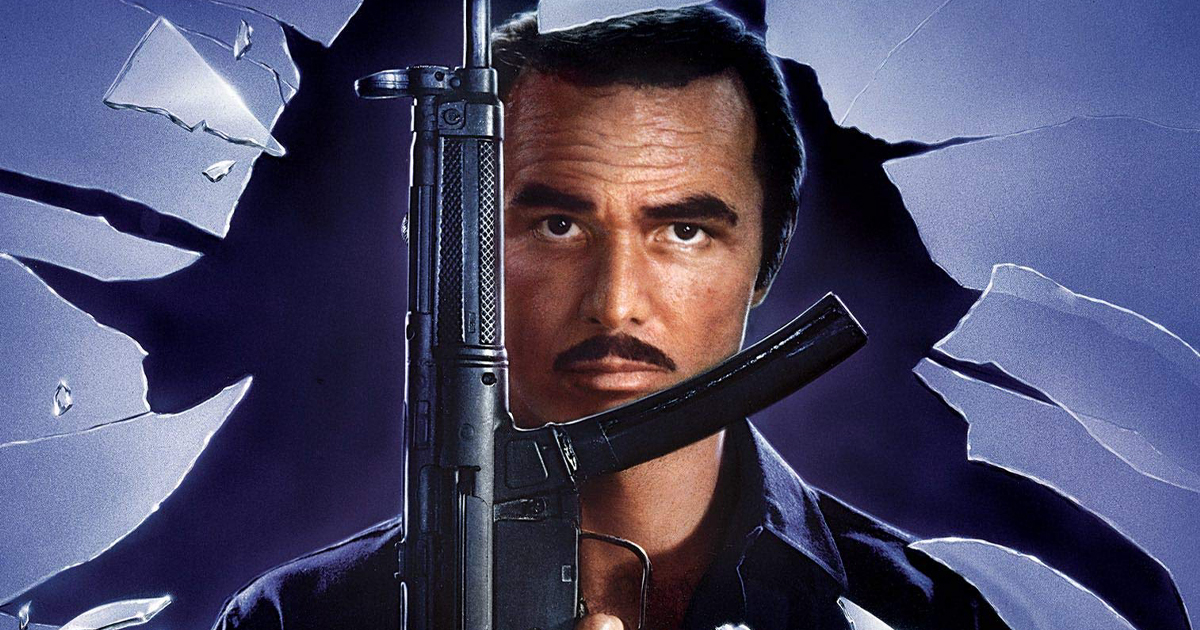
But one of the starkest, most extreme examples of a movie being fundamentally reworked and reshot remains 1985’s Stick, directed by and starring Burt Reynolds.
Stick is one of the most glaringly obvious reshot movies ever made. The new footage jumps out at you instantly—not because of a lack of technical skill behind the camera, but due to a cruel twist of fate that struck Reynolds during this period, triggering a precipitous decline in his stardom.
High Hopes and Back-to-Back Flops
Based on the novel by Elmore Leonard, Stick tells the story of an ex-con car thief who finds himself working for a big-shot Hollywood producer while nursing a deadly grudge against a small-time drug dealer who killed his former cellmate.
When the project was coming together, Reynolds was still riding incredibly high. He was one of the biggest box office draws in the world. Both of his 1982 releases, Best Friends and The Best Little Whorehouse in Texas, were hits, and his directorial effort Sharky’s Machine had just earned him some of the best reviews of his career. Stick was meant to be the spiritual successor to Sharky’s—a gritty crime flick, but initially envisioned with a lighter touch.
Reynolds assembled an excellent cast of old friends and rivals:
- Charles Durning went completely unrecognizable under a bright red wig and a heavy tan to play the drug-dealing villain, Chucky.
- Candice Bergen signed on as a crooked lawyer who serves as the love interest.
- George Segal, Reynolds’ former box office rival, took a flashy role as the film’s eccentric producer, Barry Braham.
Reynolds was slated to start shooting at the end of 1983, but that year proved disastrous for his box office drawing power. He suffered two major consecutive flops: Stroker Ace (which he famously turned down an Oscar-winning role in Terms of Endearment to make) and The Man Who Loved Women. Still, Universal Pictures trusted him enough to let him make Stick his way.
Disaster Strikes on the Next Set
Principal photography went smoothly. Once it wrapped, Reynolds immediately pivoted to shooting City Heat, a big-budget action-comedy with his close friend Clint Eastwood. It was on this set that disaster struck.
During a fight scene, Reynolds was accidentally struck in the face with a real metal chair, shattering his jaw. Restricted to a liquid diet, he rapidly lost over 30 pounds. Even after the jaw healed, he felt no better; he had developed TMJ (temporomandibular joint disorder), a poorly understood malady at the time that left him in chronic, agonizing pain.
While Reynolds was secretly suffering, his career took another hit. The Cannonball Run II tanked, marking his third major flop in a row. When he finally presented his finished cut of Stick to Universal—complete with score and titles—the studio executives hated it. They found it to be a slow, character-heavy crime drama with a bit of comedy and very little action. Confident it would bomb, they told Reynolds he had to turn it into an action movie.
Turning a Drama Into an Action Movie
The resulting reshoots were extensive, leaving the theatrical version with very little relation to what Reynolds originally shot.
In the initial cut, Chucky was the primary threat, and the character of Stick was non-violent, never using a gun or killing anyone. In the revised version, Chucky was demoted to a mere front-man for a cartel boss named Nestor. The action was aggressively ramped up with a series of new sequences, including a major brawl in a Jai Alai arena and a massive gunfight finale. The studio also forced the inclusion of an estranged teenage daughter for Stick, purely so she could be kidnapped in the climax to raise the stakes, while Bergen’s shady lawyer was softened into a standard love interest with a heart of gold.
What makes the film a fascinator for cinephiles is how completely obvious the reshot footage is. Because Reynolds had lost at least 30 pounds in the months between shoots, he looks incredibly frail and ill in the new action sequences. There was simply no hiding it.
In the original footage, Reynolds is buff, showing off his biceps and taking his shirt off at every opportunity. In the reshot scenes, his clothes literally hang off his emaciated frame. He looked so gaunt that industry rumors circulated for years claiming he had contracted AIDS, a stigma that followed him for a long time because the public didn’t realize how devastating TMJ could be.
Why the Reshoots Actually Work
Oddly enough, the reshot sequences are pretty good. Even though Reynolds later admitted he was just going through the motions while feeling terrible, he still gave it his all, executing his own stunt work.
His physical frailty actually gives the character a legitimate edge. You buy it when he is struggling to hold his own against Dar Robinson, who plays the albino killer Moke. Even the finale, where Stick fires a machine gun at the bad guys, works remarkably well because Reynolds looks like he is genuinely straining under the weight of the weapon—which fits an ex-car thief who isn’t supposed to be a trained soldier.
In a bizarre twist of fate, the original “Reynolds Cut” actually leaked to the public. In the late 1980s, a shipping error at Universal resulted in a print of the original cut being sent to a British television station, which aired it. Years later, it surfaced on YouTube.
To give the Universal executives some credit, the original cut didn’t really work. It was flabby. The comedy fell flat, and the casting choices didn’t hold up; Candice Bergen visibly struggled with the moral ambiguity of her original character description long before she found her footing in Murphy Brown. Furthermore, a movie set in Miami during the peak era of Miami Vice that pushed the drug trade to the periphery would have likely bored 1985 audiences to tears.
A Flop, but a Lasting Cult Favorite
Fortunately, three of the best elements from Reynolds’ original cut survived the theatrical butcher shop. George Segal’s performance as Barry remains wonderfully over-the-top and perfectly cast. There is also a great, tense scene where Stick clears a tough guy out of a party by splashing a glass of gasoline in his face and threatening to light a match.
Finally, the film retains a legendary stunt where legendary daredevil Dar Robinson free-falls backward off the side of a high-rise building while actively firing a gun—a shot captured without editing out a safety airbag below. Tragically, Robinson died in a motorcycle accident just a few years later on the set of the forgotten film Million Dollar Mystery.
When you mix those original, gritty scenes with the solid 1980s action elements introduced during the reshoots, you get a remarkably cohesive thriller. Backed by a moody, Miami Vice-esque synth score, it stands as Reynolds’ best movie of the late eighties by a wide margin.
Regrettably, it couldn’t escape its troubled production. Elmore Leonard publicly loathed how much the film departed from his book, granting numerous interviews detailing how bad he thought it was. That bad press gave the project a toxic stench. Combined with Reynolds’ career being in free fall, the movie was doomed. While Stick actually opened at number one at the box office in April 1985, it sank like a stone by its second week, topping out at a dismal $8 million. It was the final nail in the coffin for Reynolds’ run as a top-tier box office leading man.
Even so, Stick is one of the Burt Reynolds movies that warrants repeat viewings. The era, the Miami milieu, and the isolated set-pieces are incredibly distinct. It’s not perfect, and it’s no Sharky’s Machine, but for what it is, it holds up.













The comment section exists to allow readers to discuss the article constructively and respectfully, focused on the topic at hand.
What’s Not Allowed