
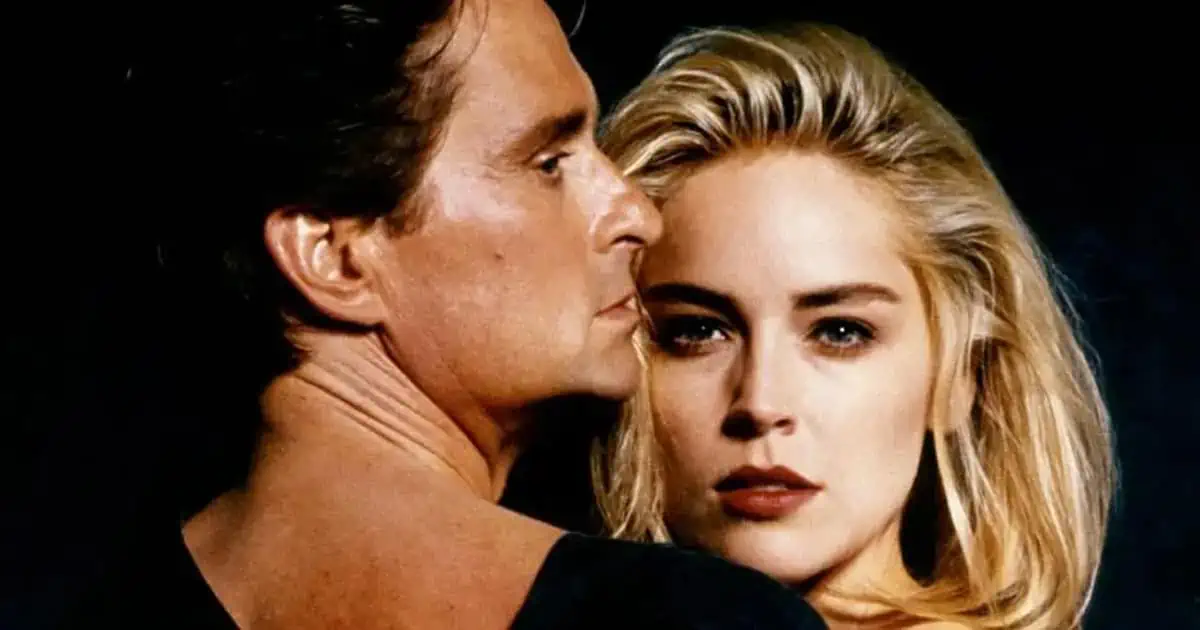

Who doesn’t love a good murder mystery? We have all spent hours trying to guess the killer before the movie tells us. We look for clues in the background or try to read the body language of the actors. But sometimes a movie comes along that totally rewrites the rules of the game.
The early 90s were weirdly obsessed with erotic thrillers, and for a brief window, Hollywood treated sex, murder, and bad decisions like the most commercial combination on the planet. In the spring of 1992, Basic Instinct hit theaters and became a massive cultural event. Directed by Paul Verhoeven and written by Joe Eszterhas, the film was a huge box office success, pulling in more than $350 million worldwide. It sparked heated debates on late-night television, dominated entertainment news, and drew aggressive protests from advocacy groups.
For a lot of people, the movie is still defined by a single fleeting moment in a police interrogation room. But reducing this meticulously crafted thriller down to its shock value completely misses the point. Beneath the glossy sheen of its taboo-pushing sexuality, Basic Instinct is a remarkably chilly, smart thriller about power, performance, and the lethal dangers of trying to pin down someone who absolutely refuses to be categorized. It’s a puzzle box of a movie that uses our own voyeuristic tendencies against us, and it remains one of the sharpest mainstream thrillers of the 1990s.
What We’ll Be Covering
In this breakdown, we’ll explore:
- The mystery at the center of Basic Instinct
- Why Nick Curran is the opposite of a traditional hero
- How Catherine Tramell manipulates everyone around her
- The film’s themes of voyeurism, obsession, and power
- The controversy that followed its release
- What the ice pick under the bed really means
Quick Character Guide
| Character | Role | What They Represent |
|---|---|---|
| Nick Curran | Detective | Addiction, obsession, self-destruction |
| Catherine Tramell | Novelist and murder suspect | Power, manipulation, authorship |
| Beth Garner | Police psychologist | Misdirection, uncertainty, jealousy |
| Gus Moran | Nick’s partner | The cost of obsession |
| Roxy Hardy | Catherine’s lover | Possessiveness and collateral damage |
Basic Instinct Plot Summary
Johnny Boz’s Murder Sets the Tone
The movie kicks off not with a slow-burn mystery, but with a visceral execution that sets a savage tone for everything that follows. We see retired rock star Johnny Boz tied to a bed with a white silk scarf, lost in the throes of sexual ecstasy with a mysterious blonde woman. Her face is deliberately hidden from the audience by the reflection of a mirrored ceiling. At the absolute peak or, dare I say, climax of their encounter, the woman reaches into the sheets, pulls out an ice pick, and brutally stabs him to death.
It’s a chaotic, bloody sequence that feels wonderfully grounded. It isn’t a clean Hollywood murder. It’s primal, messy, and terrifying.
Meet Nick Curran: The Anti-Hero Detective
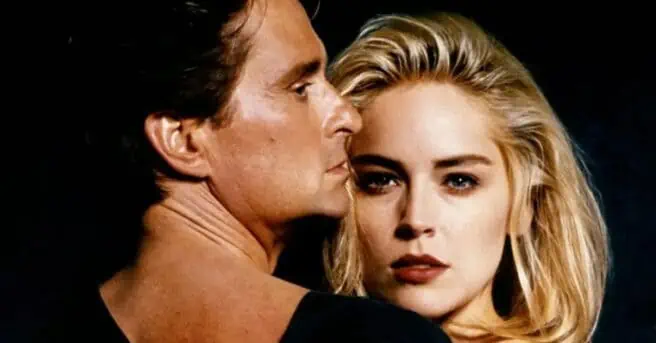
The guy stuck cleaning up this mess is San Francisco homicide detective Nick Curran, played with intensity by Michael Douglas. Nick isn’t introduced as a heroic investigator. He’s introduced as a train wreck. His nickname around the precinct is “Shooter,” earned after a highly questionable undercover incident in which innocent tourists were killed. Though officially cleared, the psychological fallout still haunts him.
Add severe alcoholism, cocaine abuse, and a reckless disregard for consequences, and you’ve got one of the least trustworthy protagonists in thriller history.
Nick soon finds himself investigating Johnny Boz’s girlfriend. That girlfriend is Catherine Tramell.

Catherine Tramell: The Ultimate Unreliable Suspect
Enter Catherine Tramell, a brilliant, unfathomably wealthy crime novelist played in a star-making performance by Sharon Stone. Catherine holds a psychology degree from Berkeley and has an unsettling habit of writing novels that mirror real-life murders.
Her latest book just happens to feature a retired rock star murdered with an ice pick. The setup is almost too perfect. And Catherine knows it.
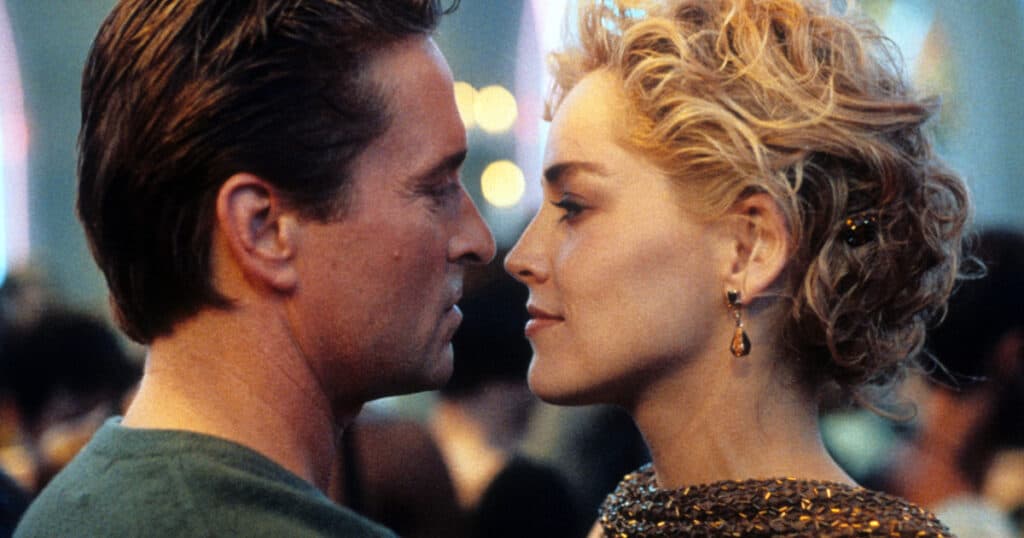
Nick immediately suspects her. Unfortunately for him, he’s also completely fascinated by her.
Why Nick Curran Is the Real Weak Link
One of the smartest things Basic Instinct does is refuse to make Nick a traditional hero. The movie goes out of its way to portray him as deeply compromised. He manipulates people, abuses authority, and repeatedly makes terrible decisions.
His relationship with Dr. Beth Garner is a perfect example. Beth helped him regain his badge after his psychological evaluation. Nick repays that trust by using and manipulating her while pursuing Catherine.
Even more troubling is an early scene in which Nick becomes physically aggressive with Beth, ignoring her protests and boundaries. The sequence is deliberately uncomfortable and reinforces the idea that Nick himself is dangerous.
When Catherine enters his life, she doesn’t corrupt him. She simply recognizes what’s already there. Catherine identifies him as an addict, a killer, and a man drawn toward self-destruction.
Instead of resisting that assessment, Nick embraces it. His addiction to alcohol and cocaine gradually transforms into an addiction to Catherine herself.
Sex, Power, and Control in Basic Instinct
In Basic Instinct, sex is never just sex. Every intimate encounter functions as a negotiation of power.
Catherine doesn’t merely seduce people. She dominates them.

The Interrogation Scene Explained
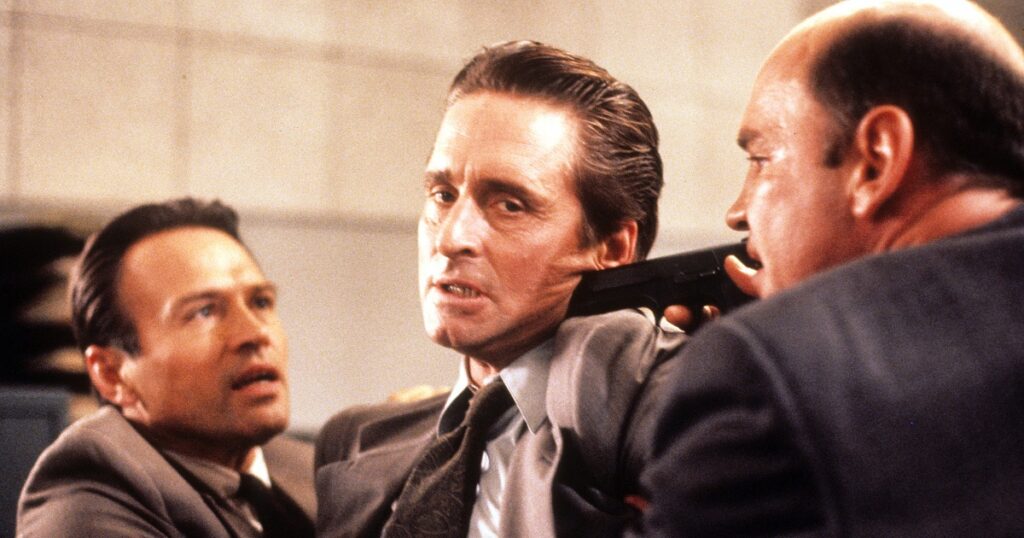
The film’s most famous sequence remains one of its most fascinating. A room full of detectives assumes they can intimidate Catherine into a confession. Instead, she dismantles them. She casually smokes, mocks their authority, and exposes their insecurities.
When she uncrosses her legs, she isn’t surrendering power. She’s demonstrating how easily power can be taken away.
The detectives believe they’re interrogating Catherine. In reality, Catherine is studying them.
The scene remains unforgettable because it completely reverses the expected power dynamic.
Voyeurism and the Illusion of Understanding
One of the movie’s strongest themes is voyeurism. Nick believes observation leads to understanding. If he follows Catherine, studies her, and watches her closely enough, he’ll eventually uncover the truth.
But Catherine always knows she’s being watched. She actively performs for her audience. The more Nick observes her, the more trapped he becomes inside her carefully crafted reality.
Basic Instinct doesn’t just indulge voyeurism. It criticizes it. Nick’s obsession with watching Catherine ultimately prevents him from seeing what’s right in front of him.
Is Catherine Writing the Story?
This is where Basic Instinct becomes surprisingly meta. Catherine’s novels don’t merely predict murders. They seem to shape reality itself.
At one point she tells Nick exactly how her latest story ends: A detective falls in love with the wrong woman. Then he dies. By revealing this plot, Catherine traps Nick inside it.
Every attempt he makes to escape his fate only pushes him deeper into the narrative she’s already written. The mystery stops being about who committed the murders. Instead, it becomes about who controls the story. And Catherine always seems to be holding the pen.
Who Really Committed the Murders?
The brilliance of Basic Instinct lies in its refusal to provide certainty. The evidence is carefully balanced between Catherine and Beth.
The Case Against Catherine Tramell
- Her novels mirror the murders.
- Johnny Boz is killed exactly as described in her book.
- She repeatedly manipulates Nick.
- The ice pick appears beneath her bed in the final scene.
The Case Against Beth Garner
- Police discover a wig and raincoat.
- Evidence appears to connect her to multiple murders.
- She has a complicated history with Catherine.
- She may have motive to frame her former lover.
The film never provides objective proof. Instead, it forces viewers to choose which version of reality they believe.

The Controversy Surrounding Basic Instinct
No discussion of Basic Instinct would be complete without addressing the controversy surrounding its release. Organizations including GLAAD and Queer Nation criticized the film for connecting bisexuality and lesbian identity with violence and predatory behavior.
The criticism was understandable. Hollywood had a long history of portraying LGBTQ+ characters as dangerous or psychologically unstable, and Basic Instinct arrived in the middle of that cultural landscape.
The protests became so intense that activists demonstrated during production and outside theaters after release. Yet Catherine Tramell remains one of the most fascinating contradictions in film history. She’s simultaneously criticized as a harmful stereotype and celebrated as an unusually powerful female character who refuses to be controlled by the men around her.
That tension continues to fuel debate more than thirty years later.
Basic Instinct Ending Explained
Gus’s Murder Changes Everything
The final act begins with the brutal murder of Nick’s partner, Gus Moran. Moments later, Nick discovers Beth standing nearby. Consumed by grief, paranoia, and suspicion, he confronts her. When Beth suddenly reaches into her pocket, Nick reacts instinctively. He shoots her. As she collapses, her hand reveals she was only reaching for her keys.
The moment echoes the tragic shooting that earned Nick the nickname “Shooter” years earlier. Nick has repeated the same mistake.
The Convenient Evidence
After Beth’s death, investigators discover an overwhelming amount of evidence connecting her to the murders. The case appears solved. Almost too solved. The evidence arrives so neatly that it immediately raises suspicion.
The official narrative becomes simple: Beth was obsessed with Catherine. Beth framed Catherine. Beth committed the murders. Case closed.
But Basic Instinct has never been interested in easy answers.
The Ice Pick Under the Bed
Nick returns home. Catherine is waiting for him. They reconcile. They make love. For a brief moment, the film pretends we’re getting a happy ending.
Then Catherine asks what comes next. Nick suggests marriage, children, and a normal future. Catherine’s expression changes instantly. The tension becomes unbearable.
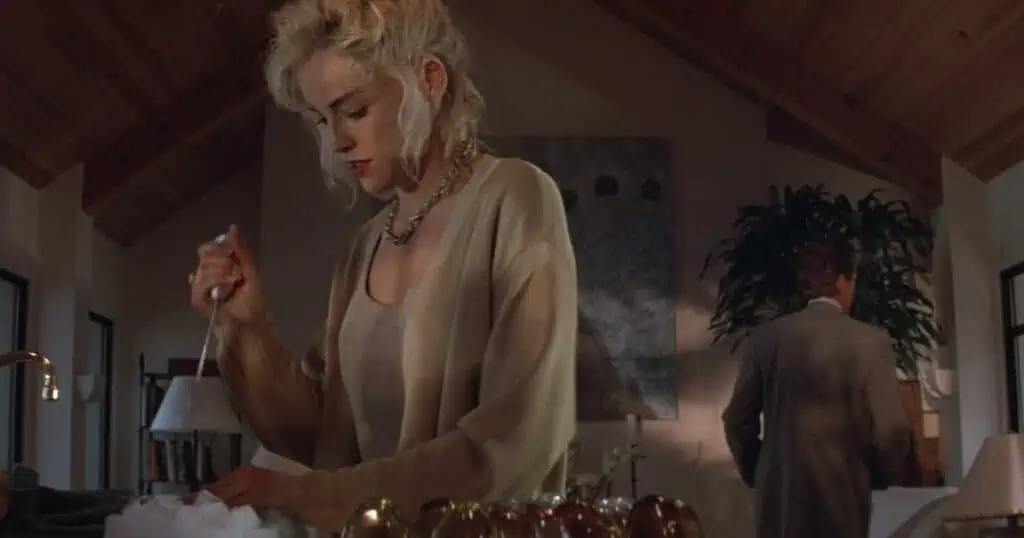
She reaches beneath the bed. The audience prepares for murder. Instead, she pulls Nick closer and kisses him. The tension seems to disappear.
Then the camera slowly drifts downward. And there it is. The ice pick. Waiting beneath the bed.
What the Ending Really Means
That final shot is the movie twisting the knife. The ice pick strongly suggests Catherine was never innocent. More importantly, it suggests she never lost control. Beth may have been framed. Nick may have been manipulated from the beginning. And Catherine may have orchestrated the entire narrative exactly as she described in her novels.
But the most important question isn’t whether she kills Nick. It’s whether she needs to. By the end of the film, she has already won. Nick has surrendered his independence, his judgment, and possibly his future. He belongs to her story now.
Whether the murder happens tonight or years later almost doesn’t matter. The ending isn’t about death. It’s about control.
The Legacy of Basic Instinct
The 2006 sequel, Basic Instinct 2, attempted to revive the franchise but was widely regarded as both a critical and commercial failure. Notably, Nick Curran never appears and is never mentioned. The sequel offers no answers regarding his fate.
In an odd way, that omission feels fitting. Men who enter Catherine Tramell’s orbit rarely emerge intact.
Final Thoughts
The ice pick beneath the bed reveals the ultimate truth of Basic Instinct. Nick never solved the mystery. He became part of it.
The film remains effective because it denies viewers the comfort of certainty. There is no heroic victory, no moral resolution, and no definitive answer. Instead, we’re left feeling exactly like Nick Curran: fascinated, manipulated, and completely unsure of what just happened.
Powered by razor-sharp dialogue, sleek direction, and an iconic performance from Sharon Stone, Basic Instinct remains one of the most provocative and endlessly debatable thrillers ever made. And more than three decades later, we’re still arguing about that ice pick.
Frequently Asked Questions
Did Catherine Tramell kill Johnny Boz?
The film never explicitly confirms it, but the final ice pick reveal strongly suggests Catherine committed at least some of the murders attributed to Beth Garner.
Did Catherine kill Nick Curran?
The movie never shows Nick being killed. However, the ending implies that Catherine still possesses the murder weapon and remains capable of carrying out the fate she described in her novel.
Was Beth Garner innocent?
Beth appears innocent when Nick shoots her, particularly after her keys fall from her pocket. Whether all the evidence against her was genuine or planted remains one of the film’s central mysteries.
Why is Basic Instinct controversial?
The film faced criticism from LGBTQ+ advocacy groups for linking bisexual and lesbian characters with violence and manipulation, a recurring stereotype in early 1990s thrillers.
What does the ending mean?
The ending suggests that Catherine may have orchestrated events from the very beginning, using Nick’s weaknesses to frame Beth and maintain control of the narrative.




















The comment section exists to allow readers to discuss the article constructively and respectfully, focused on the topic at hand.
What’s Not Allowed