
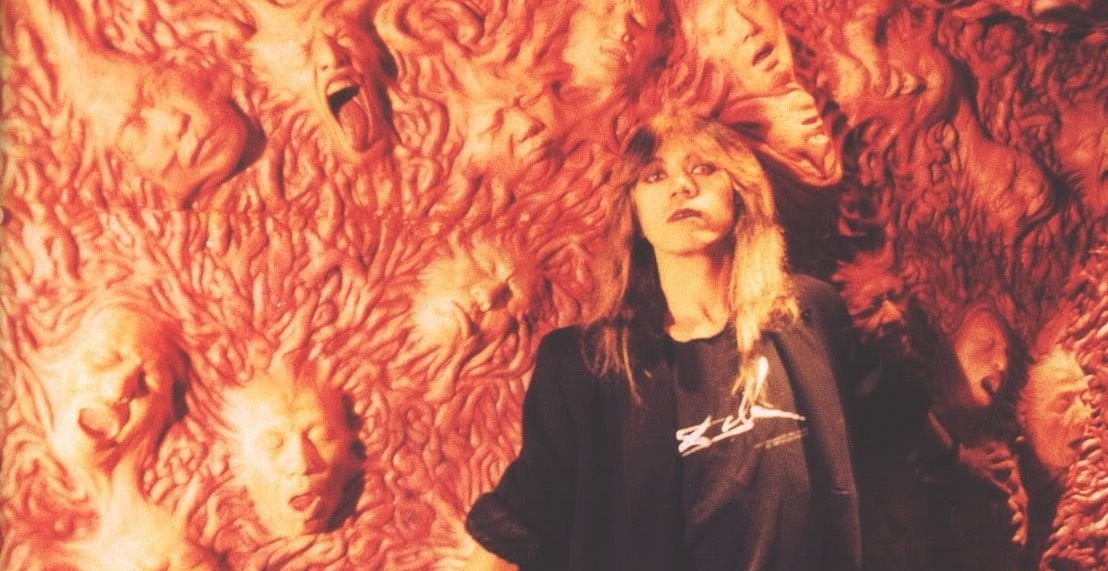
Screaming Mad George, the legendary special makeup and creature effects artist whose surreal work was featured in some of the most memorable horror movies of the 1980s and ’90s, has died at the age of 69. His family and representatives announced the news this week, revealing that George actually passed away five months ago, on February 10, 2026. According to a statement from his representatives, George suffered a cardiac arrest after losing consciousness at his home. His family followed emergency responders’ instructions and successfully restored his vital signs before he was transported to intensive care. Surrounded by his loved ones, George remained unconscious and passed away peacefully four days later.
The family chose to keep his death private while they grieved, explaining that they needed time and space to process the loss before sharing the news publicly.
Born Joji Tani in Osaka, Japan, in 1956, George developed a fascination with Japanese genre cinema, supernatural folklore, and horror manga at an early age. He also drew inspiration from artists like Salvador Dalí and Hieronymus Bosch. At 18, he moved alone to New York to pursue a career as a painter and studied fine art at the School of Visual Arts. While attending the school, he also formed the punk band THE MAD and performed as its vocalist at legendary New York clubs including CBGB. His interest in combining music, physical performance, and visual art eventually led him toward special makeup effects.
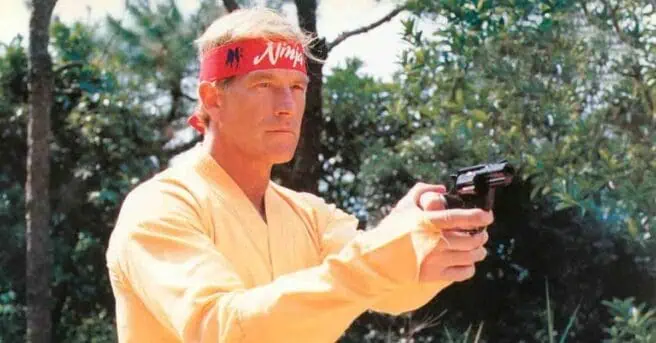
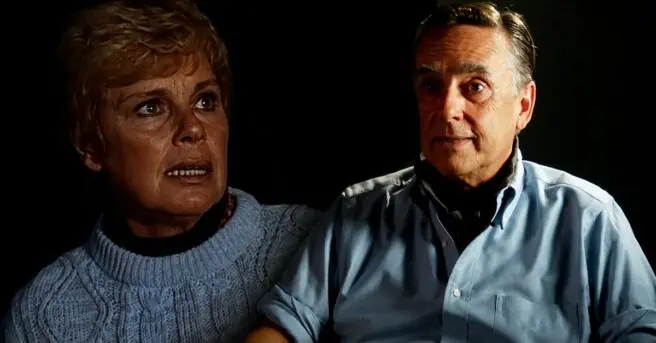
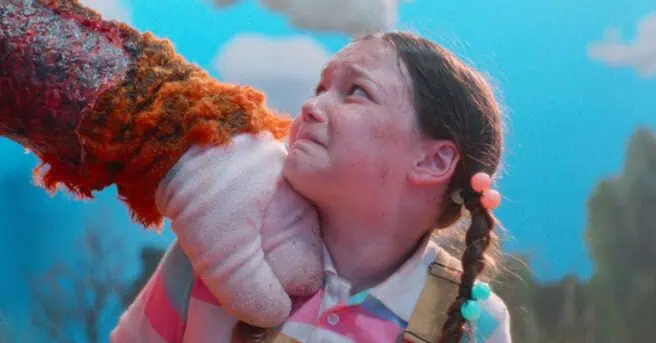
George’s career changed after he sent a short film to legendary makeup effects artist Rick Baker. Impressed by what he saw, Baker invited George to California. After years of working behind the scenes, George established himself as one of the industry’s most distinctive creature and special makeup effects artists. His professional career began in 1986. Over the following decades, George contributed his unique imagination to films like Society, Bride of Re-Animator, Poltergeist II: The Other Side, A Nightmare on Elm Street 3: Dream Warriors, A Nightmare on Elm Street 4: The Dream Master, Big Trouble in Little China, Predator, Spaceballs; Silent Night, Deadly Night 4: The Initiation; Silent Night, Deadly Night 5: The Toy Maker; Freaked, Children of the Corn III: Urban Harvest, Space Truckers, and Beyond Re-Animator, among others.
His name became particularly associated with director and producer Brian Yuzna, with whom he collaborated on several genre productions. George’s work on Yuzna’s Society may be his most famous achievement, with the film’s infamous finale showcasing the kind of surreal, grotesque physical transformation that became his signature.
But George never considered himself simply a horror artist. He described himself as a surrealist, explaining that his interest was not in creating grotesque imagery simply for its own sake. Instead, he wanted to explore transformation, imagination, and the possibility of finding beauty beyond conventional reality. That philosophy helped make his work immediately recognizable. His creatures could be horrifying, bizarre, funny, beautiful, and repulsive all at once. They looked as though they had escaped from a nightmare, but also had a strange sense of playfulness and artistry.
George eventually established S.M.G. Inc., his own Hollywood effects studio. The laboratory became an important training ground for younger effects artists, including Greg Nicotero and Robert Kurtzman, who would go on to co-found KNB EFX Group and become major figures in the special effects industry themselves.
In 1991, he stepped behind the camera to co-direct The Guyver, the live-action adaptation of the Japanese manga and anime franchise, alongside Steve Wang. The film allowed George to bring his surrealism to the overall filmmaking process, while showcasing the creature and practical effects work that had made his reputation.
His creativity also extended well beyond feature films. George worked on music videos, live performances, artistic installations, and album projects, and continued making music throughout his life. In 1992, he appeared at EXTASY SUMMIT ’92 at Tokyo’s Nippon Budokan as Screaming Mad George & Psychosis. He also directed and produced music videos and worked with numerous musicians. His connection to music and visual art was particularly evident in his work with Marilyn Manson during the Mechanical Animals era, helping create the androgynous, alien appearance of the Omega character.
George was also deeply connected to Japanese horror culture. Among his many unusual projects was his work translating Hideshi Hino’s nightmarish manga The Panorama of Hell for its 1989 English-language edition. The translation retained the original Japanese right-to-left reading format, helping preserve the manga’s intended presentation for English-speaking readers.
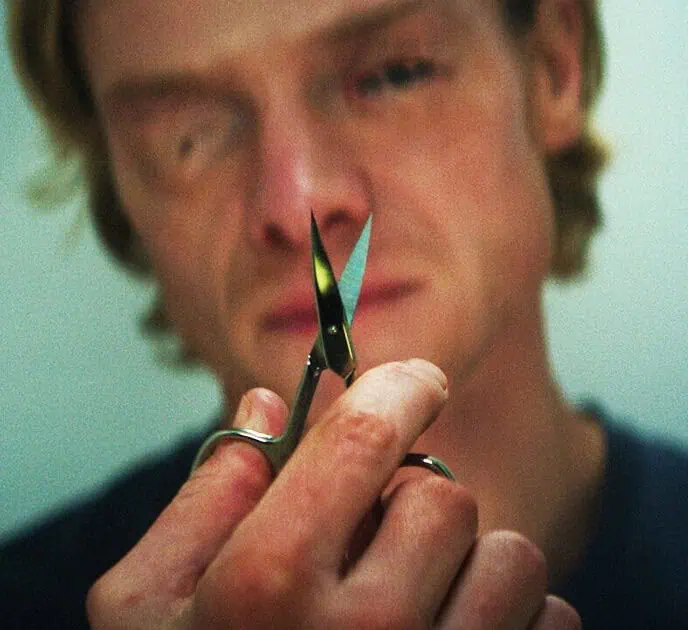
In the early 2000s, as computer-generated effects increasingly became part of mainstream filmmaking, George taught himself the technology rather than abandoning the medium. He incorporated digital effects into his own filmmaking, including his project Boy in the Box, treating the emerging technology as another tool in his artistic arsenal.
In 2003, George returned permanently to Osaka and began focusing more heavily on education, mentorship and fine art. He served as a visiting professor at Osaka University of Arts, where he taught and mentored young artists. He also studied Aikido and became a certified instructor of the Russian martial art Systema, eventually establishing a Systema club at the university. He continued exhibiting his artwork in Japan, including the Special Hallucinogenic Art Show: Screaming Mad George Exhibition at Abeno Harukas in Osaka in 2019. His final years remained creatively active. In October 2025, he held another solo exhibition in Tokyo, Screaming Mad George: Hallucinogenic Art Show, and appeared at Tokyo Comic Con in December.
According to his representatives, George’s health had begun declining around 2024. He experienced increasing difficulty walking and eventually used a wheelchair while dealing with chronic pain and respiratory illness. Despite those challenges, he continued teaching and creating art until the final months of his life.
Behind the outrageous imagery and larger-than-life persona was, according to those who knew him, a warm, generous and deeply compassionate man. His representatives described him as cheerful and approachable, while emphasizing the humility and work ethic that existed alongside his extraordinary talent.
George reportedly worked at an almost relentless pace during his years in Hollywood, sometimes sleeping only three or four hours a night and taking very little time away from his work. He also made a point of looking after the people who worked for him, even during difficult periods when he went without income himself. His legacy can be seen not only in the unforgettable creatures and transformations he created, but in the artists he inspired and mentored along the way.
Screaming Mad George leaves behind his wife, Miki, and their daughter, Alice. A memorial gathering is planned for the first anniversary of his passing, with additional details to be announced.
For horror fans, practical-effects artists and filmmakers, the loss of Screaming Mad George marks the passing of a singular creative voice. His work gave physical form to nightmares that could not have existed in quite the same way through any other artist’s imagination.
Our deepest condolences go out to George’s wife Miki, his daughter Alice, his extended family, friends, former colleagues, students, and all of the fans around the world who were inspired by his work, which will continue to inspire artists and horror fans for generations to come.


















The comment section exists to allow readers to discuss the article constructively and respectfully, focused on the topic at hand.
What’s Not Allowed