


It’s hard to properly describe just how cool today’s film made vampires look. They were no longer old men hiding away in castles and crypts. Instead, they were leather-clad rock stars who rode motorcycles along the beach, blasted great music, and looked like they were having the time of their lives. So how did all of this come to be? Which major director was originally attached to the film before stepping away? Which one of the stars actually broke his wrist during production? And which A Nightmare on Elm Street actress had her role almost entirely removed from the finished movie? All this and much more as we take a look at What Happened to The Lost Boys.
How The Lost Boys Reinvented Vampires
Back in the early 1980s, if someone mentioned vampires, most audiences immediately thought of Bela Lugosi or Christopher Lee. Dracula had become the defining face of cinematic vampires, but by that point the character and the genre as a whole had begun to feel stale. Vampires simply weren’t considered cool anymore. But they didn’t have to stay that way.
Anne Rice’s The Vampire Chronicles had only produced two novels at the time and were still years away from being adapted for the screen. So who would reinvent the bloodsucker for a new generation? First-time writers Janice Fischer and James Jeremias sold their screenplay for The Lost Boys to independent production company PSO (Producers Sales Organization) for an impressive $400,000, a remarkable payday for two newcomers. Warner Bros. would later partner with PSO to distribute the film domestically.
The title was, of course, an homage to Peter Pan, but it also inspired the entire premise. Think about Peter Pan. Every year he appears at someone’s window. He never grows older. What else could someone like that be… if not a vampire?
Richard Donner’s Original Version
Originally, Superman director Richard Donner was set to direct the film. His version of The Lost Boys looked dramatically different from the one audiences eventually saw. The vampires were only around 13 or 14 years old, making the movie much more of a family adventure in the spirit of The Goonies. Even characters like the Frog Brothers were originally written as children around eight years old. As Donner became increasingly busy with other projects, including Lethal Weapon, he realized he couldn’t give The Lost Boys the attention it deserved and stepped away from directing.
That wasn’t unusual for Donner. He often stayed attached to projects for long periods before eventually moving on once his enthusiasm faded. He did, however, remain involved as an executive producer. Fortunately, his wife and producer Lauren Shuler Donner had recently worked with an exciting young filmmaker on St. Elmo’s Fire.
His name was Joel Schumacher.

Joel Schumacher Changes Everything
When Schumacher first read the screenplay, it was almost unrecognizable compared to the finished film. Star was originally a boy. The entire script carried a much lighter tone. It was even intended to receive a G rating.
Schumacher believed the premise had far greater potential if the characters were older teenagers instead of children. He leaned into the film’s sexuality, its rebellious energy, and its rock-and-roll attitude. That decision completely transformed the project.
Originally, the story took place in Santa Cruz, California. However, the city requested that its name not be used. Considering Santa Cruz had gained national attention during the 1970s due to multiple serial killers operating in the area, city officials understandably didn’t want another movie forever associating the town with murder. So the fictional town of Santa Carla was born.
Casting Michael and Sam
Joel Schumacher believed the casting would make or break the movie. Rather than filling the younger roles with established stars, he preferred casting fresh faces who wouldn’t bring oversized egos with them.
The two most important roles were the Emerson brothers: Michael and Sam. Schumacher immediately loved Jason Patric’s audition and offered him the role of Michael. Patric turned it down. More than once. He worried the movie would become little more than an exploitative teen horror film and feared it would damage the serious acting career he hoped to build. Eventually, Schumacher personally explained his vision for the film and even promised Patric a significant amount of creative freedom in shaping Michael’s character. Only then did Patric finally agree.
Meanwhile, Corey Haim had already become one of Hollywood’s fastest-rising young actors thanks to performances in Lucas and Silver Bullet. He was cast as Sam, the younger brother who effectively serves as the audience’s point of view throughout the story. Everything supernatural unfolds largely through Sam’s eyes, making him one of the film’s most relatable characters. Haim was perfect for the role.
Building the Frog Brothers
Corey Feldman had previously worked with Richard Donner on The Goonies, making him an easy recommendation for the role of Edgar Frog. During his first meeting with Schumacher, Feldman played Edgar fairly straight. Schumacher stopped him. He instructed Feldman to go watch a marathon of Chuck Norris and Sylvester Stallone movies before returning.
Edgar Frog wasn’t supposed to act like a normal teenager. He was supposed to believe he was an action hero. That simple direction completely changed Feldman’s performance.
Making his feature-film debut, Jamison Newlander was cast as Edgar’s brother, Alan Frog. With that, the Frog Brothers were complete.

Finding Star and David
Jason Patric repeatedly recommended Jami Gertz after the two had recently worked together on Solarbabies. Schumacher initially resisted. He envisioned someone much closer to a young Meg Ryan with short blonde hair. But after meeting Gertz, he immediately understood why Patric had fought so hard for her. She possessed exactly the mysterious, ethereal quality Star needed. Once she appeared onscreen, she became impossible to ignore.
Kiefer Sutherland was also still early in his career, having recently appeared in Stand by Me and At Close Range. A close-up from At Close Range especially impressed Schumacher and convinced him to audition Sutherland for David.
Despite having relatively little dialogue throughout the movie, David dominates nearly every scene he appears in. Sometimes pure presence is enough. And few movie vampires have ever looked cooler.
Filling Out the Cast
Schumacher still wanted several experienced actors to anchor the adult roles. Dianne Wiest had recently won an Academy Award for Hannah and Her Sisters, and producers worried she would reject the relatively small role of Lucy Emerson. To Schumacher’s delight, she accepted. She became the perfect mother balancing warmth, vulnerability, and strength.
Edward Herrmann loved the opportunity to escape costume dramas and formal period pieces. Playing Max offered something completely different. Even though audiences wouldn’t discover he was the Head Vampire until the climax, Herrmann found the twist irresistible.
The role of Grandpa was originally intended for veteran actor Keenan Wynn. Unfortunately, Wynn’s declining health forced him to withdraw. Bernard Hughes stepped in at the last minute and delivered one of the funniest performances in the entire movie.
Alex Winter, Billy Wirth, Brooke McCarter, and Chance Michael Corbitt rounded out David’s vampire gang.
One fun bit of trivia involves Kelly Jo Minter. Horror fans know her from A Nightmare on Elm Street 5: The Dream Child and The People Under the Stairs. She briefly appears as an employee working inside Max’s video store. Although it’s little more than a blink-and-you’ll-miss-it cameo, she actually receives an official character name in the credits because she originally had speaking scenes. Those scenes revealed too much about Max’s backstory and unintentionally spoiled the movie’s third-act twist. As a result, almost all of her dialogue was removed, leaving only her brief appearance in the finished film.
Building the World of The Lost Boys
With a relatively unknown young cast now in place, the studio decided to reduce the film’s budget shortly before production began. That meant every department had to become even more resourceful.
Production designer Bo Welch was responsible for creating the vampires’ lair. Rather than building one massive set, he designed it in modular sections that could be rearranged depending on the needs of each scene. The finished result is so convincing that you’d never realize it wasn’t a complete underground hideout.
Cinematographer Michael Chapman was another major addition to the production. Although he had recently directed All the Right Moves starring Tom Cruise, Chapman had always wanted to photograph either a vampire or werewolf movie. The Lost Boys finally gave him that opportunity.

The Story Begins
The film immediately introduces us to one of its most important characters: not a person, but a place. The Santa Carla Boardwalk. It’s where everyone gathers. It’s where teenagers go to have fun. And, as we’ll soon discover, it’s also the perfect hunting ground for vampires.
We waste no time meeting David, Dwayne, Paul, Marco, and the rest of the Lost Boys. They’re effortlessly cool. They’re mysterious. And there’s something strangely timeless about them.
The first indication that they’re far more dangerous than they appear comes when a security guard confronts them and is mysteriously killed. Remarkably, the murder happens entirely off-screen. In fact, The Lost Boys keeps its vampire violence hidden for quite a while. Many people have compared this approach to Jaws, praising the restraint and mystery.
Joel Schumacher, however, admitted that the decision wasn’t artistic, it was financial. Showing the vampires too early would have required expensive makeup effects throughout the opening act. Instead, the filmmakers relied on clever camera work, point-of-view shots, sound design, and suggestion.
Much like Jaws, a limited budget ended up making the movie even stronger. Sometimes what you don’t see is far scarier than what you do.
A Town You Want to Visit
The opening credits accomplish much more than simply listing the cast and crew. They establish Santa Carla itself. The boardwalk, the rides, the neon lights, the carnival atmosphere, the beaches, the music. Even before the story truly begins, the town becomes one of the film’s most memorable characters. Watching it for the first time, you can’t help but want to explore this place yourself. There’s danger lurking around every corner, but there’s also something undeniably exciting about it. It’s easy to understand why Michael and Sam become fascinated by their new home.
At its heart, The Lost Boys is also a classic fish-out-of-water story. The Emerson family has left everything behind and is attempting to start over. Judging by the condition of Grandpa’s eccentric old house, this new life is going to be very different from the one they left behind.
New Friends… and New Enemies
Before long, each member of the family forms an important new connection. Sam meets Edgar and Alan Frog, the comic book-loving brothers who believe vampires are very real. Lucy meets Max, the friendly owner of the local video store. After helping recover a missing child, she impresses Max enough that he offers her a job. Michael, meanwhile, meets Star. Or perhaps it’s more accurate to say he becomes completely captivated by her. Even after seeing her ride away with David and his intimidating motorcycle gang, Michael refuses to give up. Most people probably would have decided to move on. Michael isn’t most people. His determination only makes him seem cooler.
Following Star ultimately brings him face to-face with David and the Lost Boys. From there, things become very interesting.

Filming the Famous Bridge Scene
Kiefer Sutherland was an avid motorcyclist in real life, allowing him to perform many of his own riding stunts. Unfortunately, that willingness came with a price. During production, Sutherland broke his wrist. The injury forced the filmmakers to carefully hide his arm throughout the remainder of shooting. After all, David couldn’t suddenly appear with an unexplained broken wrist halfway through the movie.
One of the film’s most memorable sequences takes place when David challenges Michael to hang beneath a railroad bridge as a train races overhead. Interestingly, the production had another obstacle to overcome. Depending on where the cameras were pointed, Six Flags Magic Mountain would appear in the background. The crew had to carefully choose their angles to avoid accidentally placing a modern amusement park in the middle of what was supposed to be an isolated stretch of wilderness.
So if you happened to be riding roller coasters at Magic Mountain during the summer of 1986, there’s a good chance you unknowingly complicated the making of The Lost Boys.
“They’re Only Noodles, Michael”
One of the movie’s most unforgettable moments comes when Michael believes he’s eating a container full of squirming maggots. Thankfully for Jason Patric, they weren’t actually maggots. The effect was created using rice. Real maggots don’t move enough on camera to create the unsettling visual Schumacher wanted. To make them appear alive, the crew sprayed them with lemon juice, causing them to wriggle just enough to sell the illusion.
It’s such an iconic scene that it was later referenced in What We Do in the Shadows. Few compliments are bigger than another vampire classic paying tribute to your movie decades later.
Becoming a Vampire
One of the more interesting ideas introduced in The Lost Boys is the concept of the “half-vampire.” Simply drinking vampire blood isn’t enough to complete the transformation. A victim doesn’t become a full vampire until they drink human blood themselves. It’s a clever idea.
At the same time, the movie doesn’t fully explore the concept. Michael appears just as powerful as David long before completing the transformation, making the distinction feel somewhat unclear. Ultimately, the rule mainly exists so Michael and Star can still be saved by the film’s conclusion. Still, it’s an inventive addition to vampire mythology.
The Frog Brothers Fight Back
Eventually, Sam convinces Edgar and Alan Frog that Michael has fallen under the vampires’ influence. The trio tracks the gang back to their underground lair in hopes of destroying them while they sleep. Things don’t exactly go according to plan. They manage to kill only one vampire before the others awaken. It’s a brutal reminder that these vampires are far more dangerous than anyone imagined.
Now the surviving Lost Boys have only one thing on their minds. Revenge.

One of Horror’s Greatest Final Acts
For a movie filled with memorable scenes, it’s remarkable how well The Lost Boys builds toward its climax. Every major character gets a chance to stand against the vampires. The Frog Brothers put everything they’ve learned from comic books to the test. Sam proves he’s far braver than anyone gives him credit for. Lucy refuses to become another victim. Even Grandpa, who has mostly served as comic relief throughout the movie, plays a pivotal role.
The action is fast, inventive, and satisfyingly violent without ever losing the film’s sense of fun. Michael finally gets the showdown he’s been building toward with David. The two battle through the Emerson house before David is finally defeated.
Michael survives… But he’s still a vampire. At least, that’s what everyone believes. The real surprise is still waiting.
The Head Vampire Twist
As longtime fans know, David was never the Head Vampire. It’s Max. The kind, friendly owner of the neighborhood video store. His interest in Lucy was never romantic. He wanted a family. Specifically, he wanted Lucy, Michael, and Sam to become part of his vampire clan. It’s a terrific twist because Edward Herrmann plays Max with such warmth throughout the movie that audiences rarely suspect him.
With David and the rest of the gang apparently defeated, everyone lets their guard down. Then Max calmly walks in. Suddenly, every victory the heroes thought they’d earned disappears. He effortlessly overpowers everyone in the room. For a brief moment, it genuinely feels like the villains have won.
Then… A loud car horn echoes outside. Grandpa crashes his Jeep straight through the house, impaling Max on a massive wooden fence post. It’s one of the funniest and most satisfying endings in 1980s horror.
As Max dies, Grandpa casually delivers one of the greatest final lines ever spoken in a vampire movie. “One thing about living in Santa Carla I never could stomach… all the damn vampires.” Audiences could hardly believe it. The theater must have erupted.
Of course, Grandpa’s final line raises one hilarious question. If he knew Santa Carla was crawling with vampires all along, why did he invite his daughter and grandsons to move there? Maybe Grandpa is secretly the movie’s real villain.
Creating the Vampire Look
The filmmakers wanted the vampires to look frightening without burying the actors beneath heavy prosthetic makeup. Unlike many vampire movies before it, the goal wasn’t to create monsters. It was to create monsters who still looked incredibly attractive. Schumacher wanted audiences to instantly recognize each actor beneath the makeup. The yellow eyes, the sharpened cheekbones, the elongated fangs. Everything enhanced the performers instead of hiding them.
That balance became one of the film’s defining visual trademarks and influenced countless vampire movies that followed.
Kiefer Sutherland’s Pain Was Real
One particularly memorable close-up shows a single tear running down Kiefer Sutherland’s face while wearing David’s vampire makeup. It wasn’t acting. The custom contact lenses used throughout production were extremely painful. They irritated the actors’ eyes so badly that Sutherland genuinely began to cry during filming. Schumacher loved the shot and left it in the movie. Sometimes the best moments happen by accident.

The Scene Schumacher Forgot to Film
Even experienced directors occasionally make mistakes. After principal photography had wrapped, Schumacher realized something important. He had forgotten to shoot the sequence showing the vampires waking up and flying off to attack the Emerson house during the finale. There wasn’t enough money to bring everyone back for extensive reshoots. Instead, he improvised. Unused footage of the vampires sleeping inside the cave was recycled. Shots from earlier in the movie were repurposed. Even the vampires leaving the cave was simply footage of them entering, played in reverse.
If you watch closely, they’re technically flying backward. Does it make logical sense? Not really. Does it work? Absolutely. Most viewers never notice.
One of the Greatest Horror Soundtracks Ever
It’s impossible to talk about The Lost Boys without talking about its music. The soundtrack isn’t simply background noise. It’s part of the movie’s identity.
Thomas Newman composed the score, creating eerie musical themes whenever the vampires were nearby while also delivering sweeping orchestral moments throughout the adventure. Then there are the songs, and what songs they are.
Perhaps no moment captures the film’s outrageous energy better than Tim Cappello’s unforgettable performance of “I Still Believe.” Covered in chains. Coated in baby oil. Playing saxophone with unbelievable intensity. It’s a scene that has become legendary.
At the time, Cappello was Tina Turner’s touring saxophonist. Although he only appears briefly, the performance became so iconic that he still performs the song at conventions nearly four decades later. It’s hard to think of another minor movie appearance that became such a lasting pop culture phenomenon.
Music That Defined the Movie
Joel Schumacher had already imagined Run-D.M.C.’s version of Aerosmith’s “Walk This Way” playing during the beach massacre long before the filmmakers secured the rights. He even staged the sequence around the song. Fortunately, everything worked out, and they were eventually able to license it.
The opening credits feature Echo & the Bunnymen’s haunting cover of The Doors’ “People Are Strange,” recorded with original Doors keyboardist Ray Manzarek. Lou Gramm, lead singer of Foreigner, contributed “Lost in the Shadows.” INXS supplied both “Good Times” and “Laying Down the Law.”
And then there’s the song almost everyone associates with the movie. “Cry Little Sister.” Written and performed by Gerard McMann, it remains one of the defining horror songs of the 1980s. Over the years it has been covered by numerous artists, including Corey Feldman himself.
Few horror movies have ever been so completely defined by their soundtrack. The music doesn’t simply accompany The Lost Boys, it is The Lost Boys.

Box Office Success
The Lost Boys opened in the United States on July 31, 1987, earning just over $5 million during its opening weekend. By the end of its theatrical run, the film had grossed approximately $32 million domestically against a production budget of just $8.5 million, making it a clear financial success. Those numbers may seem modest today, but the movie business looked very different in the 1980s. For perspective, Beverly Hills Cop II was the highest-grossing domestic release of 1987 with around $153 million.
Given its relatively small budget, The Lost Boys easily surpassed the threshold needed to be considered a hit and quickly established itself as one of the defining horror films of the decade.
The Novelization
Like many popular films of the era, The Lost Boys received an official novelization. Author Craig Shaw Gardner adapted the screenplay into prose before later writing novelizations for Batman and the Back to the Future trilogy.
The novel includes several scenes and character moments that never made it into the finished film. For example, Michael works as a garbage collector to earn enough money to buy the leather jacket he wears throughout the movie. The book also expands the role of the Surf Nazis, the rival gang seen on the Santa Carla beach.
While these additions don’t drastically change the story, they do provide fans with a little more insight into the world of The Lost Boys.
David Was Never Meant to Stay Dead
Sharp-eyed viewers may notice that David doesn’t explode the way the other vampires do. That wasn’t an accident. The filmmakers intentionally left the character’s fate ambiguous because they always envisioned bringing him back in a sequel. It’s a smart decision. David is simply too memorable a villain to discard after one movie.
Joel Schumacher spent much of the 1990s trying to develop a follow-up. One proposed sequel, titled The Lost Girls, would have shifted the focus to a new generation of vampires. Unfortunately, Schumacher never found a story he felt was worthy of the original, and the project remained stuck in development.
The Direct-to-Video Sequels
Fans eventually did receive two sequels, though not the ones Schumacher had envisioned. Lost Boys: The Tribe arrived in 2008, followed by Lost Boys: The Thirst in 2010. Neither film comes close to matching the original. Still, The Tribe offers a certain amount of guilty-pleasure entertainment. Corey Feldman returns as Edgar Frog, delivering an appropriately over-the-top performance.
An interesting bit of casting also connects the sequel back to the original. The lead vampire is played by Angus Sutherland, Kiefer Sutherland’s half-brother. It’s a fun piece of trivia that many fans still don’t realize.
Comics Expanded the Story
The Lost Boys universe didn’t end with the movies. Several comic-book series continued the mythology, expanding the world and revisiting familiar characters. One storyline even served as a prequel to The Tribe, helping bridge the gap between the original film and its later sequels.
While the comics remain somewhat under the radar, they’re worth seeking out for fans looking to spend more time in Santa Carla.

From Horror Movie to Broadway Musical
Perhaps the most surprising chapter in the film’s legacy came decades later. The Lost Boys was adapted into a Broadway musical. If you’ve been following theater lately, you know it has become a major success, earning multiple Tony Awards while introducing the story to an entirely new audience.
The musical expands several character arcs, leans even further into the movie’s rock-and-roll identity, and features spectacular stage effects.
Honestly, the more you think about it, the more perfect the idea seems. Music has always been central to The Lost Boys. Turning it into a musical almost feels inevitable. It’s certainly not something many of us expected, but it works.
Visiting Santa Carla Today
Although some filming locations have disappeared, many remain recognizable. Sadly, the comic book store featured in the movie was destroyed during the 1989 Loma Prieta earthquake. Fortunately, the business itself survived. It eventually reopened in a different location, where fans can still find memorabilia connected to the film, including the famous Destroy All Vampires comic signed by members of the original cast.
And, of course, the Santa Cruz Beach Boardwalk is still standing. It remains one of California’s most recognizable amusement parks and even appeared decades later in Jordan Peele’s Us. Visiting the boardwalk today feels like stepping directly into one of the greatest vampire movies ever made.
The Legacy of The Lost Boys
I consider The Lost Boys one of the greatest vampire films ever made. It completely changed the way audiences viewed vampires. Gone were the old aristocrats hiding away in castles. In their place came leather jackets, motorcycles, rock music, teen rebellion, and just enough horror to make everything unforgettable.
The movie also helped introduce a generation of actors who would go on to define late-’80s and early-’90s cinema. From Jason Patric and Corey Haim to Kiefer Sutherland and Jami Gertz, the cast became every bit as iconic as the movie itself.
Whether it’s the soundtrack, the wardrobe, the endlessly quotable dialogue, or simply the atmosphere, it’s almost impossible to watch The Lost Boys and not come away understanding why it has endured for nearly forty years. It’s more than a cult classic. It’s one of the defining horror films of its era.
And that, my friends, is What Happened to The Lost Boys.
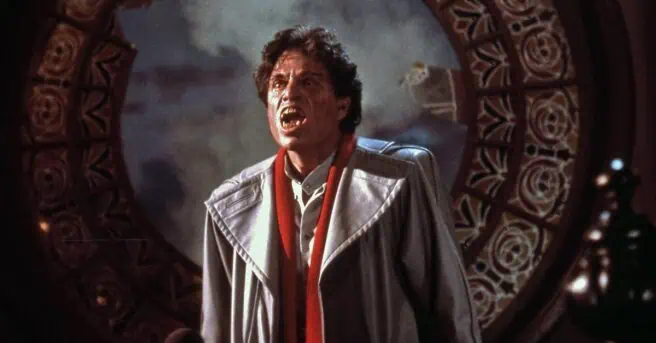
A couple of previous episodes of this show can be seen below. For more, check out the JoBlo Horror Originals YouTube channel—and don’t forget to subscribe!




The comment section exists to allow readers to discuss the article constructively and respectfully, focused on the topic at hand.
What’s Not Allowed