
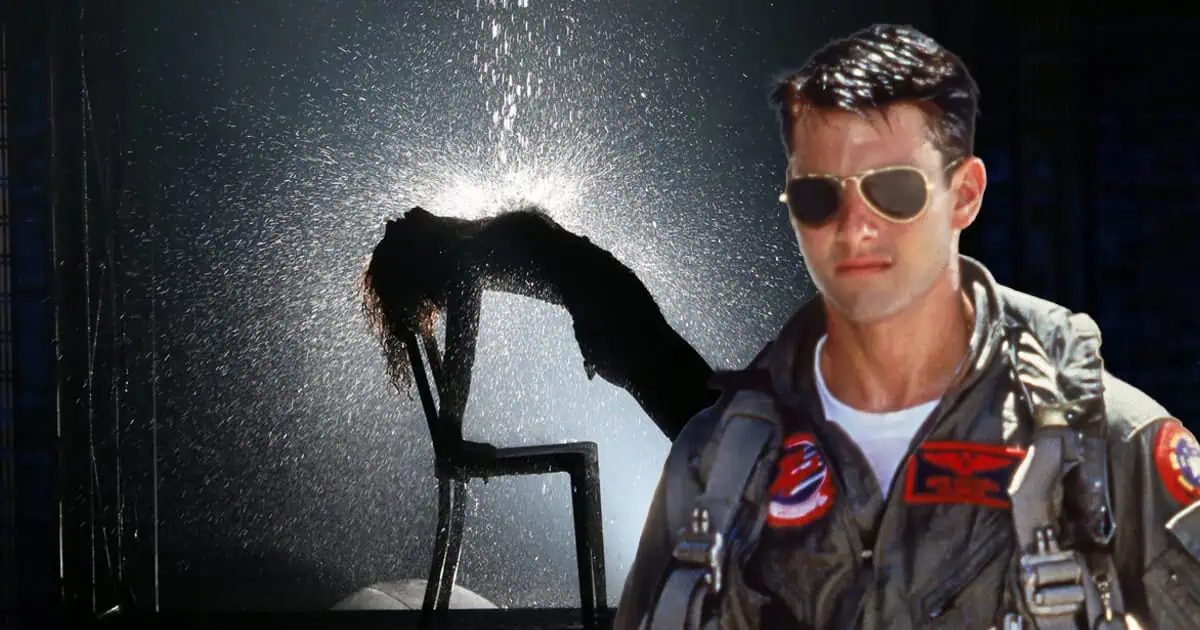

What image pops in your mind when you think of the iconic catalogue of movies made in the 1980s? Is it glowing neon soaked sets? Is it grimy New York cityscapes with dramatic lighting? Is it ripped Hollywood stars decked out in black leather or maybe women with big hair and small outfits? Maybe it’s all of those things, but it’s definitely at least one of them.
What makes the 80s such an iconic decade for pop culture is the way we see it when we look back. Smoky, saturated and neon-drenched scenes that displayed excess, energy, and everything in between. Let’s rewind back to our favorite generation of movies and talk about what sets the look of 80s cinema apart from anything before it, or after it. If you’re looking for a deep dive into the beauty of the 80s, while also explaining how its aesthetics provided an endless amount of inspiration for movies and tv shows since, this is for you. Let’s get into it (and make sure to check out our new Loving the 80s series HERE).
In the last decade and a half or so, movies that are set in the 1980s have become a dime a dozen. From horror movies, to biopics, to comic book movies and even indie dramas, filmmakers have attempted to replicate the look of this particular era to varying degrees of success. And they do this for a couple of reasons. Firstly, the 80s is now far enough in the past that moviegoers and audiences everywhere are becoming more and more nostalgic for it. Secondly, in a world where the modern day looks so flat and grey, and weirdly geometric, it’s nice to see movies that have that analog and hand made bright feel to them.
In the late 70s, movies like Taxi Driver and The Warriors showcased rich contrast but gritty and swampy color pallets. Movies looked like the world outside. Dark, grim, and unsettling. But as the 80s rolled in, America in particular was facing a new era of movies that reflected the desperate need for optimism in a time when post-war Americans felt dark and depressing for many. Movies faded from being realistic reflections of the world outside our window into aspirational adventures that showcased bright colors, loud synthesizers, and sweet cars. In some ways, the 80s felt like a re-imagining of reality itself. Everything was idealized, characters were beautiful and flashy as opposed to muted and sullen, and the emphasis on fun became the basis for the very aesthetic direction of movies.
So, what makes these movies look so good? Well, it’s simple but also extremely complicated. So, to make it easy, I’m going to identify what I consider to be the 5 staples of the 80s aesthetics. These categories are:
- Lighting
- Physical sets
- Costumes
- Music
- Posters
Each category is really an umbrella under which there is plenty of detail and subcategories. But let’s start with the lighting.
The Lighting
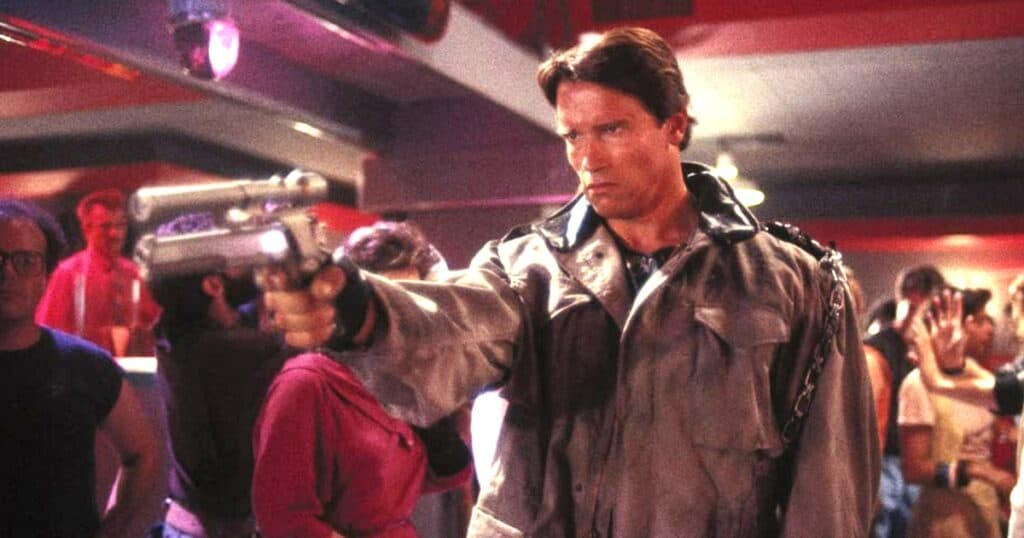
Neon lights have been used to illuminate our screens long before the 80s and will continue to do so long into the future. However, you have to admit that pink and teal neons take you right back to this decade every time. Movies like The Terminator, Blade Runner, and Manhunter are great examples of what colorful lighting can do for otherwise dark or dystopian subject matter. Shows like Miami Vice are notorious for this as well but that show is arguably as cinematic as it gets for the 80s. You’d be hard pressed to find an iconic 80s film that doesn’t have a red or blue or pink glowing hue bouncing off of the shiny leather of the characters. Even in places it doesn’t belong, it’s there.
Couple this with the rise of digital video games and consoles which all presented a slick neon aesthetic as well, and you’ve got yourself a corner of the market dedicated to this era. Even movies like The Lost Boys which sported less neon, but had multiple shots where the scene was soaked in red light which made for a perfect final showdown with the blood thirsty villains. The way light was used in these films was both meant to present the worlds on screen with excitement and eye-catching colors that can motivate the lighting choices simply looking “cool” and also to add flare to the already mesmerizing physical sets and locations. We’ve all seen tv studio on tv, but have we seen one like the neon-soaked studio in The Running Man? Nope.
From the 1940s through the 1980s, neon signs were a major form of commercial advertising. Downtown districts, motels, diners, bars, arcades, and shopping areas were filled with colorful glowing signs. By the 1980s, filmmakers could simply point a camera at many urban locations and capture that look. Simply, neon lights and harsh contrast made the movies look new and polished and slick, and decorated every frame with simple yet effective “vibes”. Even Rocky IV went the way of the neon which makes this particular installment in the franchise stand out specifically for being so rooted in 80s aesthetics. Mind if an aside, but it feels like neon lights were to the 80s what sad fluorescent lighting was to the 70s.
B-movies (and especially b-action movies) had less of this lighting style, but instead kept the smoky and back-lit vibes all the way up which honestly does create a similar visual intrigue and probably costed less as all you needed was a light behind the talent and a set full of people smoking cigarettes which is probably just what was actually happening on those Cannon films.
When we look at this aesthetic, it’s easy to see why modern movies set in the 80s lean into it so heavily. From the IT 2017 remake, Lisa Frankenstein, Bumblebee, Wonder Woman 1984 and so many others, it’s clear that one of the easiest ways to take your characters and audience right back to the 80s is just to turn on those humming neon lights and let the vibes do the work. But of course, that can only take you so far, the next thing it took to make that juicy 80s look on film, is the physical and practical sets. Let’s get into it.
Physical Sets
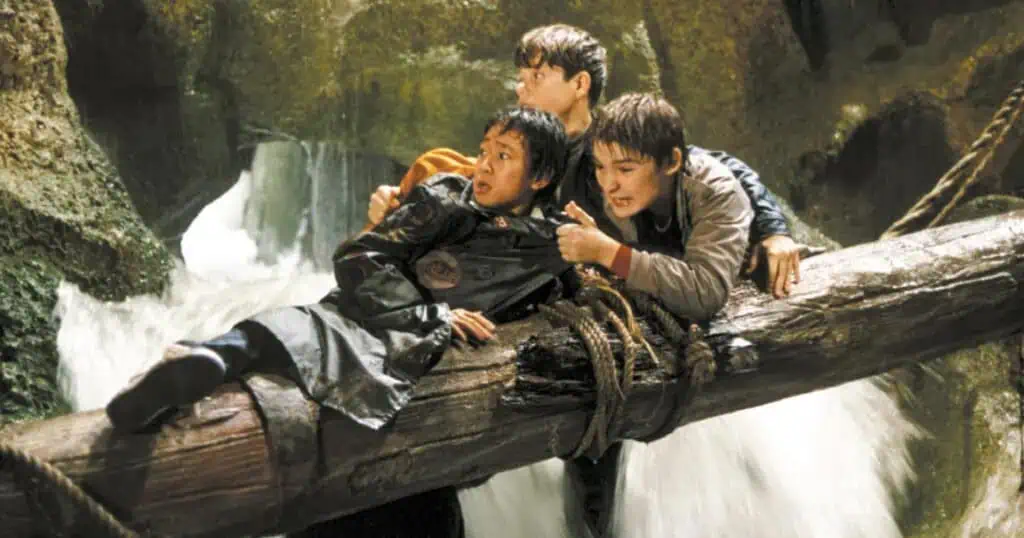
For my money, it doesn’t get ANY better for film sets than the 80s. The Goonies is one of the most recognizable films of the era because of its use of real tangible locations and sets. Look at the scene where they discover One-Eyed Willy’s pirate ship inside an underground rock cave. Nowadays, you’d see most of this done on a green screen or something similar, but when they made this movie they straight up BUILT THAT SHIT. Speaking of caves, look at the vampire hangout in The Lost Boys. All practical. And this was just the norm for the time. Any 80s film worth its salt went to the trouble of designing and building these sets and/or filming in real locations to add an authenticity to the story. We’re talking about REAL malls, REAL schools, REAL diners and theaters, and of course REAL houses.
Not to keep comparing to modern movies but while plenty of productions are using practical sets still, this was just the absolute standard of the time. Pick any genre and you’ll notice a tactile look and feel to the set. Even Empire Strikes Back and Return of The Jedi (The best Star Wars movies ever) which were made in the 80s and had bigger budgets than most movies STILL took the time to build out MOST of the stuff we see on screen. This is a topic that I hope never gets overlooked as it makes these artists and construction workers and set designers look like work horses in comparison to the 2 or 3 grips it takes to hang up a giant green screen on a wall for whatever movie Marvel is working on. Not to take away from these methods, but something about being in the real location makes the movie sit better with the eyes.
Look at any of the locations for Robert Zemeckis’s Back To the Future. For a filmmaker with a notorious love for tech and CG, this dude filmed his movie on location for almost every shot and it’s this kind of thing that makes the movie look timeless and less dated NOW. If you look at the composite or CGI from this era, it CLEARLY shows its age. But if you just look at the shots from Back To The Future, The Lost Boys, or Ghostbusters—it’s plain to see that if these moments were placed into a modern film of today, they’d fit right in. The same cannot be said for the digital effects, unfortunately.
Part of why it’s more rare to go practical with locations today is due to the rise of the dreaded “spoilers” which in the 80s weren’t a culturally accepted thing to avoid. There were big franchises, and some movies did have to hide details from the media to avoid being ruined for audiences, but those were few and far between. Nowadays, if Tobey Maguire is seen anywhere near the warehouse they film Avengers movies in, it’s spread online so much that by lunch there’s already 100 AI images created by fans to further drive conversation. In the 80s, you didn’t have that kind of thing so productions were able to just film in a mall and have people spectate without having to speculate.
I mean, imagine seeing all of the A-list actors in the MCU getting together at the same time to film the final brawl of Endgame in a practical location. People would be buying plane tickets just to be there and witness it. So instead, they film in a dungeon with flat lighting and mo-cap suits and then have overworked and burnt out VFX artists make the entire aesthetic of the movie in post-production. It’s not a dig, I’m just saying. No, you know what, it IS a dig. LOOK BETTER MARVEL! YOUR MOVIES COST ABSURD AMOUNTS OF MONEY SO THERE SHOULD BE NO EXCUSE FOR THIS UGLY SHIT.
Some of my personal favorite practical locations are the ones that are mostly unremarkable, but just feel so lived in and textured that it sells the shot. For the library in Breakfast Club, the hallways and parking lots of Ferris Bueller, the dojo in Karate Kid, the jungle in Predator, the precinct in Robocop. These places don’t look particularly special, but that’s because they’re just regular places with real history in every square inch. Do you know how expensive it must have been to build the sets for movies like The Princess Bride, The Labyrinth, or the Indiana Jones movies? A lot, for sure. But think about that investment for a second. More than 40 years later we can still watch those movies and marvel at the way they built entire caves and swamps in a way that I doubt we’ll be doing with CGI in the same amount of years. Like, nobody is going to find the horrifying CGI mustache remover from Justice League to be charming in 2066, but we DO find these weird little bastards (Gremlins) to be charming today, don’t we? They should have just painted over Cavill’s mustache like Cesar Romero in the 60s Batman show, right? They could have just put foundation over it and it would have come off as a cute little nod to previous DC stuff instead of haunting my nightmares and giving me the willies since 2017.
In short, adding neon lights to practical locations and set pieces made for some of the most iconic looking film universes of the 1980s, and within that universe were equally as interesting and visually flashy characters.
The Costumes
This one really speaks for itself. Big hair, black leather, bangles, bright spandex, and mullets galore! You will never see stuff like this in a movie and not know what decade it came from. In the 80s, music videos were just starting to rise to popularity and their influence on cinema was never as apparent as it was in the fashion and hairstyles of the characters. This was a decade when the goal was to stand out and skate on the cutting edge.
Marty’s outfit in Back To The Future is instantly recognizable to the point where wearing it on October 31st will result in someone mistaking it for a costume. The black trench coats of JD in Heathers, and the entire hoard of vamps in Lost Boys, or even the Cyndi Lauper hairstyle that everyone who was anyone tried in the 80s. These things were essential to the aesthetic of this era.

The fashion and hairstyles of 1980s movies became iconic because they reflected a decade defined by excess, individuality, and visual confidence. Filmmakers embraced bold colors, oversized silhouettes, leather jackets, denim, athletic wear, and highly stylized costumes that instantly communicated a character’s personality. Unlike many other eras that favored realism or subtlety, 1980s cinema often celebrated larger-than-life heroes, rebels, and dreamers. Characters from films such as The Breakfast Club, Top Gun, and Back to the Future wore outfits that were memorable enough to become part of popular culture themselves. The clothes were designed to stand out on screen, making characters instantly recognizable even from a silhouette.
It’s like every character was given a superhero costume that was meant to embody who they were in visual language. Bully characters could be easily identified without them having to say a word. They just had “the look”, and that’s something that we see less and less anymore as social media has made fashion trends faster, and easier to conform to, which results in many people simply dressing the same way. So, we put these extreme costumes together with practical locations and sets, and soak them all in bright pink and teal lights, and we blow fog and smoke all over that shit, and we’re looking at the ideal 1980s look and vibe.
Music
Okay, this is maybe one of the most important ones. The 80s sound was a tasteful mix that covered electro-pop, metal, synth wave, and good old fashioned rock n roll. Almost every single one of my favorite movie soundtracks comes from the 80s. The iconic theme of Beverly Hills Cop is still my ringtone if I ever take my phone off vibrate. Names like Kenny Loggins and Harold Faltermeyer are synonymous with this particular era as the synth heavy sounds they produced practically defined the decade.
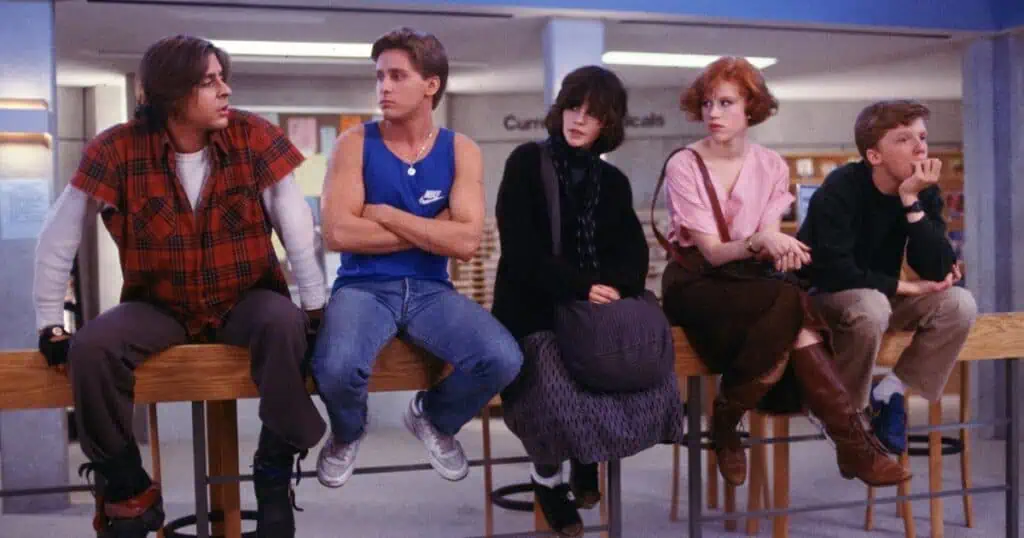
Needledrops were also a hot commodity in these movies with some of them being easier to equate to feature length music video montages than actual films. See movies like Flashdance if ya don’t believe me. Think about the best needle drops you can imagine. “Danger Zone” in Top Gun? “Eye of the Tiger” from Rocky III? “Don’t You (Forget About Me)” in Breakfast Club? Maybe “In Your Eyes” in Say Anything? These things coupled with a dynamic and bouncy synthesizer score made the sound of the 80s so recognizable that playing one note can take you back in time.
Posters
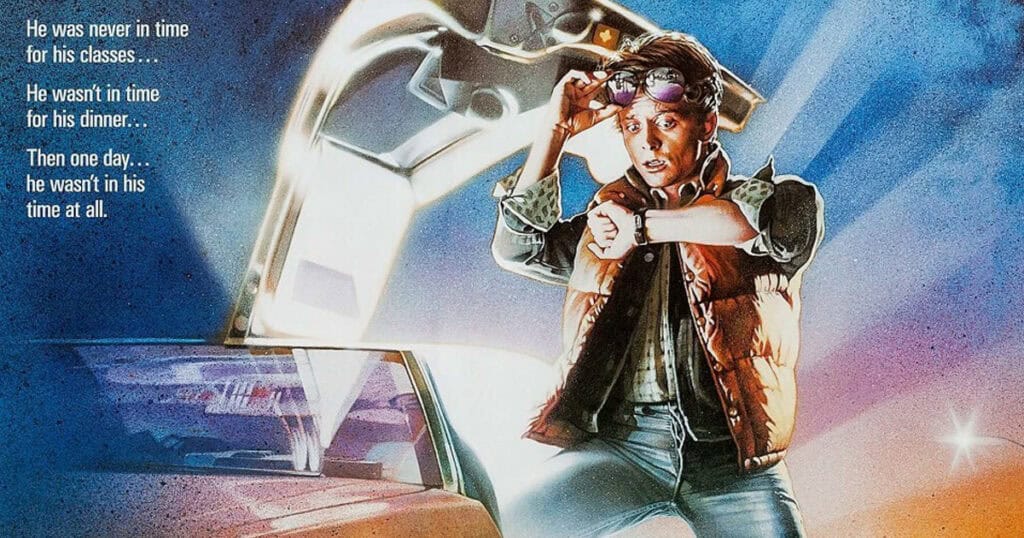
1980s movie posters stand out because they were designed to sell a feeling, a fantasy, or an adventure rather than simply show scenes from the film. Before the internet and on-demand trailers, a poster often served as a movie’s first and most important advertisement, so artists created bold, eye-catching images that could grab attention from across a theater lobby or video store. Many posters (a lot of them drawn by the late Drew Struzan) featured hand-painted illustrations instead of photography, using dramatic compositions filled with heroes, villains, vehicles, monsters, and key locations. A common design approach was the “adventure collage,” with the main character prominently displayed while supporting characters, action scenes, and important settings surrounded them, creating the impression of a much larger world waiting to be explored. Here are some of my favorites:
- Back To The Future
- National Lampoon’s Vacation
- Blade Runner
- Robocop
- Big Trouble in Little China
What makes 1980s movie posters especially notable today is their artistic ambition and sense of imagination. They frequently used vibrant colors, airbrushed effects, neon highlights, metallic typography, and memorable taglines to create a larger-than-life experience. Unlike many modern posters, which often rely on digital photo composites and recognizable actor faces, 1980s posters were often treated as standalone works of art. They emphasized emotion and excitement over accuracy, sometimes making modestly budgeted films appear epic and mythic. As a result, these posters remain highly collectible and influential, serving as visual symbols of the decade’s distinctive blend of optimism, spectacle, and escapist entertainment.
The Ultimate Mood-Board
These 5 elements combined create a mood-board of the 1980s that has bred nostalgia for all of us and inspired countless period piece movies since. It’s an era we love because of how easy it is to picture in our minds.
Do you think modern movies can live up to the best of the 80s? Let us know in the comments!













The comment section exists to allow readers to discuss the article constructively and respectfully, focused on the topic at hand.
What’s Not Allowed