

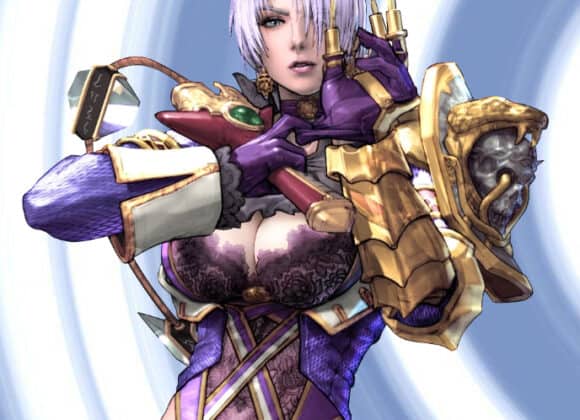

More than any other console, I remember the launch of the Sega Dreamcast like it was yesterday. In North America, the date was September 9, 1999. I didn’t have a pre-order for the system, but I was determined to lock one down on day one. My friend Brendan and I decided to split the cost, though he paid more than I did. We stumbled upon a scummy independent video game store in Selden, Long Island, New York, with a Jabba the Hutt-looking dude grinning behind the counter. In the end, he sold us someone else’s pre-order, on the condition that we purchase a second controller, more than one game (we bought Sonic Adventure, SoulCalibur, Powerstone, and Hydro Thunder), and two VMU memory cards. I don’t recall the total, but it wiped us out. Nevertheless, we emerged victorious.
In the coming years, the Sega Dreamcast would become one of my favorite video game consoles of all time, despite its limited library and short lifespan. As soon as we could, we hacked the system, transforming a burned startup disc into the console’s entire library. I still have that Dreamcast to this day, and it still works. While making this list, I tried to be objective, but my rose-tinted glasses for the system and fond memories of specific games significantly color this Top 10. Consider this list more personal than the others we’ve posted in the past few weeks. I have no regrets. I still love the Sega Dreamcast. It deserved better. Let’s do this.
- Soulcalibur (1999) – Best Overall Sega Dreamcast Game
- Marvel vs. Capcom 2 (2000) – Best Tag-Team Fighting Game
- Powerstone (1999) – Best Environment-Based Fighting Game
- Crazy Taxi (1999) – Best Score Attack Game
- Jet Set Radio (2000) – Best Vibes
- Resident Evil: Code Veronica (2000) – Best Survival Horror
- Quake III Arena (1999) – Best Arena Shooter
- Shenmue (1999) – Best Open-World Action
- Cannon Spike (2000) – Best Shoot ’em up
- Ikaruga (2001) – Best Shmup
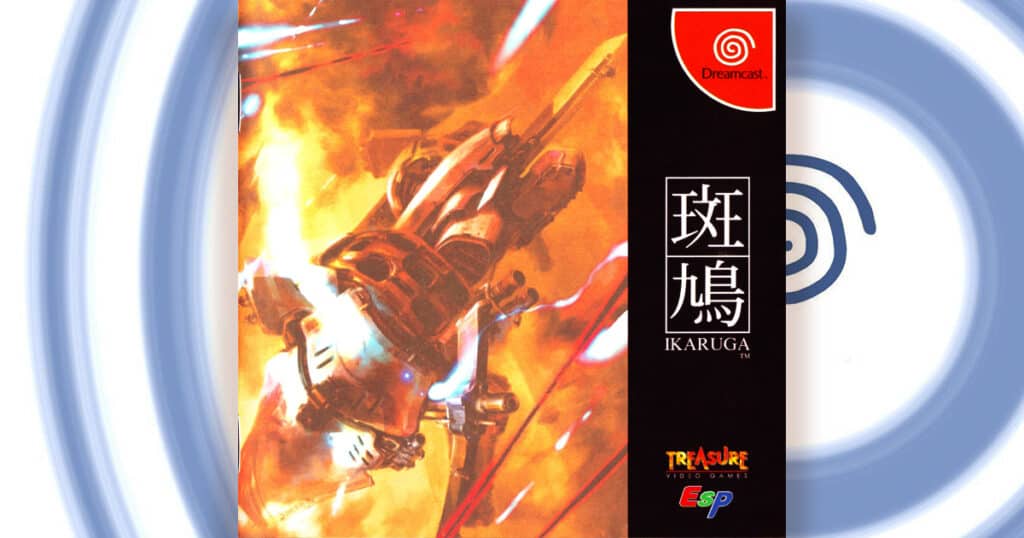
10) Ikaruga
- Developer: Treasure
- Publisher: Sega / Treasure
- Release Year: 2001
- Genre: Shoot ’em Up (Shmup)
- Players: 1–2 Players
- Known For: Polarity-switching mechanics, brutal difficulty, precision gameplay
- Why It Matters: Reinvented the shmup genre by combining puzzle-like mechanics with intense bullet-hell action, becoming one of the most respected arcade shooters ever made.
Anyone who’s played Treasure’s Ikaruga is more than aware of the game’s blistering difficulty and ingenious game design. In this spiritual successor to Radiant Silvergun, you play as a rebel pilot named Shinra. While piloting a ship called the Ikaruga, you flip between two polarities, black and white, and you’d better be quick. All enemies and bullets in the game are either black or white. Bullets that match the player’s color are absorbed, while the others kill the player. Sounds simple enough, doesn’t it? Oh, you sweet summer child, you’re in for a time.
Whether you approach Ikaruga as a single-player or cooperative experience, it’s a ride. This maddening shmup essentially forces you to solve environmental puzzles on the fly as you navigate a storm of black and white projectiles. If you’re playing with a partner, your coordination and communication must be off the charts, like Pacific Rim levels of synchronization. Finishing the game is a point of pride, but mastering the game, making that high score climb, is what it’s all about.
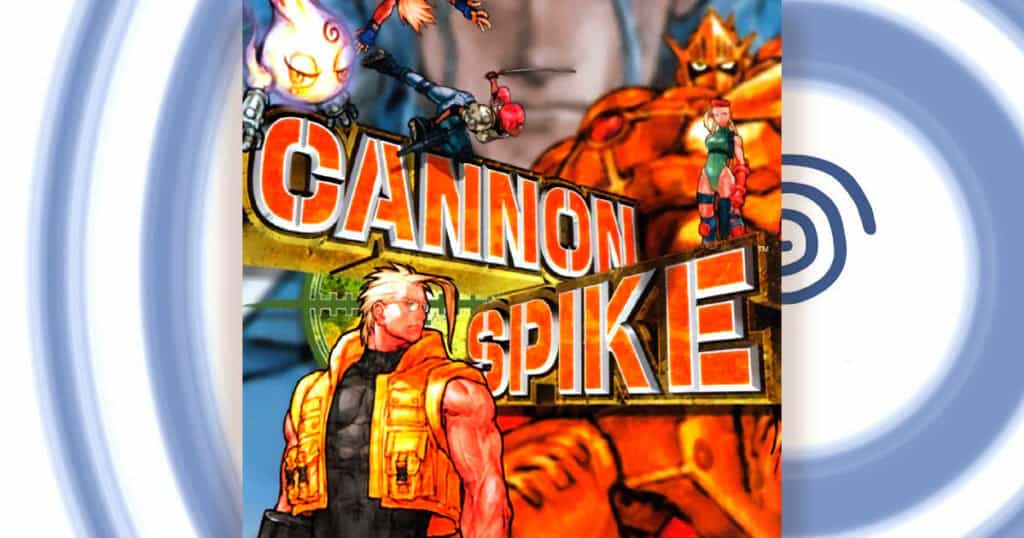
9) Cannon Spike
- Developer: Psikyo
- Publisher: Capcom
- Release Year: 2000
- Genre: Multi-Directional Shooter
- Players: 1–2 Players
- Known For: Capcom crossover characters, frantic arcade action, cult-classic status
- Why It Matters: Blended arena shooting with fast-paced arcade chaos and became one of the Dreamcast’s most underrated hidden gems.
If you’re a fan of Smash TV or top-down, multi-directional shooters in general, chances are you’ve played, or at least heard of, Cannon Spike. Developed by Psikyo and published by Capcom, this fast, frenzied, short-but-sweet action shooter is a must-have on the Dreamcast. Featuring seven playable characters from or inspired by Capcom games, Cannon Spike features Cammy and Charlie from the Street Fighter series, Arthur from Ghost ‘n Goblins, Siva from Midnight Wanderers, Linn Kurosawa from Alien vs. Predator, and original characters Shiba Shintaro and Simone. Oh, and if you’re savvy, you will unlock Baby Bonnie Hood from Darkstalkers and Mega Man from, well, you know.
Using a series of standard and special attacks, players rush through a gauntlet of relentless firefights, the action scarcely letting you come up for air. While the game did not debut to rave reviews, it eventually became a cult classic. The controls are tight, the movement is floaty, but in a way that’s satisfying and feels by design. The attacks, special moves, and overdrive mechanics are also on point. On its face, Cannon Spike is a quick-and-dirty experience that leaves you exhilarated and ready to amp up the difficulty. I recently played through the game again on my OG Dreamcast, and it still rips.
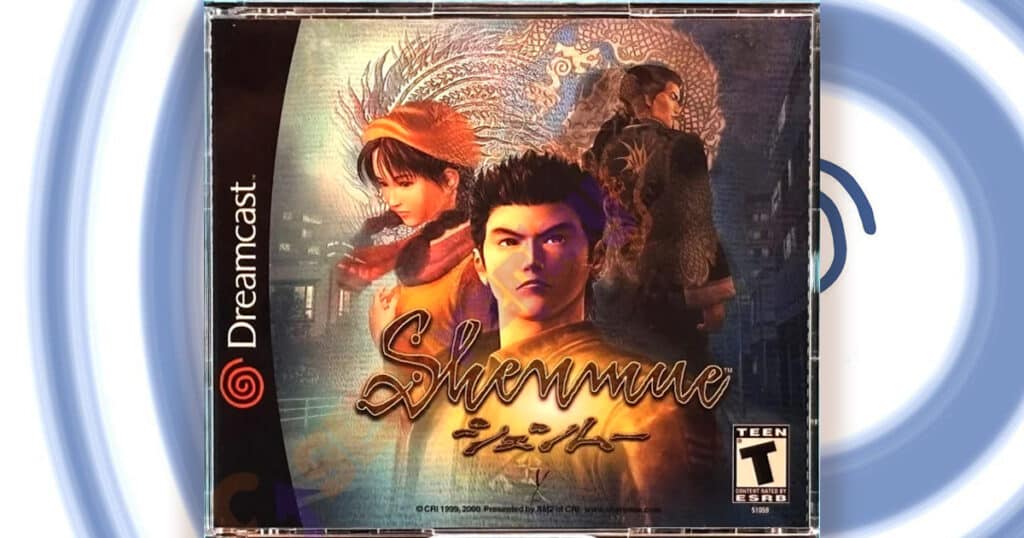
8) Shenmue
- Developer: Sega AM2
- Publisher: Sega
- Release Year: 1999
- Genre: Open-World Action Adventure
- Players: 1 Player
- Known For: Real-time world simulation, cinematic storytelling, QTEs, immersive detail
- Why It Matters: Pioneered many mechanics now standard in open-world gaming, including dynamic NPC schedules and cinematic exploration.
To call Shenmue anything less than a revelation would be a crime. Before games like Yakuza (or, Like a Dragon) were making a meal out of city-wide, narrative-driven action games, Sega’s Shenmue was putting in work. In the game, you play as the teenage martial artist Ryo Hazuki as he investigates his father’s murder in Yokosuka circa 1986. Dripping with 80s-inspired flair, the game finds players searching for clues, interacting with citizens, solving logic puzzles, and kicking the crap out of street toughs a la Virtua Fighter-style scrums.
At the time, the level of detail and depth of Shenmue was unheard of on a home console. It was a pioneer of so many game mechanics that modern players take for granted, such as well-timed quick-time events, a real-time clock that kept to a strict schedule, and interactivity with items that revealed hidden secrets. Big deal, right? It was. Shenmue was immersive in a way many games tried and failed to achieve. After Shenmue, every game developer under the sun wanted a taste of that Shenmue magic in their game, but few managed to hit that high-water mark until later. I’ll never forget getting a part-time job down at the docks, choosing my meals, going to the arcade to play games like Hang-On and Space Harrier, and adding to my collection of capsule toys. Shenmue deserves some respect for its name, and I’m gonna give it.
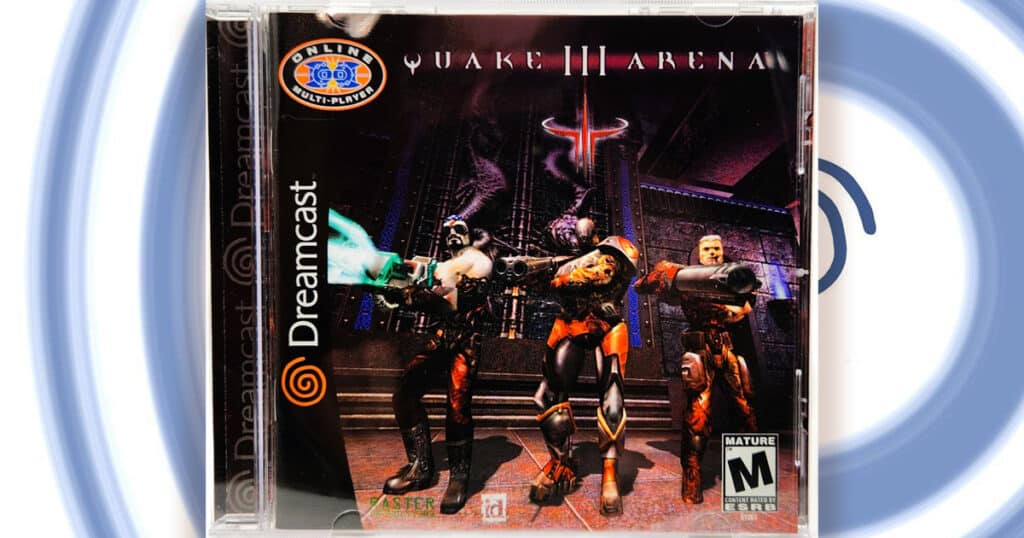
7) Quake III Arena
- Developer: id Software
- Publisher: Sega
- Release Year: 1999
- Genre: Arena First-Person Shooter
- Players: 1–4 Players (Offline), Online Multiplayer
- Known For: Fast-paced combat, rocket launcher battles, online play
- Why It Matters: Helped bring competitive online arena shooters to home consoles while showcasing the Dreamcast’s online capabilities.
Who needs a Story Mode when it comes to Quake? All you need to have fun in this game is a claustrophobic battleground and nothing but rocket launchers! Quake III Arena is all about interplay. It’s a perfect storm of simple shooting mechanics, speed, and precision that make it one of the best arena shooters ever made. Much like the “Fight Off the Living Dead” minigame in Timesplitters 2, if you angle your weapon a specific way, it’s headshots all day, every day, baby! If everyone in the arena knows this trick, Quake III becomes a game about positioning, reaction time, and using every trick of the environment to your advantage.
I remember screaming myself hoarse while playing Quake III Arena on the Dreamcast. There was always time for another round, whether I was blowing away bots with my Rocket Launcher or making a mess with my BFG10K’s splash damage. If you’re looking for depth, you won’t find it here. Quake III Arena is all about having a good time with friends. It’s got that magic that makes you cry out for “just one more round,” after your opponent hands you your ass on a silver platter. It looks great (for the time), handles like a dream, and stands the test of time. I would play Quake III Arena at the drop of a hat. Bring it on.
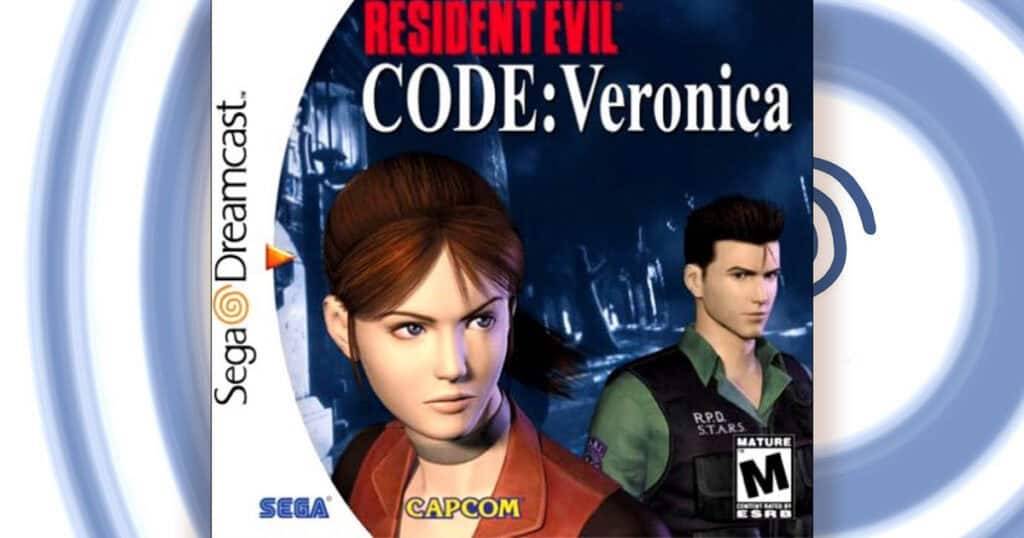
6) Resident Evil: Code Veronica
- Developer: Capcom Production Studio 4
- Publisher: Capcom
- Release Year: 2000
- Genre: Survival Horror
- Players: 1 Player
- Known For: Fully rendered 3D environments, cinematic presentation, Claire and Chris Redfield
- Why It Matters: Marked a major technical and narrative evolution for the Resident Evil franchise during the Dreamcast era.
You can rank Resident Evil: Code Veronica anywhere you want, but nothing changes the fact that when this game hit the Dreamcast, players were quickly changing into the brown pants in case of an accident. Instead of featuring pre-rendered backgrounds, Code Veronica boasted real-time 3D environments, making the experience more cinematic than previous entries. In the game, you either play as Clair or Chris Redfield, a brother-sister duo hoping like hell to survive a zombie onslaught.
While several RE games are higher in quality than Code Veronica, this game hit hard on the Dreamcast, with players marking it as an evolutionary step for the franchise. Rumors persist that Capcom is due to announce a Code Veronica remake (perhaps during Summer Games Fest), but there’s nothing quite like the original. It was the first Resident Evil game that made you feel like you were in an action film. Still, there were plenty of puzzles and mysteries for RE purists to solve. In other words, Code Veronica paved the way for games like Resident Evil 4 to run.
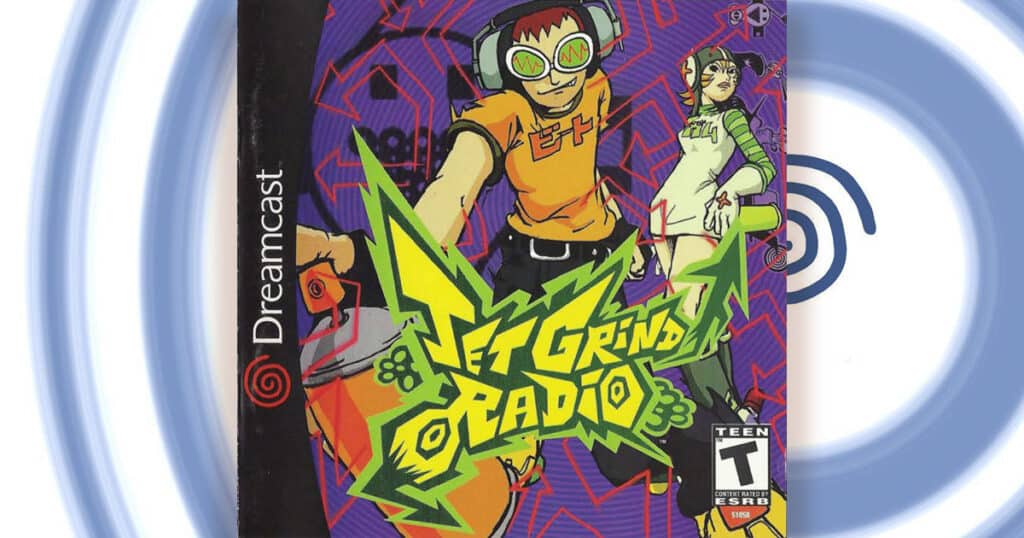
5) Jet Set Radio
- Developer: Smilebit
- Publisher: Sega
- Release Year: 2000
- Genre: Action / Rhythm / Sports
- Players: 1 Player
- Known For: Cel-shaded graphics, graffiti mechanics, iconic soundtrack
- Why It Matters: Introduced cel-shaded visuals to mainstream gaming and became one of Sega’s most stylish and influential cult classics.
From the moment I heard the smooth grooves of Sega and Smilebit’s Jet Set Radio. I was in love. I grew up in roller rink arcades in the ’80s (my mom was a gifted roller skater), and I’ve always had a deep appreciation for street art. When Jet Set Radio dropped the beat, I listened. Directed by Masayoshi Kikuchi and featuring art by Ryuta Ueda, Jet Set Radio is a 1990s-set rhythm game with attitude, addictive flow-state gameplay, and style for miles.
While riffing on Japanese pop culture, Jet Set Radio brandishes a middle finger to the man while you skate your way through reinterpretations of Shibuya and Shinjuku. The cel-shaded presentation gives the game a unique flavor that feels like graffiti come to life. Sega has mentioned that it’s actively looking to revive the franchise, and I could not be more excited. It will be difficult to top the original, though. It’s a time-and-place game, like Tony Hawk meets Elite Beat Agents, with a splash of Banksy. It’s a classic if there ever was one, and I want more. Give it to me, Sega!
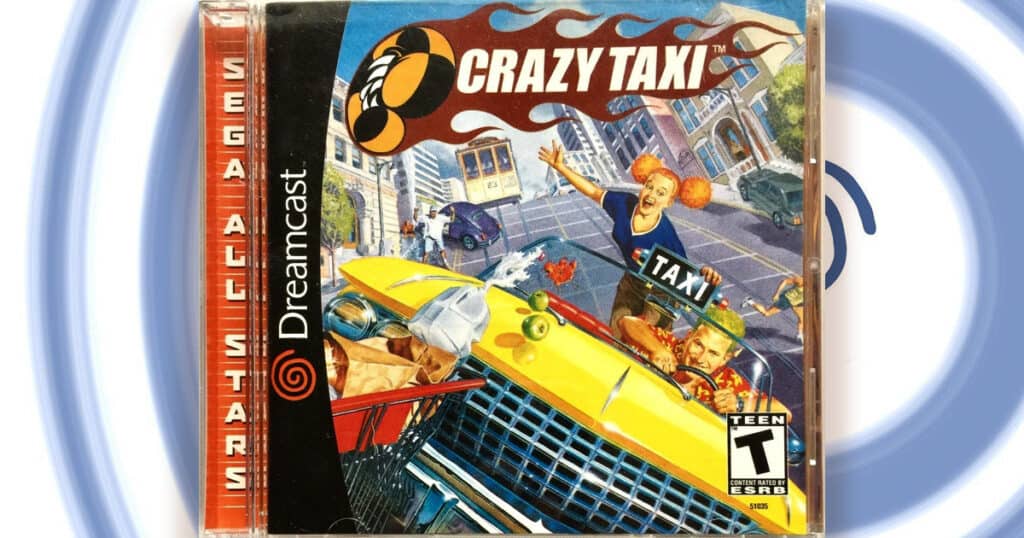
4) Crazy Taxi
- Developer: Hitmaker
- Publisher: Sega
- Release Year: 1999
- Genre: Arcade Racing
- Players: 1 Player
- Known For: Time-based gameplay, outrageous driving, punk rock soundtrack
- Why It Matters: Perfectly captured Sega’s arcade spirit at home and became one of the Dreamcast’s signature experiences.
Yeah, yeah, yeah, yeah, yeah! Playing Crazy Taxi at the arcade is great, but the moment this highly addictive, score attack driving game came to the Sega Dreamcast, it was time to put the top down and go for a wild ride. In the game, you play as different cabbies, racing around the clock to pick up fares and earn extra cash by making the trip as unhinged as possible.
To progress through the game, players perform “crazy stunts” to increase their scores and overall ratings. Crazy Taxi is a skill-based game that requires quick thinking, faster reflexes, and map memorization to take advantage of shortcuts and avoid hazards. A high-energy soundtrack featuring bands like The Offspring and Bad Religion powers the experience, making it impossible not to sing along as you put the fear of God into one passenger after the next with your insane driving. Again, Sega says they’re working on a Crazy Taxi revival, with details and gameplay debuting soon. I’ll keep my eye out, but you never forget the first time you get behind the wheel of this Dreamcast classic.
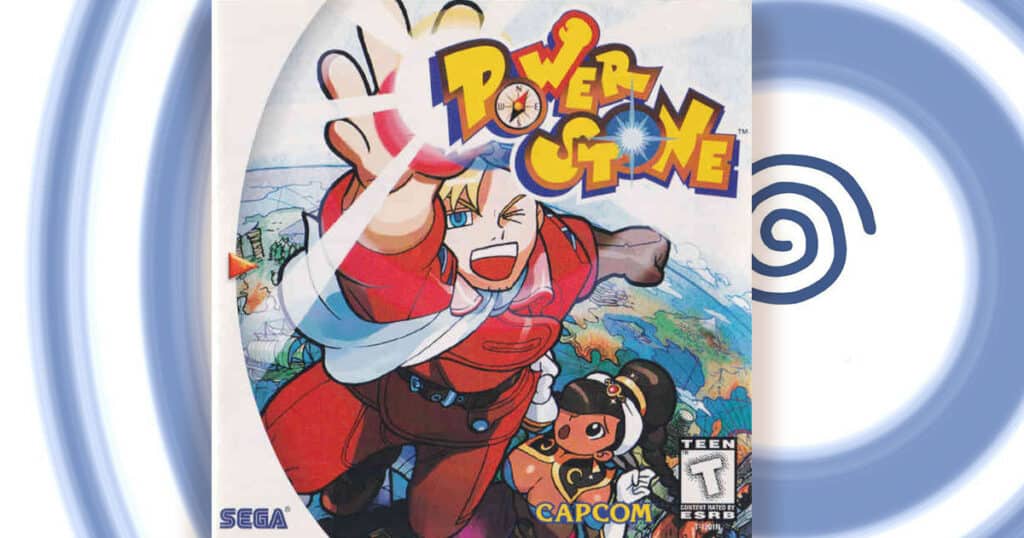
3) Powerstone
- Developer: Capcom
- Publisher: Capcom
- Release Year: 1999
- Genre: 3D Arena Fighting
- Players: 1–2 Players
- Known For: Interactive stages, environmental weapons, over-the-top transformations
- Why It Matters: Expanded the fighting genre with free-roaming arenas and chaotic multiplayer gameplay that felt unlike anything else at the time.
I’m not gonna lie, I struggled with this one. Capcom’s Powerstone and Powerstone 2 are both on the Dreamcast, but how do I choose? On one hand, Powerstone 2‘s expanded character roster, evolving levels, and 4-player gameplay are pure party game bliss. Still, there’s something so incredibly satisfying about Powerstone‘s snappy, stylish, one-on-one madness that makes everything happening in the game more personal, urgent, and hard-hitting. You can disagree, but know that I agonized over the choice between the two for days. I need to go with my gut.
For me, nothing comes close to the thrill of a Wang-Tang versus Wang-Tang barroom brawl in Tong-An, or uppercutting the shit out of someone with Falcon’s Power Hurricane, the snap, crackle, and pop of each hit increasing your opponent’s blood pressure level. Playing with items on or off, it hardly matters, but when that meat comes out, it’s a mad rush to the meal, the result of the match changing on a dime, unless it doesn’t. Few fighting games get my blood pumping like Powerstone. Throwing items is lightning quick, Rogue’s head stomp is a motherf**ker, and if you know how to use the environment to your advantage, your opponent will regret the day they met you for eternity. To them, I say, cry more. Let’s go another round!
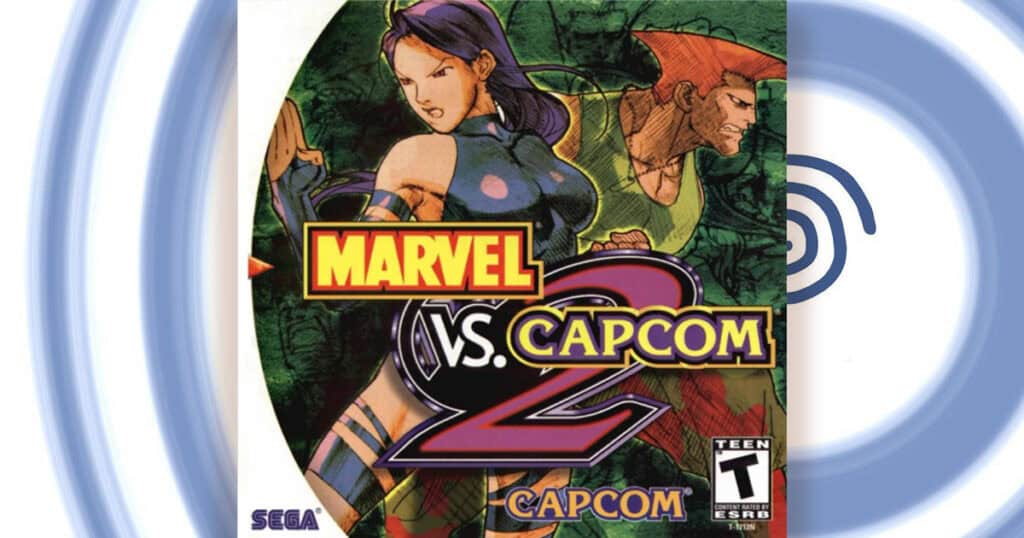
2) Marvel vs. Capcom 2: New Age of Heroes
- Developer: Capcom
- Publisher: Capcom
- Release Year: 2000
- Genre: Tag-Team Fighting
- Players: 1–2 Players
- Known For: Massive roster, hyper-fast combat, “I Wanna Take You for a Ride” soundtrack
- Why It Matters: Became one of the most beloved and competitive fighting games ever made, helping define the Dreamcast’s reputation among fighting game fans.
“I wanna take you for a ride!” That song! What a bop! Every time I hear it, I can’t help but rock the f**k out, my head snapping from side to side, my shoulders swaying, and my eyes lighting up! It’s time to play one of the greatest fighting games of all time, and it’s not even up for debate. In the game, players select from a who’s who of Marvel and Capcom-related characters for a no-holds-barred tag-team-style battle that lets you become your favorite heroes, villains, and everyone in between!
The roster for this game is absurd. My go-to teams were often Chun-Li and Felicia, Ryu and Psylocke, B.B. Hood and Shuma-Gorath, and Cammy White and Jill Valentine. I got my ass kicked plenty of times, but I had some of the best times of my fighting game history squaring up against friends in this game. Yes, the immense character roster helped, but it was the air-tight, kinetic, and hard-hitting gameplay that made it a slam dunk. The Dreamcast was exceptionally good for fighting game enthusiasts, and few games have reached the heights of Marvel vs. Capcom 2 since.
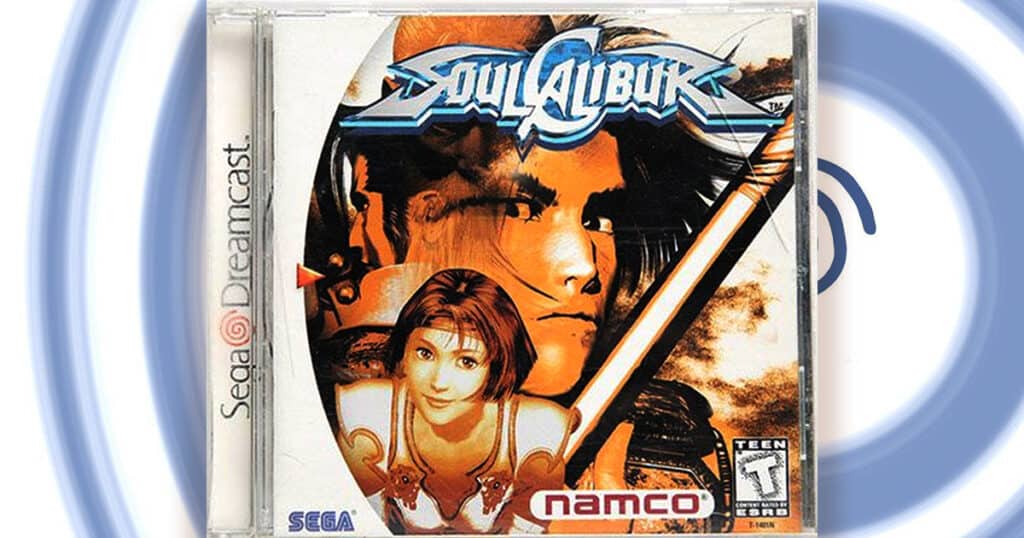
1) Soulcalibur
- Developer: Project Soul
- Publisher: Namco
- Release Year: 1999
- Genre: Weapon-Based Fighting
- Players: 1–2 Players
- Known For: Arcade-perfect visuals, fluid combat, ring-out mechanics
- Why It Matters: Widely considered one of the greatest launch titles ever released and a showcase for the Dreamcast’s technical power.
What could take the top spot if not Marvel vs. Capcom 2? Soulcalibur, my friends. Good lord, Bandai Namco Entertainment spoiled us with this one. Soulcalibur is the ultimate Dreamcast experience from top to bottom. Showcasing the console’s power and ability to recreate “arcade perfect” action wherever you play, Soulcalibur is a brutal, strategy-based fighting game that you could button-mash your way through, but then you’d be robbing yourself of a rich gameplay system that reacts to every twitch of the controller.
Instead of maining a specific character, Soulcalibur inspired me to get good at everyone, with Kilik, Taki, Ivy, Sophitia, Mitsurugi, and Astaroth being among my favorites to use. Whether unleashing an all-out beat-down or declaring victory because of a ring out, Soulcalibur was the reason I got to school the next day with only three hours of sleep. I didn’t want to play it. I needed to play it. Soulcalibur made every bit of haggling and up-selling on September 9, 1999, worth every penny and more. If you own a Dreamcast, you owe it to yourself to let loose with some Soulcalibur.
The Dreamcast may have had a short lifespan, but its influence on modern gaming remains enormous. From online console gaming to open-world storytelling and arcade-perfect fighters, many of the system’s innovations helped shape the industry that followed.
FAQ: Sega Dreamcast Games
What was the best Sega Dreamcast game?
Many fans consider Soulcalibur the best Sega Dreamcast game because of its groundbreaking graphics, responsive weapon-based combat, and near-perfect arcade adaptation. Other top contenders include Shenmue, Marvel vs. Capcom 2, and Crazy Taxi.
Why is the Sega Dreamcast still popular?
The Sega Dreamcast remains popular because of its innovative hardware, arcade-perfect ports, experimental game design, and strong lineup of cult classics. The console also developed a passionate retro gaming community after Sega discontinued it in 2001.
What made the Dreamcast different from other consoles?
The Dreamcast was ahead of its time in several ways, including built-in online support, downloadable content, VMU memory cards with mini-games, and highly accurate arcade conversions. Many of its ideas influenced later consoles from Sony, Microsoft, and Nintendo.
Was the Dreamcast a commercial failure?
Although critically acclaimed, the Dreamcast struggled commercially against Sony’s PlayStation 2. Sega discontinued the console in 2001, making it the company’s final home gaming system.
What are the rarest Dreamcast games?
Some of the rarest and most valuable Dreamcast games include Cannon Spike, Marvel vs. Capcom 2, Project Justice, Giga Wing 2, and Illbleed.
Did the Dreamcast have online gaming?
Yes. The Dreamcast was one of the first home consoles with built-in internet functionality. Games like Phantasy Star Online and Quake III Arena helped pioneer console online gaming.
What was the Dreamcast launch date?
The Sega Dreamcast launched in North America on September 9, 1999, often marketed as “9/9/99.”
Why do retro gamers love the Dreamcast?
Retro gamers appreciate the Dreamcast for its creativity, arcade energy, unique exclusives, and experimental spirit. Many fans also view it as Sega’s last great console effort before leaving the hardware business.
What do you think about our Top 10 Sega Dreamcast Games list? What’s your Top 10 list look like? Leave a comment below and let us know what your favorite games for the Sega Dreamcast are!




















The comment section exists to allow readers to discuss the article constructively and respectfully, focused on the topic at hand.
What’s Not Allowed