


The Birth of Turtlemania
In 1984, two best friends were sitting in their unfurnished slum of a house, watching cartoons and drawing comedy comic strips to entertain themselves. One friend sketches out a Turtle standing on 2 legs with a head wrap and a pair of nunchucks. He shows his buddy, who adds a few things to the sketch, and writes a name on it. That name, was Teenage Mutant Ninja Turtles.
There are few single years in history that are as significant in pop culture as 1984. The year we met the Ghostbusters for the first time, the year Mr. Myagi taught Daniel LaRusso to defeat his bullies, The Terminator blasted his way onto the big screen, and a small indie comic about 4 turtle siblings was conceived of- soon to take take the entire world by storm. What started as a dark and gritty comic book meant to parody more popular superheroes, quickly proved to be a viable property that would leave the two friends who created it to face levels of fame and success that would eventually drive them apart, while their creation became bigger, and bigger, and bigger. This is the story of the Teenage Mutant Ninja Turtles, and how this scrappy black and white comic book became a multi-billion dollar franchise that is still going strong over 40 years later.
The Teenage Mutant Ninja Turtles were created by the now-legendary duo of Peter Laird and Kevin Eastman. 2 lifelong comic book fans from the east coast who started their careers in the mid-80s after jokingly doodling a group of mutated turtles who defend New York from their arch rivals, The Foot Clan. Legend has it that the buddies were living in a small house with minimal furniture where they would sit together in front of the TV and watch cartoons while they’d draw their own comics that were strictly for them. The pair were actively trying to break into comics but neither had achieved any success with the big two publishers of the time, those publishers, of course, being Marvel and DC. One night, Eastman draws up the first sketch of who would eventually become Michaelangello, shows it to Laird, and the friends run with the idea.
The original idea was (believe it or not) a parody of one of Marvel’s most famous heroes- Daredevil.
Daredevil’s comic book origins begin with a young boy in Hell’s Kitchen called Matt Murdock, who is rendered blind after saving a civilian from a truck crash which resulted in toxic waste splashing his eyes and frying them permanently. Eastman and Laird imagined that that same “ooze” trickled off the street into the sewers where it infected 4 regular turtles and a sewer rat into becoming the humanoid heroes we’d come to know and love. The ninja aspect was also pulled from Daredevil, as well as drawing inspiration from his sworn enemies, “The Hand” which Eastman and Laird would call “The Foot” for their story.
The friends knew that what they had was unique, and set the tone for a violent series of comic books that they could call their own. So, in 1984, the first issue of Teenage Mutant Ninja Turtles was published. But not with one of the big two publishers. Instead, they scraped up all the money they had and released the book independently. They called their company “Mirage Studios” which, in reality, was just the two artists and was headquartered at their shared home in New Hampshire. This was the very definition of an indie comic book. But to their surprise, the first issue was a smash success.
The ninja turtles that we know NOW are family-friendly and fun loving siblings who fight crime with karate and comedy, but the original run was a grimy and colorless tale of violence and corruption that hooked readers instantly. The turtles were based on Daredevil, but their sensei, Splinter, was a clear play on Daredevils sensei, Stick. A wise old man who knew how to train these broken boys into warriors. Neither Eastman nor Laird were prepared for the success that the first issue would reach, selling out all 3,000 copies they printed. The path forward was clear, keep writing and drawing the TMNT books.
From Indie Comic to Stratospheric Success
For the next few years, the friends would keep pushing books out and growing their friendship, partnership, and creator-owned IP, even expanding the cast of characters to include the likes of April O’Neal, Casey Jones, and of course, Shredder. But the real success of these pizza-loving reptiles would come in 1987, when Eastman and laird would ink a deal to have their now iconic characters made into action figures.
For context, these boys had made a semi-living producing their comics over the course of just a few years, but when they were approached by Playmate Toys in 1987, they were about to take their living-room creation into the stratosphere, selling over $1 billion worth of action figures from ‘87 to ‘89. Now, this is a good time to remind you that this highly lucrative deal was being brokered by just these two guys. They didn’t have and editor, a publisher, a manager, or any staff to help them. They owned the characters outright and knew that they needed to keep control of them. So, playmate makes the toys, they soften the rougher edges of the characters by giving them colorful masks and redesigning the turtles to look more… cute, they sell BIG, and before long, a small indie comic and a billion dollar line of action figures wouldn’t be enough. Enter The Teenage Mutant Ninja Turtles animated series.
The original cartoon would ultimately become the catalyst for what would eventually drive the friends apart and become one of the most infamous feuds in comics history. See, Laird and Eastman were dreamers. They enjoyed making a now comfortable living on their own terms, and figured the toy and cartoon deals were merely a means to fund their dream of working together on comic books. They would spend hours drawing their comics and passing unfinished pages back and forth to each other until they had a perfect page, and it was everything they always wanted. Until it wasn’t.
The pressure of the increased popularity and what was eventually titled “Turtlemania” started to weigh in and cause the responsibility of owning the characters to take away from the fun of it. By the time the animated series had premiered, Eastman and Laird barely spoke to each other anymore and could almost never be found collaboratively working together. And while their creation was alive and well beyond either artist’s expectations, the relationship between these two friends was in shambles. And, of course, both the success AND the beef would only grow bigger bigger.
The Silver Screen and Practical Magic
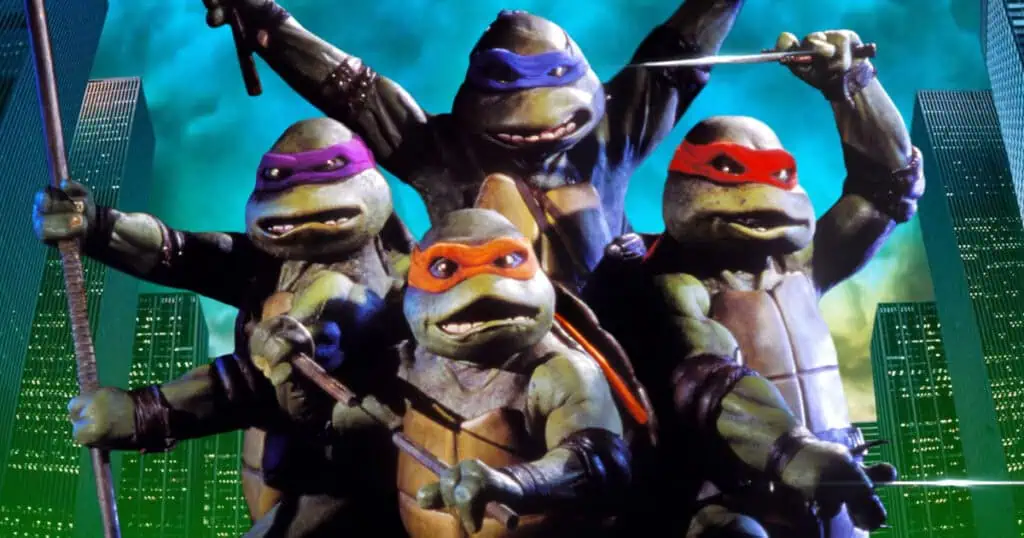
As the comics, toys, and animated series proved to be lucrative, it didn’t take long at all for Hollywood to come knocking and looking to produce a live-action feature film. In the mid 80s, around the time the cartoon was coming out, iconic b-movie producer and filmmaker Roger Corman approached the boys to make a film under his new production banner, New World Pictures. This version of the film would have seen actors like Billy crystal painted green to look like a turtle… which we’re all glad didn’t happen. But the script, and the production locations were good enough to get a movie into production. This would eventually become the 1990 New Line Cinema indie movie that we all know and love today.
Jim Henson was hired to create the revolutionary turtle costumes which (at the time) were the single biggest undertaking of his career. And Henson did such a great job with these foam, clay, and rubber suits, that they stand as arguably the best these characters have ever looked aesthetically. Fully practical suits were made with movable animatronic eyes, mouths, and facial muscles, while the actors wore muscle suits that feel more real than anything else we’ve seen. The way these characters catch light, interact with each other, and perform stunts all add to the magic of why this first trilogy of films resonated with audiences.
The movie would adapt elements from Eastman and Laird’s initial comic book run, as-well-as taking key iconic aspects from the cartoon like the turtles’ love for New York pizza, and skateboarding in the sewers. As well, we’d see Casey, April, and Shredder appear in the film. The first movie had a budget of only 13 million dollars which almost a waste of money when the film went into production and nobody wanted to distribute it. Basically, the movie was getting made, but it looked like there would be no way for anyone to actually see it. Disney, paramount, Fox, Columbia, universal- no studios were interested in releasing the movie. It wasn’t until New Line cinema (primarily known for distributing B-movies in the 80s) saw the film and picked it up that hope was restored.
They released the movie in 1990 on theaters and to their surprise, it was ALSO a massive success making over $200 million at the global box office. This was just the beginning. While Eastman and Laird were basically strangers to each other at this point, their characters and stories belonged to the masses now and they were blowing up beyond compare. Toy sales kept increasing, the animated series kept running, and now the movie. This was the height of 90s turtlemania.
In the film, we see the origin of the turtles and their sensei splinter, who was basically the pet rat of a martial arts expert who was slain by The Foot. Now their trainer, splinter adopts the turtles and teaches them how to speak, how to survive, and most importantly, how to fight. Now vigilantes who live in the shadows of New York’s underground sewers, they protect the innocent from wrongdoers while remaining anonymous to the city. Like folklore legends. That is until they’re hoist into the world of April o’Neal, a reporter who is only days away from cracking open the conspiracy of an evil ninjas who control crime in New York.
The movie features the voices of Robbie Rist as Michelangelo, Brian Tochi as Leonardo, Corey Feldman as Donatello, and Josh Pais who not only did the voice of Raphael, but was the only one who also did the physical performance and stunts for his character. We also see Judith Hoag as April O’Neal (in this movie), and Elias Koteas as Casey Jones. Critically and commercially, this movie was a hit. So, it didn’t take long before a sequel went into production.
Sequels and Shifting Eras
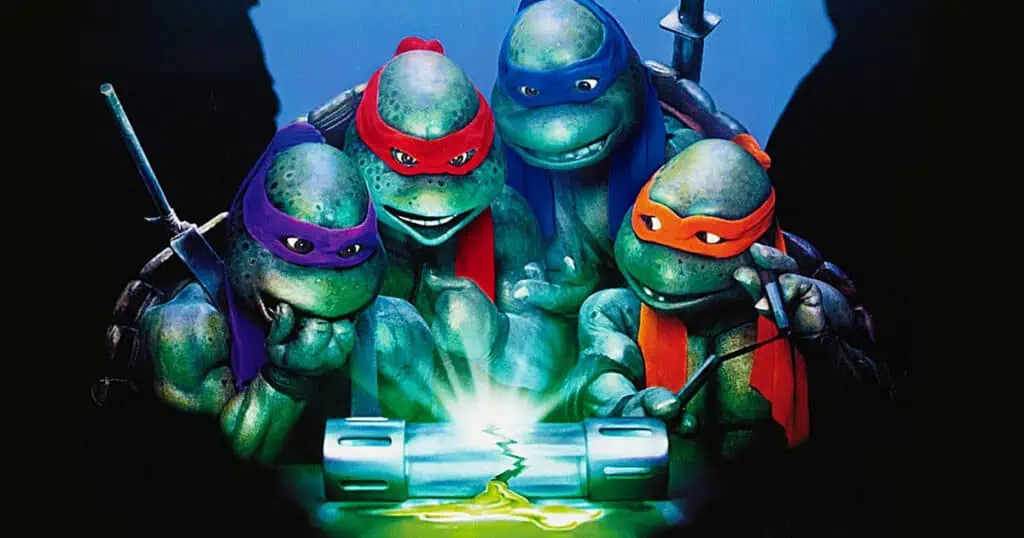
Just one year later, in 1991, we’d see Teenage Mutant Ninja Turtles II: The Secret Of The Ooze hit the big screen and carry over the fun of the original film while also delivering on expanding the story and action to new heights.
The second film serves as a straight up sequel that would see the return of Shredder and The Foot Clan, but with some new faces being added to replace the previous film’s characters. For example we’d get Paige Turco taking on the role of April, we’d lose Casey jones entirely, and pro wrestler Kevin Nash would take on the body acting role of Super Shredder, who is basically the original villain but enhanced with the ooze.
This movie is the pinnacle of TMNT cinema, and easily a favorite movie featuring the turtles. The comedies ramped up, the action was twice as heavy hitting, and the performances were exactly what they needed to be. In the film, the turtles would discover their true origins while fighting to protect the city from the foot as they seek revenge for the boys foiling their evil plot from the first film. As a side note, this movie also features the best looking movie pizza ever made, with perfect melted cheese.
This movie would be given a budget nearly double what the first movie had, but would only pull in about $80 million, which was a significant drop off from the previous film. However, it was still considered a hit, and a third installment was made inevitable.
TMNT III would release in 1993 and is easily the biggest downgrade from one film to the next. The movie’s budget was about the same as the last one, but would only draw in enough money to break even after marketing costs. Why? Well, simply, turtlemania had died down, and the comics were suffering from Laird and Eastman’s ongoing feud which prevented new books and source material from being produced. Couple that with the fact that the once-cutting edge suits and character designs were now lower quality and less convincing and the movie just felt like a made-for-tv version of a much better set of original films.
The movie would take the turtles to the past as they travel back in time to rescue April from a villain known as Lord Norinaga. Personally, this is a massive disappointment to fans of the turtles. The comedy didn’t land the same, the story didn’t have the same grounded feel, and the film ultimately just looked cheap and bland. Which it was. This wouldn’t stop the cartoon from continuing to release new episodes, or prevent new toys from being produced and sold, but it would halt the live-action treatment of the franchise indefinitely.
The Fallout and The Last Ronin
Meanwhile, Eatsman and Laird had rarely kept up with their comics. Some issues would be made by Eastman, some would be made by Laird, and the ones they worked on together had noticeable collaborative clashes that made the readers increasingly detached from the adventures they once loved. Now, it’s worth mentioning that while this was all happening, the franchise would continue on without them with things like the 1997 live action tv series which was… very bad, as-well-as 5 or 6 animated series that would constantly be rebooting and keeping the turtles fresh in animation. And in the year 2000, after blazing success in the 80s, to unprecedented franchise potential in the 90s, Kevin Eastman had finally had enough…
Eastman sold his 50% stake in the ownership of the characters to Peter Laird, making him the sole-owner of the Teenage Mutant Ninja Turtles. Both men had grown to become savvy businessmen, but Eastman simply had enough of the drama and wanted out. Laird would of course continue writing stories and comics for the turtles, but the magic felt like it was missing. Half of the creative driving force in these books was gone, and now one guy was responsible for them. It was messy, but the iconic status of the characters carried them through. More movies and series would be made over the years including Michael Bay’s films, the animated “TMNT” film which served as a 4th installment to the original trilogy, and the recent Mutant Mayhem film and tv show which are pretty great.
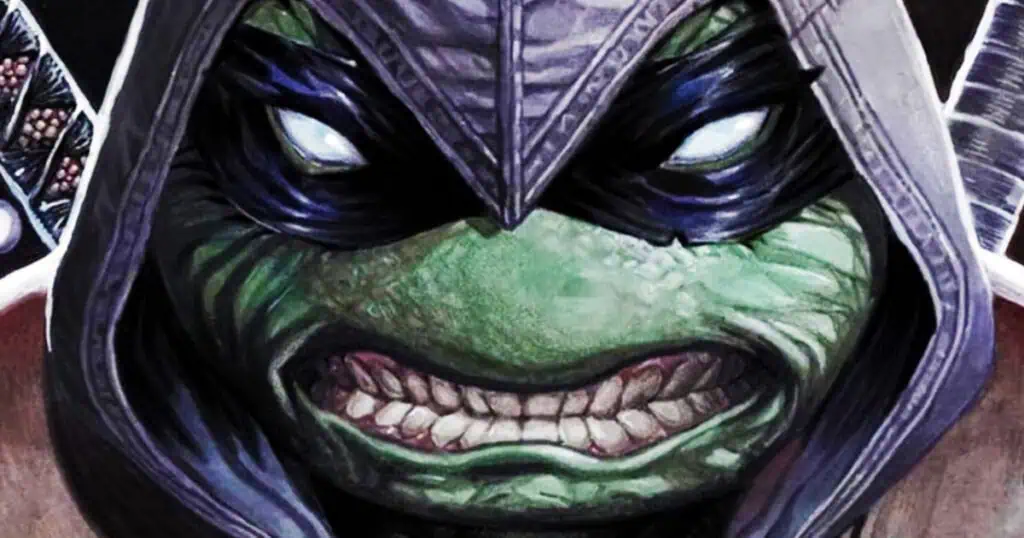
Eventually, the pair would sort of make up and work together on a few books and mangas here and there featuring the turtles, but it wasn’t until 2022 that readers and lifelong fans finally got the full story. 2022’s “The Last Ronin” was released, a comic book that picked up from the original run of comics and ignored all other continuity. A pure sequel to the golden age of TMNT comics written by Peter Laird and his old friend, Kevin Eastman.
The book would follow a lone turtle whose brothers and sensei had all been murdered in battle. Alone, the remaining ninja turtle (who is anonymous at first) tries to carry on after seeing all that he lived for be burned to the ground. The book was dark, heartbreaking, and bloody. It was later revealed that the surviving turtle was Michelangelo, the silliest and least likely to survive member of the team. There’s monologues in this book that fans believe are Laird and Eastman’s way of making amends with each other and burying the hatchet for one last ride to end what they created all those years ago.
So, in the end, what started a simple parody of Marvel comics characters quickly and aggressively took over the pop culture zeitgeist, destroyed its own creators, and became one of the most iconic and profitable comic book franchises of all time. And that’s the story of how the Teenage Mutant Ninja Turtles became what we know them to be now. There are rumors that the Last Ronin video game was cancelled, which is highly disappointing, but there remains hope for an animated adaptation or even better, a live action adaptation with practical costumes that could serve as a 5th installment to the original trilogy and animated fourth movie.














The comment section exists to allow readers to discuss the article constructively and respectfully, focused on the topic at hand.
What’s Not Allowed