

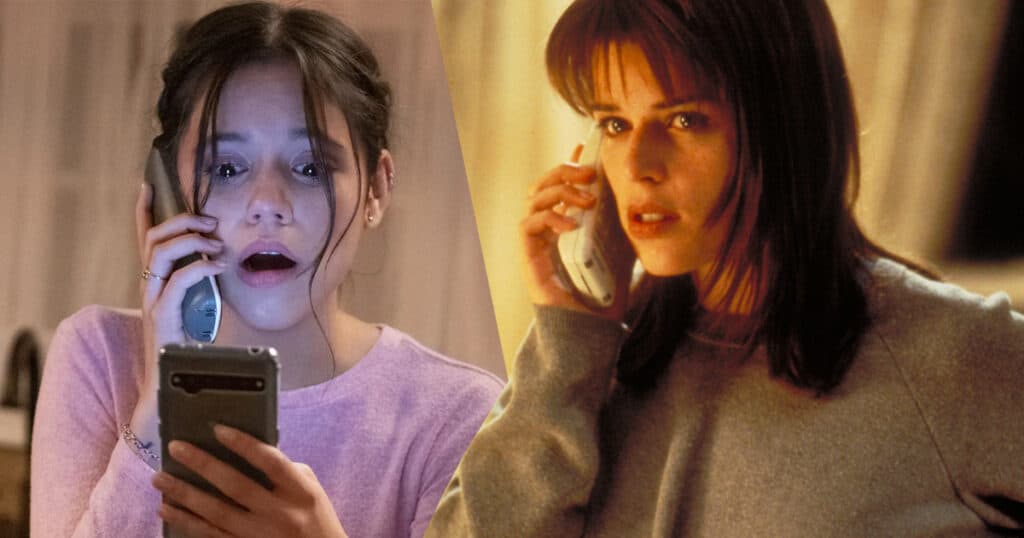

From iconic horror characters to endlessly quotable dialogue, few horror franchises have influenced pop culture as deeply as Wes Craven and Kevin Williamson’s Scream series. Since the original 1996 film reinvented the slasher genre through self-aware “meta horror,” the franchise has become one of the most important names in horror cinema.
With the release of Scream 7, the Ghostface franchise now spans multiple generations of characters, directors, killers, and horror trends. Across seven films, the series has explored sequel culture, remake culture, “requels,” fandom toxicity, and legacy horror storytelling.
So where does every Scream movie rank? Here are all seven Scream films ranked from weakest to best.
| Rank | Film | Release Year | Key Theme |
|---|---|---|---|
| 7 | Scream 3 | 2000 | Hollywood satire |
| 6 | Scream 7 | 2026 | Legacy violence escalation |
| 5 | Scream 2 | 1997 | Sequel commentary |
| 4 | Scream 4 | 2011 | Internet fame and requels |
| 3 | Scream VI | 2023 | Urban Ghostface chaos |
| 2 | Scream | 2022 | Legacy reboot (“requel”) |
| 1 | Scream | 1996 | Meta-slasher reinvention |

7. Scream 3 (2000)
- Ghostface Style: Manipulative mastermind
- Horror Theme: Hollywood satire and franchise mythology
- Setting: Hollywood
- Final Girl Focus: Sidney Prescott
- Tone: Lighter and more comedic
- Violence Level: Mild compared to other entries
- Legacy Character Presence: Sidney, Gale, Dewey
- Commentary Focus: Horror sequels and movie industry culture
- Most Memorable Element: Stab 3 Hollywood setting
- Biggest Criticism: Weak killer reveal and “ghost mom” storyline
Ahhh the black sheep of the Scream franchise. Even as the clear worst entry, there’s still a certain charm to the third film. The Hollywood setting (dictated by the Studio after the Columbine shootings) really fits in well with the movie-centric series. Sure, the mismanaged killer and ghost mom portions are a little strange. Plus those Jay and Silent Bob cameos don’t exactly help matters. But this provides us Sidney Prescott, Gale Weathers, and Dewey Riley (that’s Neve Campbell, Courteney Cox, and David Arquette) doing their thing. And, even if it doesn’t work, they connect it with all the films and try to make it feel important.

6. Scream 7 (2026)
- Ghostface Style: Brutal and high-volume killer
- Horror Theme: Legacy continuation and escalation
- Setting: Suburban/family-focused legacy setting
- Final Girl Focus: Sidney Prescott
- Tone: Violent and cynical
- Violence Level: Highest body count in the franchise
- Legacy Character Presence: Sidney, Gale
- Commentary Focus: Franchise continuation and nostalgia
- Most Memorable Element: Extreme kill count
- Biggest Criticism: Weak final-act motivations
I’m still a little iffy on this one’s placement as it may actually be behind Scream 3. But the one thing that I think is putting it ahead (at least until a rewatch) is the violence. Where 3 is damn near PG-13, 7 takes a gnarlier approach, with the highest body count of the franchise. But it’s still hard to forgive that absolutely terrible final act, which features some of the dumbest motivations we’ve seen in the franchise. Neve Campbell is still great as Sidney and I liked her dynamic with her family, but when all was said and done, this was ultimately a pointless venture.

5. Scream 2 (1997)
- Ghostface Style: Copycat escalation
- Horror Theme: Sequel culture and media violence
- Setting: College campus
- Final Girl Focus: Sidney Prescott
- Tone: Suspense-heavy and self-aware
- Violence Level: Moderate
- Legacy Character Presence: Sidney, Gale, Dewey, Randy
- Commentary Focus: Horror sequels and audience expectations
- Most Memorable Element: Police car escape sequence
- Biggest Strength: Clever subversion of the original film’s formula
This is probably the most controversial placement of any film on the list and by all means, I don’t consider this to be a bad film. If anything, it just shows how strong the series is that this sequel is so far down the list. Having been released less than a year after the original, it’s a miracle that this film is as good as it is. The tension when Sidney and her roommate Hallie (Elise Neal) are forced to climb over Ghostface’s seemingly unconscious body is a masterclass. And the way it toys with your expectations set up from the first film is an absolute treat.
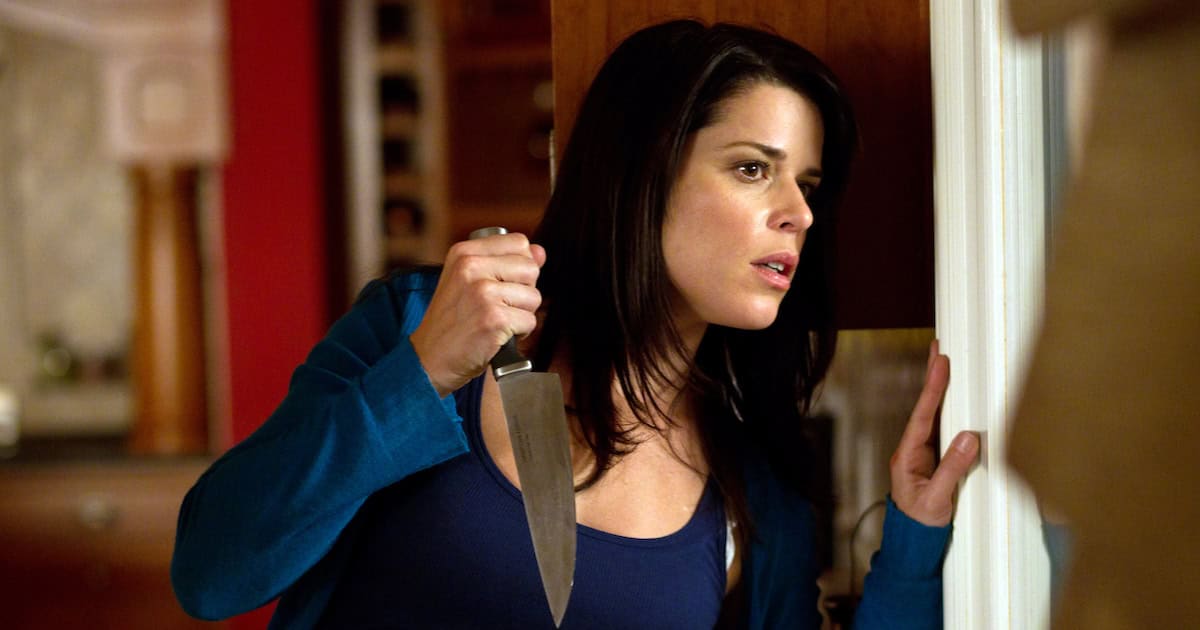
4. Scream 4 (2011)
- Ghostface Style: Fame-obsessed modern killer
- Horror Theme: Internet celebrity and “requels”
- Setting: Woodsboro reboot-era setting
- Final Girl Focus: Sidney Prescott
- Tone: Darkly satirical
- Violence Level: Sharp and aggressive
- Legacy Character Presence: Sidney, Gale, Dewey
- Commentary Focus: Social media fame and remake culture
- Most Memorable Element: Jill Roberts reveal
- Biggest Criticism: Glossy visual style and weak opening
The Scream series has always been so ahead of the game that they were doing “requels” before they were even a thing. And they masterfully handle the melding of the old characters with the new. A weak opening and a strange Soap Opera lighting effect that seems out of place in the horror genre are really the only drawbacks to the film. Though I will always be in the camp that the film should have ended before the hospital scene. We don’t always need happy, triumphant endings. I think the Scream franchise is more than overdue for a downer.

3. Scream VI (2023)
- Ghostface Style: Physically aggressive and relentless
- Horror Theme: Franchise escalation and survival trauma
- Setting: New York City
- Final Girl Focus: Sam Carpenter and Tara Carpenter
- Tone: Intense and fast-paced
- Violence Level: Extremely brutal
- Legacy Character Presence: Gale Weathers and Kirby Reed
- Commentary Focus: Expanding franchise scale and expectations
- Most Memorable Element: Subway and ladder sequences
- Biggest Strength: One of the strongest openings and first halves in the series
The latest entry may just have the strongest first half of any of the sequels. There are so many interesting new ideas introduced and nearly all of them work. And Ghostface is just plain MEAN here, with some of the most brutal kills of the whole franchise. While it certainly gets a little convoluted and Montreal serves as a pretty weak NYC, the film still provides plenty of satisfying twists and turns. It doesn’t hurt that these characters are just so damn likeable. Plus, the return of Kirby (Hayden Panettiere) will always be a positive in my book.

2. Scream (2022)
- Ghostface Style: Requel-era superfan killers
- Horror Theme: Legacy sequels and toxic fandom
- Setting: Modern Woodsboro
- Final Girl Focus: Sam Carpenter and Tara Carpenter
- Tone: Emotional and brutal
- Violence Level: Graphic and grounded
- Legacy Character Presence: Sidney, Gale, Dewey
- Commentary Focus: “Requels,” nostalgia, and fan entitlement
- Most Memorable Element: Opening attack on Tara Carpenter
- Biggest Strength: Excellent integration of legacy and new characters
The first Wes Craven-less Scream (this one and 6 were in the hands of directors Matt Bettinelli-Olpin and Tyler Gillett) and it still features all the hallmarks of what makes a great entry in the series. An absolutely stellar opening, with some of the more brutal stabbings on film. I physically wince during some of Ghostface’s kills here. While we may have a weak lead with Sam (Melissa Barrera), that’s more than made up for with our tremendous side characters like the Meeks twins (Jasmin Savoy Brown and Mason Gooding) and Richie (Jack Quaid). And heck, we practically get a second lead that’s Sidney Prescott-levels of empowered with Tara (Jenna Ortega). The usage of the legacy characters in the script written by James Vanderbilt and Guy Busick feels perfect and, if anything, could have probably done with an even higher body count. But after 6, this entry feels even stronger.

1. Scream (1996)
- Ghostface Style: Classic dual-killer slasher
- Horror Theme: Meta-horror and slasher deconstruction
- Setting: Woodsboro
- Final Girl Focus: Sidney Prescott
- Tone: Suspenseful, witty, and genre-defining
- Violence Level: Moderate but impactful
- Legacy Character Presence: Original core cast introduction
- Commentary Focus: Horror movie rules and audience expectations
- Most Memorable Element: Ghostface reveal and Randy’s horror rules monologue
- Biggest Strength: Reinvented the slasher genre for modern audiences
Is this even a surprise? I’m not sure there’s a single person on the planet that would put any other film in the number-one spot. And for good reason: it revolutionized horror. As good as any sequel is, there will never be anything that surpasses the original. Randy Meeks (Jamie Kennedy) is the embodiment of every horror fan I know (and am) and provides some of the best monologues in slasher history. The deconstruction of slasher films provides one of the greatest twists in all of cinema history, with an absolutely blockbuster third act.
Which Scream movie is considered the best?
Most fans and critics consider Scream (1996) the best film in the franchise because of its reinvention of the slasher genre and iconic Ghostface reveal.
Which Scream movie is the scariest?
Many fans consider Scream VI the scariest sequel due to its brutal kills and aggressive version of Ghostface.
Which Scream movie has the highest body count?
Scream 7 currently features the highest body count in the franchise.
Which Scream sequel is most underrated?
Scream 4 has gained major reevaluation over time and is now often considered one of the smartest sequels.
Do you need to watch the Scream movies in order?
Yes. The franchise heavily references previous killers, survivors, and events.
Which Scream movies were directed by Wes Craven?
Wes Craven directed:
- Scream (1996)
- Scream 2
- Scream 3
- Scream 4
How Would You Rank the Scream Movies?
The Scream franchise has remained one of horror’s most consistently entertaining series across multiple decades, evolving from a slasher deconstruction into a commentary on modern fandom, sequel culture, internet celebrity, and horror nostalgia.
Whether your favorite Ghostface movie is the original Scream, Scream VI, or even the divisive Scream 3, every entry brings something unique to the franchise.
How would you rank the Scream series? Let us know in the comments below.
“What’s your favorite scary movie?”











The comment section exists to allow readers to discuss the article constructively and respectfully, focused on the topic at hand.
What’s Not Allowed