
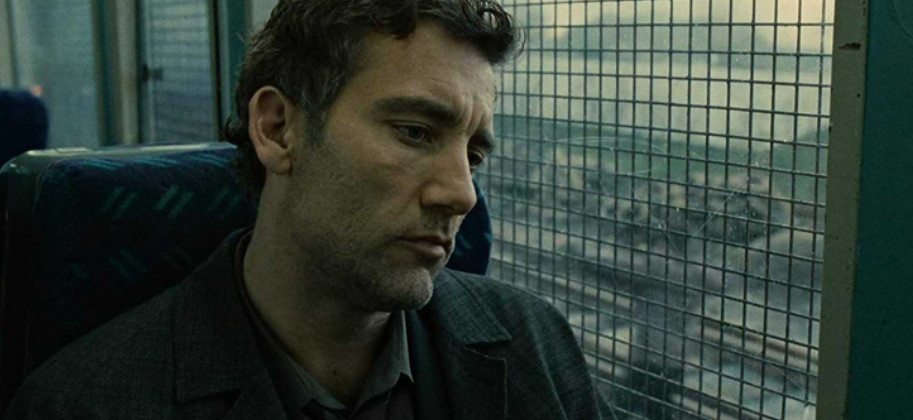

INTRO: In the early years of this century, a lot of fans were hoping Clive Owen would be the next James Bond. He never was cast as that character, but that hasn’t held him back from having a great career. One of his best movies came out the same year Daniel Craig made his Bond debut in Casino Royale. It’s a dark action film set in a dystopian future, where the fate of humanity lies in the hands of Owen’s character. A depressed alcoholic who doesn’t have the right footwear for the dangerous journey he’s on. The film is Alfonso Cuarón’s Children of Men, and it’s time for it to be Revisited.
SET-UP: Children of Men began with a 1992 novel written by P.D. James, also known as Baroness James of Holland Park. An author who had her greatest success with a series of mystery novels featuring a detective named Adam Dalgliesh. The novel The Children of Men was something out of the norm for James, as it wasn’t a mystery novel. It was a story set in the dystopian future of 2021, a time when society is collapsing and humanity is on the verge of extinction. That’s because no one has gotten pregnant since the sperm count of human males dropped to zero back in 1994. Democracy has been abolished in England. The country is run by a man who has appointed himself Warden of England. At the center of the story is the Warden’s cousin, a doctor named Theo Faron. Theo is first contacted by a dissident group called the Five Fishes because they want him to talk to his cousin and try to restore democracy in the country. But things don’t go as hoped, and the Warden decides to target the dissidents. So then Theo tries to help the Fishes as they go on the run. It’s very important that one member in particular, a woman named Julian, be kept safe. Because she is the first human female to get pregnant since the ‘90s.
In 1996, a production company called Beacon Pictures contacted James about making an adaptation of the novel. And they proved they were passionate about the material, because it took almost a year of negotiations to close the deal. James had specific requests she needed to make sure Beacon would follow through on before she would hand over the rights. For one thing, she demanded that Children of Men be adapted as a film, not for television. At the end of the negotiations, James was paid an amount somewhere in the mid-six-figures and Beacon got the rights. The adaptation then officially went into development – and passed through the hands of multiple screenwriters over the next few years. American Perfekt writer/director Paul Chart wrote the first draft. But the script changed so substantially as development continued, Chart isn’t credited on the finished film. His draft was rewritten by future Iron Man and Cowboys & Aliens writers Mark Fergus and Hawk Otsby. In 2001, Beacon hired Alfonso Cuarón – the director of Great Expectations and Y tu mamá también – to take the helm of the project. Cuarón then set out to rework the script with his writing partner Timothy J. Sexton, who would go on to be a writer and producer on Chicago P.D. At that time, the goal was to start filming in 2002.
Cuarón was more interested in digging into the concept of Children of Men than he was in making a faithful adaptation of the novel. He only read the beginning of the existing script before setting it aside because he didn’t like it. He wasn’t interested in making this a science fiction movie. And he wasn’t interested in the upper class drama that had been present in the novel. He wanted to make a movie that reflected the state of the world at the time. Which was quite tumultuous and frightening. This was in the immediate aftermath of the 9/11 terrorist attacks, during the build-up to the wars in Afghanistan and Iraq. Some would start imagining something like Blade Runner when thinking of the futuristic setting. But Cuarón envisioned a future that looked a lot like modern day. Just more rundown and dangerous. The only reason to set the story in the future was because it needed to take place a substantial amount of time after humanity became infertile. And the idea of infertility could be used as a metaphor for the fading sense of hope Cuarón felt humanity had in the early two thousands.
Once he had been presented with the premise of Children of Men, he had a take on the story so clear in his mind that he was afraid to read the novel. He was concerned that reading James’ version of the story would confuse his vision of it. So he only read an abridged version of the novel, while Sexton read the complete text. Then they cherrypicked the elements they felt were relevant to their approach to the idea.
The version of Children of Men that Cuarón and Sexton crafted together moves the setting to 2027. Eighteen years have passed since the last live human birth – and the youngest person on the planet has just been murdered. Knifed outside a bar for refusing to give an autograph. The world is falling apart. Crime, terrorism, paranoia, cities under siege. England has had its borders closed for eight years. Illegal immigrants are regularly captured and deported. The lead character is an office worker named Theo Faron, a depressed alcoholic whose only child died in the flu epidemic of 2008. Theo and his wife Julian broke up after the death of their son… But as the story begins, Theo is brought back into contact with Julian, who is now a member of a dissident group called the Fishes. The group needs help securing transit papers for an immigrant girl named Kee. And since Theo’s cousin works with the government saving pieces of art from around the world, he can get those papers easily. Theo does get the transit papers, but there’s a catch: they’re joint transit papers. He has to travel with the girl. Their journey is just getting started when Theo, Kee, and the Fishes are attacked and Julian is murdered. Theo is ready to give up and move on. Then Kee reveals that she is pregnant. The first human female to get pregnant in a long time. That’s when Theo becomes invested in making sure Kee is kept safe.
Since Kee is an immigrant, the fear is that the government would take her baby and pass it off as the child of a posh British couple. And Kee would be silenced forever. So the plan is to get her to the coast, where Julian arranged for her to be picked up by a ship belonging to the Human Project. An organization that is said to have research facilities set up in secret locations. And a safe haven community in the Azores. A lot of people don’t believe the Human Project even exists. Theo is skeptical himself. Kee and midwife Miriam can’t confirm they’re real, because Julian is the only one in contact with them. But the Human Project is Kee’s one chance to be kept safe. So Theo, Kee, and Miriam make their way to the coast, fuelled only by hope. It’s a very dangerous journey that takes them through the awful conditions of a refugee camp. That then turns into a war zone. There’s a lot of death and despair along the way. But they have to keep holding on to the hope that there’s going to be reward for all this risk.
Beacon and other production companies behind Children of Men had deals with Universal. But when Cuarón and Sexton’s script was turned in to the studio, it was not received with great enthusiasm. It was too dark, bleak, and political. It wasn’t the sort of commercial sci-fi action movie a studio would hope for. And just when it became clear that Universal wasn’t going to be giving the project a greenlight, Cuarón got a huge offer. Warner Bros. asked him to direct the third Harry Potter film, The Prisoner of Azkaban. He took the job, and the producers of Children of Men thought that would be the end of his involvement with their film. Spy Game screenwriter David Arata was brought in to polish the script just so there would be some indication of life in the project. But the situation wasn’t as dire as the producers feared. Making The Prisoner of Azkaban required Cuarón to spend a lot of time in England – and during that time, he couldn’t get Children of Men out of his mind. As soon as the Harry Potter movie went into post-production, he called the Children of Men producers to let them know he wanted to do their movie next. And now that he had Harry Potter cred, Universal was suddenly interested in greenlighting his passion project.
Once The Prisoner of Azkaban was released in May of 2004, Cuarón was able to turn his focus to getting Children of Men into production. During the casting process, the director was informed that Universal wanted a big name to be cast as Theo Faron. Russell Crowe, George Clooney, and Matt Damon were on the list. Cuarón was pleasantly surprised to see that another one of the names on Universal’s list was Clive Owen. An actor who had a lot of buzz around him at the time due to his roles in the likes of Croupier, BMW’s The Hire shorts, and Sin City. Since Pierce Brosnan was being replaced as James Bond, a lot of fans were hoping Owen would be the new Double-O-Seven. But that wasn’t to be; the announcement that Daniel Craig was the new Bond came soon after Owen signed on for Children of Men. Cuarón cast Owen because when they met, he found that the actor really understood the character of Theo. He knew that Theo is not a highly capable, invincible hero. He’s certainly no James Bond. He’s just a regular, messed up guy. Owen had such great insight on the characters and story, Cuarón and Sexton even asked him to work on the script with them.
Then a supporting cast was built around Owen. Julianne Moore was cast as his dissident ex-wife Julian. The role of Theo’s pot-smoking artist friend Jasper went to Michael Caine. Philippa Urquhart plays Jasper’s wife Janice, a former journalist who was tortured by MI5 for criticizing the government. Danny Huston plays Nigel, Theo’s cousin who provides the transit papers. And has dedicated himself to saving works of art that, as far as he knows, nobody will even be around to see in a hundred years. Oana Pellea was cast to play Marichka, an immigrant woman who makes a strong impression even though none of the other characters understand her language. Peter Mullan was given the memorable role of Syd, an immigration officer who refers to himself in the third person and buys weed from Jasper. Chiwetel Ejiofor and Charlie Hunnam were cast as Luke and Patric, dissidents who have a different idea on how to handle the pregnant woman. At first, Luke appears to be an ally to Theo, Julian, and Kee. But it’s soon revealed that he’s the villain of the film. Pam Ferris plays Miriam, the midwife who accompanies Theo and the pregnant woman on their journey. And as the pregnant woman herself, Kee, Cuarón cast Clare-Hope Ashitey.
A casting announcement at the time mistakenly said Julianne Moore would be playing the pregnant character. That was an easy mistake to make, because Julian was the pregnant one in the novel. But Cuarón and his collaborators decided to switch things up, and chose to make the pregnant woman an immigrant from Africa. A nod to the theory that Homo sapiens originally developed in Africa and then migrated out across the world. Humanity began in Africa, and now it will continue because of an African woman.
REVIEW: Cuarón brought his go-to cinematographer Emmanuel Lubezki onto Children of Men with him. And together they were able to bring his vision of the story to the screen with incredible style. The idea was to give the film a sort of documentary feel. These events are happening and the camera just happens to be present to capture the moment. The director and cinematographer didn’t want to favor the characters over the environments they were in. They didn’t want to punch in for close-ups. They wanted to show the people existing in the midst of their surroundings. Due to this approach, the film has much longer shots than the average movie being made these days. While the average shot length in Hollywood films is in the range of four to six seconds, Children of Men has sixty-two shots that go on for more than twenty-two seconds. And when a fan cut together only the shots that last forty-five seconds or more, their video was thirty-one minutes long. The film has a running time of one hundred and nine minutes, so that’s a substantial amount of it being presented in long takes.
There are three especially long takes in the movie. Standout sequences that really stick with you after you’ve watched it. The first is a four minute sequence that takes place inside a car as it’s being attacked by people outside. A special rotating camera rig was designed to capture the moment, and the vehicle itself also had to be modified. The windshield could tilt out of the way of the camera. The seats could lower and tilt the actors out of the way. During the sequence, people get shot. The windshield shatters. A motorcycle chases the car and crashes. All of this is shown in one long take, there are no cuts. No insert shots. Of course, there was a lot of digital trickery done to make this all possible. Several elements in the sequence are CGI effects. And it’s not really just one long take. The sequence was shot in six takes in four different locations. But on the screen, it’s seamless.
Even more impressive than the car scene is a sequence that takes place in the refugee camp once war has broken out in there. Kee has been captured by Luke and taken into a crumbling building. With bullets flying everywhere and explosions going off around him, Theo has to make his way through the streets of the camp city. Then into the building, where he searches for Kee as bullets come through the walls. There is a shot in this sequence that goes on for around seven minutes. The camera follows Theo as he makes his way through this dangerous situation, with people dying all around him. It’s reminiscent of the most harrowing moments in Steven Spielberg’s Saving Private Ryan. It took the crew fourteen days to prepare for the long take in this sequence. Every time it had to be re-shot, it took five hours to get everything set up again. At one point, blood from an unlucky bystander splashes across the camera lens. When he saw the blood hit the camera, Cuarón tried to call cut. Luckily, his voice was drowned out by the sounds of war on the set, so the camera kept rolling. Lubezki then convinced him that the take with blood on the lens should be used in the film. And it is in there. That blood remains in our view for quite a while. Just like the car scene, the long take in the war zone contains hidden cuts, but that doesn’t take away any of its effectiveness.
The war zone sequence is made all the more intense by the fact that Kee has given birth to her baby by that point. The characters now have to carry a newborn infant through this hellish environment. The birth of the baby is another scene that is presented in a long take. That one goes on for over three minutes. And it’s another one that features some stunningly convincing special effects. Kee’s lower body in the birth scene is fake, and the crew pushed a prop baby through this fake body. The prop baby was then replaced by a realistic CGI baby in post-production.
The long takes in Children of Men provide jaw-dropping moments. But the film is also impressive around those moments. Cuarón’s chilling vision of the future is fully believable, and it’s almost a shame that we hear any specific dates mentioned. Because if we weren’t already past the date given for when humanity became infertile, we could still see this a potential future. In 2021, it’s just as likely that we might have a world like this ahead of us as it was when the film was released in 2006.
The director didn’t want to fill his movie with exposition that would tell us what’s going on in 2027 or how the world got that way. We get all the information we need to understand the situation through interactions between characters who have no control over what’s going on. We can fill in the blanks on the state of the world by looking at the set design. Newspaper articles, TV screens, billboards, signs. Cuarón didn’t want to explain why humans became infertile because such an explanation would take up too much time. And would take the film too far into the realm of science fiction. The most detail we get on the situation comes from Miriam, who tells an emotional story about what it was like to be working as a nurse when the infertility issue began. It started with an epidemic of miscarriages. And then no more babies were being conceived.
Cuarón told Hollywood Elsewhere, “I was not interested in constructing a back-story about what caused female infertility. Because if I did that, a lot of the movie would then have to be about that. For me, female infertility was basically a metaphor for the fading sense of hope. And the Human Project… if I have to explain who they are and the whole background of that, that also would have consumed a significant portion. The Human Project is a metaphor for human understanding. For me that was sufficient.”
There’s also no explanation given for why Kee is the first woman to get pregnant in almost twenty years. It just happened. Cuarón does have fun playing with the nativity element of the situation. Kee is in a manger when she lets Theo know she’s pregnant. When characters see that she’s pregnant, or see the baby once it’s born, they react like it’s a religious event. Some even exclaim “Jesus Christ!” Beyond the nativity, there are visual nods to imagery that have become part of the human consciousness. A shot of a woman in the refugee camp crying over the corpse of her son is a reference to a photograph taken in the Balkans. A photo that also reminded Cuarón of the Michelangelo sculpture La Pieta, showing Mary holding the body of Jesus. Shots in the refugee camp bring to mind imagery of concentration camps. These shots are accompanied by a song that shares its title with a phrase that was at the entrance of most German concentration camps. Arbeit Macht Frei, meaning “work sets you free”. There’s also a visual reference to the Abu Ghraib prison abuse scandal. And if you’re wondering why there’s a pig balloon floating above Nigel’s place at the Battersea Power Station: that’s a nod to the cover of the Pink Floyd album Animals.
One moment in the film that reflected real world tragedy wasn’t originally meant to be so familiar. In the opening scene, a terrorist bomb blows apart a coffee shop on Fleet Street right after Theo has walked out of the place. That explosion was filmed in London just a month and a half after the city was hit by four terrorist bombings that targeted the public transport system. Fifty-six people were killed in those attacks and hundreds were injured. But the authorities still let Cuarón go through with filming the terrorist bombing scene. Which had already been planned, approved, and scheduled before the real bombing attacks happened.
So Children of Men is set in the future, but also very topical. And beyond the dazzling technical achievements, it also features terrific performances from its actors. Michael Caine is, of course, a standout as Jasper, who is quite different from the average Caine role. So different, in fact, that his wife didn’t even recognize him once he was in character. Caine decided to play Jasper like an older version of his late friend John Lennon. Some viewers may be surprised at how little screen time Julianne Moore, Chiwetel Ejiofor, and Charlie Hunnam have. The lesser known Clare-Hope Ashitey and Pam Ferris are around longer than the bigger names, and we come to like and care about their characters during the time we spend with them. Aside from one brief, heartbreaking moment with Jasper and his wife Janice, we’re with Theo for the entire movie. The camera either stays with him, or shows us his perspective. Along the way he proves to be a good hero, although his heroism at first seems unlikely. He’s just an unusual hero who loses his shoes early on and gets stuck wearing flip-flops for most of the movie. Speaking with the BBC, Owen described his character as “very undynamic, very reserved, and almost like a shadow of a human being. He is a guy who has given up and who is desperately sad about the world in which he lives. Through the course of the movie, his hope is reawakened. … It was very deliberate of Alfonso Cuarón to get away from any sense of a cliched, heroic character. I’m there trying to help this girl, and Alfonso didn’t want it to suddenly have the ‘Here we go, we’ve seen this before, this is where the main character saves the day’ feeling. By putting Theo in flip-flops and making him look like a complete alcoholic, out-of-shape mess, he avoided that.”
Theo is such an unusual hero that he never uses a gun in the movie. Not even when he’s making his way through a war zone. You might expect him to take a weapon from one of the corpses around him and start blasting away. But he never attempts to do so. He doesn’t even touch a gun.
LEGACY/NOW: Children of Men has some great action sequences in it, but it also has an arthouse sensibility. So it’s no surprise that the studio had no idea how to market a movie that was exciting but also bleak and political. When Universal gave it the greenlight, Stacey Snider was the head of the studio. But by the time filming was finished, Snider had left Universal for DreamWorks. There were new executives in place, and they were baffled by the film Cuarón handed over to them. They put together some unappealing posters. They cut together a flashy-but-underwhelming trailer that went heavy on exposition. And they sent the movie out into the world – where it was met with a shrug at the box office. Made on a budget of seventy-point-five million, Children of Men earned just thirty-five million at the North American box office. The international box office boosted it to a total of seventy million. It was considered a flop. But it did receive strong positive reactions from critics. Some critics listed it as the best film of the year, while more than twenty had it in their top ten.
Looking back, Children of Men feels like it should have been a Best Picture contender. But while it did receive some recognition from the Academy, it wasn’t nominated in that category. It was nominated for Best Achievement in Cinematography, Best Achievement in Editing, and Best Adapted Screenplay. It lost to Pan’s Labyrinth in the cinematography category and to The Departed in the other two. But while it didn’t win an Oscar, it has gotten other accolades. When Film Comment polled critics to ask what the best films of the year were, Children of Men was number nineteen. Surprisingly, it did even better with Film Comment readers, who ranked it as the second best movie of 2006. Entertainment Weekly would go on to rank it as the seventh best film of the decade. When the BBC polled critics to find out what the best films of the twenty-first century have been, Children of Men came in at number thirteen. And in 2017, Rolling Stone magazine named it the best sci-fi film of this century. Even though its director doesn’t consider it to be a sci-fi film.
Perhaps the most surprising positive response came from author P.D. James. The film is so different from her novel, it would have been understandable if she wasn’t happy with it. But she kindly sent a statement to Cuarón saying she was pleased with the film. She admired what he did with the concept and was very proud to be associated with it.
Children of Men wasn’t seen by as many movie-goers as it should have been. And it’s still underseen. But it has gathered a strong cult following, and today there are many fans who consider it to be a classic. All this time later, it still feels relevant. And, unfortunately, the future is depicts still feels possible. It’s a hidden gem, and hopefully movie fans will continue to discover it for a long time to come.
When asked what he hoped the reaction from audiences would be, Cuarón told Filmmaker magazine, “I hope young people will see this film. I mean my generation, we blew it. I think we grew up in a world that was pre-idyllic, and we saw the world collapse in front of us. We tried to believe that it was not our fault, that it was not our responsibility. We felt powerless about the situations as if they were very overwhelming and there’s a certain sense of guilt involved in the whole thing. Younger generations, they were born in a world that went to shit already, so they have a completely different perspective of what’s going on. I really believe in the evolution of human understanding that’s happening in the younger generation and the generation to come. My intention was to take the viewer on a road trip through the state of things. Then once you go through this journey, try to come up with your own conclusions about the possibility of hope in a world like this. At the end I cannot dictate a sense of hope for anybody because a sense of hope is something that’s very internal. We wanted the end to be a glimpse of a possibility of hope, for the audience to invest their own sense of hope into that ending. So if you’re a hopeful person you’ll see a lot of hope, and if you’re a bleak person you’ll see complete hopelessness at the end.”
So seek out Children of Men. Go on this incredible journey through Cuarón’s vision of a potential future. And then see for yourself what you find in the end. Is it bleak, or do you have hope for the future?














The comment section exists to allow readers to discuss the article constructively and respectfully, focused on the topic at hand.
What’s Not Allowed