

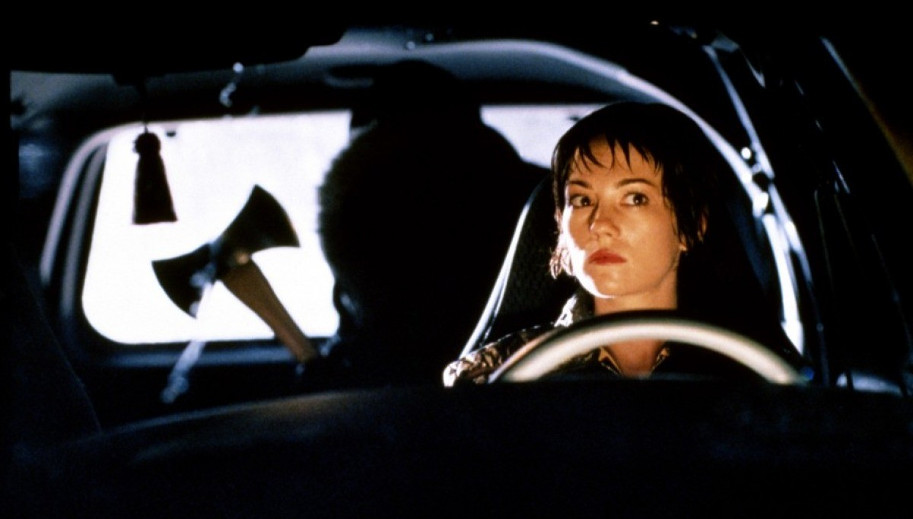
Have you heard the one about the ax murderer in the back seat of the car? Or the one about the dog in the microwave? If you have, it might be because you’re an intense connoisseur of urban legends, or maybe you just saw Urban Legend. The late-’90s slasher shined a light on all those creepy myths that have been passed down through the years.
Forged in the immediate aftermath of Scream and I Know What You Did Last Summer, Urban Legend centers on a New England college campus terrorized by a parka-wearing psycho who takes their love of scary stories too far, creating a bloody new legend of their own.
Scream may have spawned a host of imitators, but Urban Legend claws above the rest thanks to its clever central premise, undeniable enthusiasm for the genre, and a young group of filmmakers eager to make their mark.
So grab a soda, but leave the Pop Rocks behind, because we’re about to find out what happened to Urban Legend.
Origins: The Script That Sparked It All
It all began in 1997 with a young writer named Sylvia Horta. Only 23 years old at the time and working as a perfume spritzer at Nordstrom, Horta was developing an idea about a serial killer who used urban legends as part of their MO. After cleaning up a messy early pitch, Horta and their manager took the concept to major production companies around town. With Scream having been a massive hit and I Know What You Did Last Summer proving the slasher genre still had life, the timing couldn’t have been better.
Producer Neal Moritz dug Horta’s idea and agreed to help bring it to life, but they still needed a studio.
Enter Phoenix Pictures. A relatively new company at the time, they saw the potential in Urban Legend and believed it could capitalize on the renewed interest in horror. The script was purchased, and after just two drafts, the movie was greenlit.
Finding a Director: Jamie Blanks Takes the Leap
The search for a director led to 26-year-old newcomer Jamie Blanks. A massive horror fan, Blanks had previously created a fake trailer for I Know What You Did Last Summer to prove he could direct it. While that job ultimately went to Jim Gillespie, the trailer stuck in people’s minds and helped land him Urban Legend.
Blanks flew to Hollywood armed with storyboards, passion, and a deep love for the genre. That was enough to land him the job, despite having no feature film experience and a $14 million production in front of him. His first day on set would be his first time ever on a feature film set.
He was hired in February 1998. Shooting began in April. The film would be released in September. No pressure.
Casting the Campus Victims
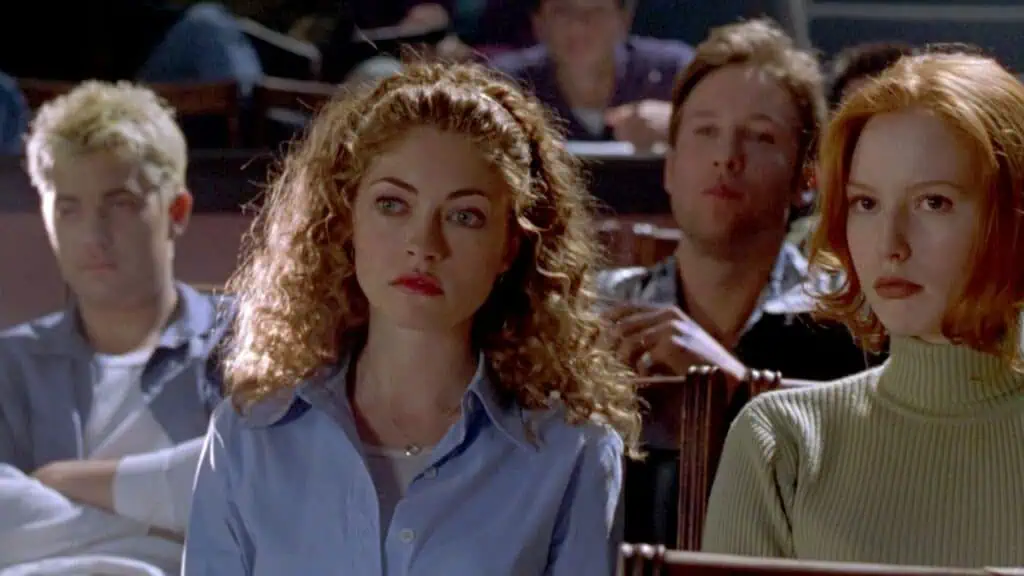
The cast was made up mostly of rising talent, with a few familiar faces around the edges.
- Jared Leto was the biggest name among the leads, known primarily for My So-Called Life.
- Alicia Witt was cast as the final girl, Natalie, after producer Neal Moritz pushed for her.
- Joshua Jackson brought humor as the class clown, thanks to Dawson’s Creek and The Mighty Ducks.
- Rebecca Gayheart landed the pivotal role of Brenda (the film’s eventual villain) after fighting hard for the part.
Supporting players included:
- Tara Reid, fresh off The Big Lebowski
- Michael Rosenbaum
- Robert Englund as the urban legend professor
- Loretta Devine as the campus cop
- Danielle Harris as Natalie’s ill-fated roommate
For the opening kill, Natasha Gregson Wagner was cast; recognizable enough to trick audiences into thinking she might be the lead. Brad Dourif also appeared in the opening sequence, delivering a memorable red herring performance.
Production: Shooting Horror on a Tight Clock
Filming took place in Toronto, primarily around the University of Toronto and Humber College. Interestingly, the story was originally set in winter, which explains the killer’s iconic parka. But because production occurred in spring and early summer, that aspect had to be adjusted, though the costume remained. The fictional Pendleton University even featured a tongue-in-cheek slogan on its crest: “The best friend did it.”
With around 54 shooting days, many of them at night, the schedule was intense. Canadian spring nights are short, meaning production had to move fast and stay organized.
Blanks pushed for dynamic visuals, using cranes and complex camera movements to give the film a distinct look. Despite the pressure, the cast later remarked they had no idea it was his first feature due to how professional he was.
Post-Production: Racing Against Time
Principal photography wrapped in July 1998. Around that time, the team learned the film would be released in late September, giving them just 13 weeks for post-production. That’s incredibly tight compared to the usual 25–40 weeks.
Composer Christopher Young had barely any time to complete the score, contributing to the film’s heavy reliance on music throughout.
The studio even screened early cuts for test audiences after only a second edit, something almost unheard of.
Release and Reception
Urban Legend opened on September 25, 1998, debuting at number three with $10 million. It eventually grossed $38 million domestically. Critics weren’t particularly kind. Many were already fatigued by the wave of post-Scream slashers and criticized the film for its similarities.
Still, it performed well enough to spawn two follow-ups:
- Urban Legends: Final Cut (2000)
- Urban Legends: Bloody Mary (2005, direct-to-video)
Legacy: More Than Just a Scream Clone
At the time, it was easy to lump Urban Legend in with other Scream imitators. But looking back, it stands out as a stylish, energetic thriller with a genuinely clever hook. Phoenix Pictures’ gamble on Jamie Blanks paid off, as he delivered a confident, visually engaging horror film.
Blanks would go on to direct Valentine in 2001, another slasher with a mysterious killer, but it didn’t leave the same impression. Today, Blanks works primarily as a composer, with his last directing credit being Storm Warning (2008).
Still, there’s no denying what he accomplished with Urban Legend: a polished, studio-backed horror film made by a first-time director in his twenties. And that’s no urban legend.
A couple of the previous episodes of the show can be seen below. To see more, head over to our JoBlo Horror Originals YouTube channel – and subscribe while you’re there!


The comment section exists to allow readers to discuss the article constructively and respectfully, focused on the topic at hand.
What’s Not Allowed